
https://misionverdad.com/venezuela/dialectica-de-la-inversion-extranjera-y-la-soberania
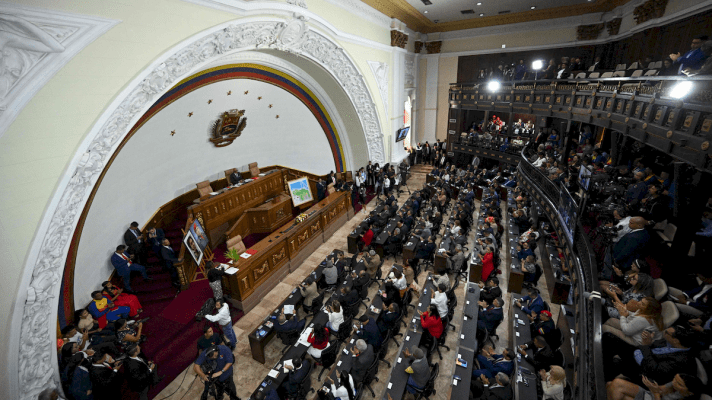
Since January 3, 2026, Venezuela has implemented a legal and economic strategy aimed at revitalizing its primary sectors without relinquishing sovereignty. The reform of the Organic Hydrocarbons Law and the enactment of the Organic Mining Law, both approved in the first four months of the year, represent the core of a state framework that combines attracting foreign capital with protecting national resources, in line with the 2020 Anti-Blockade Law and in response to a complex scenario of US sanctions.
Hydrocarbons and Mining Law: News and progress
The reform of the Organic Hydrocarbons Law, unanimously approved by the National Assembly in January 2026, incorporates mechanisms tested under the Anti-Blockade Law, particularly Productive Participation Contracts (CPPs). According to Acting President Delcy Rodríguez, these instruments allowed an oil field that produced 23,000 barrels per day in April 2024 to reach 110,000 barrels per day by December 2025. The new regulations maintain state ownership of the fields but make contractual arrangements more flexible for private operators, reducing the mandatory participation of Petróleos de Venezuela (PDVSA) and enabling international arbitration to resolve disputes—a key element favoring foreign investors.
The legal instrument abandons the prohibition on perpetual concessions to allow for more flexible public-private partnerships. According to economist Asdrúbal Oliveros, this reform is “the most significant change since the 1976 nationalization.” The law allows PDVSA to offer “special incentives” in calculating royalties and taxes, provided the contracts fall within the framework of the Anti-Blockade Law.
In parallel, the Organic Law of Mines, enacted on April 16, 2026, establishes a concession system of up to 30 years, renewable for an additional 20, for the exploitation of gold, coltan, and critical minerals. The law creates a Superintendency of Mining Activity and sets royalties of up to 13% on the commercial value, seeking to formalize a sector historically dominated by informal extraction. Furthermore, the text includes “investment protection clauses” and allows contracts to be governed by foreign law in cases of commercial disputes.
Deputy Jorge Rodríguez, president of the National Assembly, emphasized that the legal framework seeks to be “attractive, safe and deeply Venezuelan”, recognizing proposals from companies like Repsol without ceding legislative autonomy in the face of external pressures.
Both laws fall under the Anti-Blockade Constitutional Law, approved in October 2020, which granted the Executive Branch exceptional powers to “disapply” regulations that hinder economic recovery under sanctions. Analysts point out that this instrument, which enabled the signing of 29 CPPs (Productive Participation Contracts), now serves as the basis for the permanent reform of the hydrocarbons sector.
The valve of US licenses
The Venezuelan strategy operates in tension with the United States’ sanctions regime. Between January and March of this year, the Office of Foreign Assets Control (OFAC) issued general licenses (46A, 47, 48, 49, and 50A) authorizing specific transactions with the Venezuelan energy sector. License 46A allows established U.S. companies to trade Venezuelan oil; 47 authorizes the sale of diluents; 48 enables exploration and production services; and 50A grants expanded operating margins to oil companies such as Chevron, BP, and Repsol.
These authorizations facilitate operational and financial aspects — such as access to diluents, technology and markets — but leave structural sanctions against the Venezuelan state intact.
For the mining sector, last March, OFAC went further with licenses 51A, 54 and 55, which explicitly authorize transactions with the Venezuelan minerals sector, including gold, although they categorically prohibit the formation of new joint ventures with Russian, Chinese or Iranian actors.
The Vice President of the National Assembly, Pedro Infante, acknowledged the duality of the situation, denouncing the persistence of 1,081 Unilateral Coercive Measures imposed against the country and adding that “a sovereign state should not depend on external authorizations to manage its resources.” Even so, he admitted that these measures are “the necessary means to ensure revenue.” In fact, licenses 56 and 57 (April 2026) allowed the unblocking of the public banking system—Central Bank of Venezuela, Bank of Venezuela, among others—which facilitates dollar clearinghouses so that private companies can collect payments, albeit under the watchful eye of the U.S. Treasury.
An analysis by Holland & Knight indicates that the licenses “reduce PDVSA’s mandatory participation” and “formalize international arbitration mechanisms,” providing legal certainty for foreign capital but under strict reporting requirements and compliance with U.S. law. This duality reflects a policy of “conditional relief” in which Washington allows some productive reactivation without lifting the global financial blockade.
The Anti-Blockade Law acts as an internal counterweight by allowing the Venezuelan Executive to establish contractual structures that circumvent external restrictions. However, experts warn that reliance on temporary licenses creates uncertainty for long-term investments, thus limiting the scope of sectoral recovery.
Prospects for tense progress?
Recent macroeconomic performance presents a mixed picture. According to data from the Central Bank of Venezuela, GDP grew 23% in the first quarter of 2026, marking 20 consecutive quarters of expansion. However, inflation reached 71.8% during the same period, a figure that demonstrates persistent price pressures. The official projection anticipates a 55% increase in oil investment by 2026, rising from US$900 million in 2025 to US$1.4 billion, driven by private sector participation.
Venezuela’s reintegration into the International Monetary Fund, announced by the interim president, represents a milestone in financial normalization, although the president clarified that no debt program with the organization is planned. This move, along with the exchange rate stabilization resulting from currency auctions and the inflow of revenue from oil exports, aims to contain inflationary pressures while productive capacity is reactivated.
Projections indicate that, although GDP is recovering, the level remains well below the 2012 peak. However, the easing of hydrocarbon laws is expected to allow crude oil production to rise to 1.5 million barrels per day by the end of 2026, a substantial increase that would alleviate currency controls. According to Conindustria, this hybrid scheme could inject up to $6 billion in liquidity into the national banking system during 2026, although always under the risk that a US administration—the current one or a new one—could revoke the licenses.
The balance the Venezuelan state seeks lies in using sovereign legal tools—the Anti-Blockade Law, sectoral reforms—to attract foreign investment without relinquishing strategic control of resources. As Jorge Rodríguez stated, “no one is going to invest their money if they don’t have sufficient guarantees,” but the framework must be “deeply Venezuelan.” In a context of persistent blockade, this strategy represents an attempt to recover national revenues affected by sanctions, while preserving decision-making autonomy in the face of external constraints.
The effectiveness of this model will depend on the ability to translate macroeconomic growth into sustainable improvements for the population, reduce inflation, and consolidate an institutional environment that combines legal certainty for investors with transparency and accountability.
The Hydrocarbons and Mining laws, articulated with the Anti-Blockade Law and in tense dialogue with OFAC licenses, constitute central pieces of this historical challenge and a geopolitical reality in which legal sovereignty and financial dependence coexist in a tense but functional way.


One thought on “Venezuela: Foreign Investment and Sovereignty”