
This document was published in 2025 for a course through the Universidad en Línea for FSLN members and other interested people. Not only is it an excellent short history of the Nicaraguan people’s struggle, but the information on the living conditions of the people under the Somoza dictatorship and again during the neoliberal period (1990-2006), and how this dramatically improved once the Sandinistas were in power and then re-elected, is remarkable.
“We wanted peace, we had fought against the tyranny imposed by the Yankees, because we wanted peace; we wanted our people to be freed from extreme poverty and illiteracy, which exceeded 60 percent. And we had to fight against the governor imposed by the Yankees here in Nicaragua, because Somoza was nothing more than a governor imposed by the Yankees after he had fulfilled his mission of assassinating Sandino—and the Yankees armed him, financed him, and he was a brother to the Yankees.” Comandante Daniel Ortega, July 19, 2023.
“It seems like it was just yesterday… It seems like yesterday that we arrived, clad in ‘Luminous Paths,’ with the radiant backpack of the heroism of a people who rose up, that fought, that took up arms, that demonstrated the Reason of History, and that triumphed… A People That Triumphs… That is who we are… And with that Unquenchable, Unyielding, Eternal, Mystical Radiance—for it is the Light of Spirit, Life, and Truth—we continue to triumph.” Comrade Rosario Murillo, July 19, 2023.
Introduction
The Sandinista Popular Revolution, in July 1979, was not only the most significant historical event in Nicaragua’s contemporary history, but also one of the most momentous events in the history of the American continent itself, following the Cuban Revolution of 1959.
From a domestic perspective, it marked the culmination of the struggle for which generations of male and female fighters gave their lives, beginning with the very establishment of the Somoza dictatorship in 1936.
Its overthrow was carried out by the Sandinista National Liberation Front National Liberation (FSLN), the political instrument that took on this historic challenge to fulfill the long-held aspirations of the vast majority of the Nicaraguan people.
This organization was founded in 1961 by a group of young people led by the equally young leader Carlos Fonseca Amador. Through great sacrifices, succeeded in implementing a revolutionary strategy to achieve a free and sovereign homeland. It was this same organization that was tasked with putting its historic program into practice in a free and sovereign homeland following the revolutionary triumph in the 1980s.
In this unit, we will briefly address two aspects of this period in our history of sovereignty: the organizational efforts and development of the FSLN’s struggle, through its various stages up to the revolutionary triumph of 1979; the profound political and social transformations driven by the revolutionary project from the year of the triumph until 1990; and the adversities it faced during this time as a result of military aggression and an economic embargo by the United States in collusion with the local right wing.
Historical Background
Throughout its history, Nicaragua has faced external aggression due to its strategic geographic location. The United States has been the primary aggressor, beginning in 1855 with William Walker as an envoy of the slaveholders from the southern United States. After Walker was defeated in 1857, the United States carried out a direct military intervention in 1909, with the aim of overthrowing the nationalist government of José Santos Zelaya and impose puppet governments loyal to it.
To prevent Adolfo Oraz and Emiliano Chamorro from seizing power, thousands of U.S. Marines landed in 1912. Benjamin Zeledón, with a small army, fought against the U.S. military until his death in battle on October 4 of that same year. Following the second invasion in 1927, the Army in Defense of National Sovereignty (EDSN), led by General Augusto C. Sandino. They fought until 1933, managing to defeat the Marines, expel them from our territory, and sign a peace agreement for Nicaragua.
In 1934, General Sandino and some of his most trusted men were treacherously assassinated, paving the way for a coup d’état orchestrated by Anastasio Somoza García, which in 1936 led to the rise of the continent’s bloodiest dynastic dictatorship.
For two decades, the dictatorship amassed wealth and served as a foundation for U.S. interference and control to take root in Nicaragua as a neocolonial protectorate.
In September 1956, a brave young poet named Rigoberto López Pérez executed the tyrant Somoza in León; however, his son, Luis Somoza Debayle, assumed power and continued the dictatorship with the direct support of the U.S. State Department. Despite this, this event marked “the beginning of the end of the Somoza dictatorship.”
1. Historical Background
Nicaragua, due to its enviable geographical location in the center of the continent and its potential for building an interoceanic railway, has been the target of external ambitions, particularly throughout the 19th and 20th centuries.
Its main aggressor has been the United States; the first aggressors were the slaveholders from the southern states between 1855 and 1857, who were defeated by an alliance of Central American peoples; in 1909 and 1910, they intervened militarily and politically in the country to overthrow the nationalist governments of José Santos Zelaya and impose conservative puppet governments, through which they succeeded in eroding national sovereignty.
In 1912, thousands of Marines landed to prevent the fall of the pro-American duo of Adolfo Díaz and Emiliano Chamorro. This occupation that was repelled by a small patriotic army led by National Hero Benjamín Zeledón, who gave his life fighting the Marines on October 4 of that year. U.S. military forces remained in the country from that year until 1925.
In 1927, the Marines invaded the country again to “protect” the new puppet administration of the conservative Adolfo Díaz amid a civil war and to disarm the warring armies. But it was then that the Army in Defense of National Sovereignty (EDSN), led by General Augusto C. Sandino, emerged and fought from that year until 1933. That was the year they withdrew from the country, without having been able to defeat Sandino. But the EDSN, through Sandino’s voice, not only proposed at the time to liberate the country from the Yankee intervenors, but also outlined a bold program of social liberation found in his writings, letters, and manifestos—documents in which he asserts that the leading role should be played by the working classes, the exploited.
The assassination of General Sandino in February 1934 and the persecution and murder of his men thwarted any chance of putting the General’s ideas into practice. This proposal represented a revolutionary political alternative for Nicaragua, in opposition to the historical liberal-conservative traditions of the “traitorous” national oligarchy. The rise of the Somoza dynastic dictatorship—whose founder, Anastasio Somoza García, staged the first coup d’état in 1936, supported by the National Guard (GN) and the United States— obeying the gringos, he ordered Sandino’s execution and ushered in a long dictatorship that lasted 43 years.
Several attempts by opponents to overthrow his regime—such as those in 1947–1948 and 1954, which involved survivors of the EDSN, former members of the GN, and young opposition activists—were brutally and bloodily crushed. But in September 1956, as the tyrant was preparing for a new term, a young poet from León named Rigoberto López Pérez, acting on behalf of the people, executed the tyrant in the city of León.
Benjamin Zeledón
Born: October 4, 1879, La Concordia, Jinotega.
Death: October 4, 1912, Catarina, Masaya.
General, revolutionary, and defender of Nicaragua’s sovereignty
He was born into a peasant family with strong nationalist values and principles that remained with him until his final days. He studied law at the University of León; his professional training instilled in him a moral commitment to justice and the defense of his people. After completing his studies, he began his public life amid U.S. interference in Nicaragua’s internal affairs. His early speeches made clear his mission: to contribute to the building of a free, dignified, and sovereign Nicaragua.
Political Career
Benjamín Zeledón was appointed minister in various portfolios and undertook diplomatic missions, always making his stance clear in the face of foreign pressure. Given the political context, he realized that Nicaragua’s liberation would be achieved on the battlefield, and he became a military officer.
He was one of the most respected political figures of his time. Following the U.S. Marine intervention in 1912—during which he refused to submit to foreign domination—he organized a group of patriots who shared his vision, leading to the heroic feat of 1912.
Rigoberto proved that even criminal tyrants were vulnerable to bullets. As he himself wrote in his letter-testament, “I want to be the one to usher in the beginning of the end of tyranny. ”During this long period of our history, the Somoza dictatorship took on a dynastic character, as he was succeeded in power by his eldest son, Luis Anastasio Somoza Debayle. By this point, the Somoza Debayle family, taking advantage of its control of the state, had become one of the wealthiest families in the country.
It remained in power, propped up by a praetorian guard (the GN), pacts with the traditional conservative opposition, and thanks to the unconditional support of the United States. The economic situation was relatively stable—for the few who shared in the distribution of the nation’s wealth, most of whom were close to the regime.
Augusto C. Sandino
Born: May 18, 1895, Niquinohomo, Masaya Department.
Died: February 21, 1934, Managua, Nicaragua.
A Nicaraguan revolutionary who fought against U.S. intervention and for the liberation, sovereignty, and self-determination of Nicaragua.
His Early Years
In 1916, he worked as a mechanic’s assistant near the border with Costa Rica; he later traveled to Honduras in 1920 and to Guatemala in 1923, where he worked on the plantations of the United Fruit Company. He then traveled to Mexico, where he worked for oil companies in Tampico and Cerro Azul. He decided to return to Nicaragua after the Constitutionalist War of 1926.
Revolutionary Career
After his return to Nicaragua, he decided to join the Constitutionalist cause on October 26, 1926; alongside some workers from the San Albino mine, he suffered his first defeat at El Jicaro on November 2. On December 24 of the same year, following the landing of U.S. troops in Puerto Cabezas, he managed to obtain weapons and ammunition and returned to the Segovia region.
Once settled in Yucapuca, he launched a military campaign with a large group of fighters, defeating the conservative troops. Faced with the Liberals’ betrayal following the signing of the Pacto del Espino Negro in Tipitapa on May 4, 1927, he decided to continue his struggle against U.S. intervention.
From his camp at the San Albino Mine, he addressed the people with his first manifesto on July 1, 1927. On July 16, he briefly seized the town of Ocotal for a few hours following a confrontation against the U.S. Marines’ occupation of that city. In response, the U.S. Air Force bombed the town, killing more than 300 civilians .
On September 2, 1927, he formed the Army in Defense of Nicaragua’s National Sovereignty (EDSNN).
On January 1, 1933, the Sandinista cause triumphed with the expulsion of U.S. Marines from Nicaraguan territory and the signing of a peace agreement. Despite the signed peace agreements, the National Guard—created by the Americans and led by Somoza—attacked Sandino’s army fighters on several occasions. On February 21, 1934, he traveled to Managua for a dinner with Sacasa. After the meeting with Sacasa ended and he had descended from Loma de Tiscapa, he was captured and assassinated on the orders of Anastasio Somoza García, in direct collusion with the U.S. Department of State.
Rigoberto López Pérez
Born: May 13, 1929, León, Nicaragua.
Died: September 21, 1956, Managua, Nicaragua. Poet and national hero of Nicaragua.
His Early Life
He was born into a humble family as the eldest of four siblings; his parents were Soledad López and Francisco Pérez. He began his studies at the Hospicio de San Juan de Dios, where he also studied tailoring; he later enrolled in the Silviano Matamoros School of Commerce to study writing and shorthand.
He was fond of poetry, reading, and music; and at age 17 he published a poem titled *Confession of a Soldier*. In 1948, he joined a musical group called *Buenos Aires*; after his trips to Managua, he intensified his activities against the military dictatorship of Anastasio Somoza.
The Assassination of Somoza and His Martyrdom
Rigoberto argued that the only way to free the country from the Somoza military dictatorship was to physically eliminate Somoza; that is why, on September 17, 1956, he arrived in Managua with a well-laid plan for the assassination of Anastasio Somoza García. On September 21, he spent the day with his mother; he then changed into a white shirt and drill pants before heading to the Casa del Obrero, where a party was being held that the dictator would attend. With the help of his girlfriend’s brother, Armando Zelaya, and other comrades, he managed to infiltrate the reception, during which he fired five shots—four of which struck the dictator, ultimately causing his death. The guards’ response was immediate: a hail of bullets rained down on Rigoberto, taking his life at that very moment. His mother, brothers, and girlfriend were subsequently arrested and imprisoned at the La Aviación prison complex, where they were tortured for several days.
Recognition of His Action
After the triumph of the Sandinista Popular Revolution in 1979, the figure and example of Rigoberto López Pérez were widely publicized; in September 1981, the Governing Junta for National Reconstruction granted him, through Decree No. 825—published in *La Gaceta*, the Official Gazette, No. 218—the title of National Hero.
The Emergence of the FSLN in the Early 1960s
The election and administration of Luis Somoza’s new term took place amid political and social tensions, marked by the emergence of a series of armed movements, accompanied by a state of unrest and the rise of labor, youth, and student movements, such as the Revolutionary Student Front (FER); these developments provoked violent reactions from the Somoza dictatorial regime, including the massacre of July 23, 1959.
The violent repressive actions of the Somoza military dictatorship neutralized the guerrilla movements of the years 1959–1961. Between 1960 and 1963, a group of young people emerged, including Carlos Fonseca, Tomás Borge, José Benito Escobar, and Germán Pomares; they proposed the need to form a revolutionary organization with its own bylaws.
Commander Carlos Fonseca, inspired by General Sandino’s struggle as the best historical example that victory was possible, drew upon Sandino’s experience of liberation and ideology to guide the consolidation of a political-military movement capable of confronting the dictatorship and its from the North.
2. The Emergence of the FSLN in the Early 1960s
In 1957, Luis Somoza was elected to a new term in office amid an electoral farce, and his administration unfolded against the backdrop of an explosive situation marked by intense social and political opposition. Just a few months after his inauguration, a failed conspiracy took place within the Air Force and among the ranks of the National Guard. But in 1958, with the guerrilla forces led by veteran Sandinista General Ramón Raudales, a full-scale process of armed movements began that lasted until 1962. These movements gained momentum with the triumph of the Cuban Revolution in 1959.
This movement ran parallel to a state of unrest in the cities, where there were also movements—labor, youth, women’s, student, and community movements, such as the Tenants’ League in 1957, strikes by drivers, shoemakers, and construction workers, the emergence of the Nicaraguan Patriotic Youth, the Nicaraguan Socialist Youth (JSN), the Revolutionary Student Front (FER), the formation of an independent trade union federation (CGTI), the National Peasants’ Commission, street demonstrations and other social expressions of rebellion and discontent. This situation provoked violent reactions from the dictatorship, such as the law allowing political prisoners to escape, massacres like the one on July 23, 1959, carried out against a student march in León, among many others. Between 1959 and 1961, the guerrilla movements were neutralized and, in some cases, annihilated by the repressive actions of the National Guard (GN), in collusion with the right-wing governments of Central America and with the guidance of the Central Intelligence Agency (CIA) .
Amid this upsurge, between the early 1960s and 1963, a group of young people—including the student Carlos Fonseca Amador, Tomás Borge Martínez, Rodolfo Romero, Jorge Navarro, Francisco Buitrago, Germán Gaitán, José Benito Escobar, Narciso Zepeda, Germán Pomares, Faustino Ruiz, Julio Jerez, and others—all of whom came from various revolutionary backgrounds—decided that a new revolutionary alternative was needed, one with a revolutionary program and its own bylaws.
A grassroots organization distinct from those already in existence, an alternative divorced from the historical parallels that represented the oligarchy subjugated by Somocism and foreign powers. Among the members of the FSLN’s first contingent, was Colonel Santos López, a surviving member of the EDSN (which marked the coming together of two generations of Sandinistas). It is worth noting that during the process of establishing this new organization, Commander Carlos Fonseca—based on a thorough analysis of the EDSN’s struggle and Sandino’s thought—proposed the need to revive General Sandino’s vision of national liberation—a vision of free men and women—under the new historical conditions. This led to the consolidation of the Sandinista National Liberation Front (FSLN) as the revolutionary vanguard of the people.
Carlos Fonseca Amador
Birth: June 23, 1936, El Laborio neighborhood, Matagalpa Department.
Death: November 7, 1976, Zinica Village, Waslala Municipality, North Atlantic Autonomous Region.
Politician, professor, writer, revolutionary, and founder of the Sandinista National Liberation Front.
His Early Life
He was born in the El Laborio neighborhood of Matagalpa. His mother, Justina Fonseca, was a cook, and his father, Fausto Amador, an accountant at a U.S.-owned mine. He attended elementary school at the Escuela Superior de Varones de Matagalpa; as a child, he sold nancite candy at age 9 and later sold newspapers to help support his family financially.
He attended high school at the Instituto Nacional del Norte in Matagalpa. He worked at the National Union of Popular Action (UNAP), but since the organization was controlled by people with right-wing ideologies, he founded the National Renewal Party and, along with other comrades, the magazine *Segovia*.
After graduating, he traveled to Managua and served as an inspector and director of the library at the Instituto Ramírez Goyena. In 1955, he joined the Socialist Party and participated in a patriotic operation at the San Jacinto estate. Six days after Somoza’s death, he was arrested and released 50 days later. He traveled to Moscow in 1957 to participate in the Fifth World Festival of Youth; after visiting several socialist European countries, he returned to Nicaragua and was detained at the airport.
Later, in his capacity as secretary of relations for the University Center of the National Autonomous University (CUUN), he organized student assemblies demanding the release of professors and students arrested following Somoza’s execution; he was arrested several times in Managua and Matagalpa.
In 1959, along with other comrades, he founded the Nicaraguan Democratic Youth; through this movement they painted slogans against the dictatorship and led anti-Somoza demonstrations.
Beginnings in the Guerrilla Movement and Founding of the FSLN
In 1959, he joined the Rigoberto López Pérez guerrilla column; this column was massacred in El Chaparral, and Carlos was shot in the lung. After his recovery, he traveled to Costa Rica and Venezuela, where he attended a convention of the Nicaraguan United Front; upon his return, he was arrested and deported to Guatemala. In 1961, he founded the New Nicaragua Movement (MNN).
In the early 1960s, he proposed the name Sandinista National Liberation Front for the revolutionary armed organization, drawing inspiration from General Sandino’s struggle. In 1962, he was arrested and sentenced to six months in prison; on January 6, 1965, he was deported for the third time to Guatemala and confined once again to the Peten region, later arriving in Tapachula, Mexico.
Together with José Benito Escobar, Humberto and Daniel Ortega, and other comrades, he expanded their work in the neighborhoods and strengthened the student movement, while at the same time preparing for the armed struggle in both the city and the countryside. He was recognized as the political and military leader of the FSLN; he reorganized the FSLN’s ranks and wrote about Sandino’s ideology, the history of Nicaragua, and analyses of the situation Nicaragua was facing under the Somoza dictatorship.
After his final arrest and deportation, he lived and worked for six years in Havana, until 1975, when he returned to Nicaragua and rejoined the guerrilla forces in the mountains.
Death
He fell in combat in the Zinica region on November 7, 1976; after being captured, his body was mutilated. His body was recovered after the triumph of the Revolution and rests in the mausoleum at the Plaza de la Revolución in Managua.
Early Guerrilla Experiences: The Raiti-Bocay Campaign
The FSLN’s first guerrilla experience was the Raiti-Bocay campaign between 1962 and 1963. After a year of military and political preparation, the guerrilla column managed to penetrate this jungle region of Nicaragua from Honduras.
The conditions on the ground were not favorable for the guerrilla column to carry out its military operations. On October 27, 1963, an ambush took place near Raiti, resulting in the deaths of several comrades, including FSLN founders such as Francisco Buitrago, Modesto Duarte, and others; following these events, they returned to Honduras and re-entered Nicaragua clandestinely.
The Heroic Battle of Pancasan
The adverse outcomes of the Raiti-Bocay experience provided important lessons, which made it possible to establish new working conditions. Between 1964 and 1966, the FSLN established contact with the masses in neighborhoods, unions, workplaces, and student groups through intermediary organizations. While the election campaign was underway—with Anastasio Somoza Debayle running as the candidate for the Nationalist Liberal Party (PLN) and Fernando Aguero for the National Opposition Union (UNO)—the FSLN organized the Pancasan guerrilla base in Matagalpa. In 1967, after a guerrilla dropped some ammunition—which was found by local officials—the guard went to the area with a contingent of soldiers and located the guerrilla column’s camp.
Due to the situation, the guerrilla column split into two groups to ensure a successful evacuation, but on August 27, the group led by Commander Silvio Mayorga was ambushed at the La Washington estate, resulting in the death of Commander Mayorga and 12 other comrades-in-arms.
The First Guerrilla Experiences: The Raití-Bocay Campaign
The FSLN organized the Raití-Bocay guerrilla operation between 1962 and 1963 and, at the same time, established the first urban cells in Managua and other cities. However, the focus of these activities was on sustaining the guerrilla core that had infiltrated Nicaragua from Honduras in 1963, following a year of military and political-ideological preparation. However, the limited logistical support in a jungle area—with a scattered population and a lack of political work—created conditions that were not favorable for the military development of the column’s operations, which were particularly hampered by a shortage of ammunition and food.
After several successful engagements on October 27, 1963, several comrades—including founding members such as Jorge Navarro, Modesto Duarte, Francisco Buitrago, and others—fell into a deadly ambush near Raití, giving their lives in that action. The situation deteriorated due to the conditions mentioned above, until they decided to return to Honduras and re-enter Nicaragua clandestinely.
The Heroic Battle of Pancasán
In the analyses conducted by the FSLN’s National Directorate (DN), the causes behind the adverse outcomes of the Raití-Bocay guerrilla campaign were reexamined, and the continuation of the work under the new conditions was reassessed.
In the country, the anti-Somoza political struggle was in decline in the face of the so-called “civilian maneuver” by the dictatorship, which installed Dr. René Schick Gutiérrez as president—a move that, under the umbrella of the U.S. anti-insurgent policy of the Alliance for Progress (ALPRO), caused confusion among broad sectors of the population.
This policy gave the Somocista military dictatorship a certain “civil and democratic” veneer, while enabling a transfer of power through the electoral process. Furthermore, ALPRO’s handouts and demagogic promises of social improvement played a role—a situation that undermined the appeal of the armed alternative against the dictatorship.
Under these circumstances, the FSLN, between 1964 and 1966—without ever completely renouncing the armed struggle—managed, from underground, to establish contacts with the masses in neighborhoods, workplaces, student circles, and rural labor unions. This was accomplished through FSLN intermediary organizations and a political alliance with the Republican Mobilization Party (MR) and the Nicaraguan Socialist Party (PSN). This opening allowed the FSLN to expand its networks of collaborators and recruit new members. However, the alliance broke down in mid-1966, during that year’s election campaign, when the MR and the PSN proposed participating in the electoral process to provide the masses with proper political guidance. The FSLN, for its part, argued that the electoral farce must be condemned and the people called upon to join the armed struggle, which was the only way to defeat the dictatorship.
During the election campaign, Anastasio Somoza Debayle ran as the candidate for the ruling Nationalist Liberal Party (PLN), while the National Opposition Union (UNO) fielded the conservative opposition candidate Fernando Agüero, supported by independent Liberals and Social Christians. The FSLN then set about organizing the Pancasán guerrilla base in the Department of Matagalpa, capitalizing on the strong political groundwork in the area, carried out primarily by Bernardino Díaz Ochoa, Máximo Martínez, Santiago Arteta, and many other peasant leaders collaborating with the FSLN.
Meanwhile, urban cells began carrying out acts of economic recovery at bank branches and private companies, to finance the establishment of the guerrilla base and other activities. Between 60 and 70 combatants eventually gathered in the areas surrounding Pancasán Hill; most were of urban origin. As is well known, the UNO leaders organized a massive march down Roosevelt Avenue (today from Bolívar to Chávez) on January 22, 1967, to mark the end of the campaign, during which opposition figure Agüero called for dialogue with the National Guard command; for the suspension of the elections; and for the extension of the of Lorenzo Guerrero (interim president following Schick’s death in August 1966).
This resulted in the massacre of hundreds of people, carried out by the GN. Despite this, Agüero called on the people to vote in February of that same year, legitimizing the sham election in which the third Somoza was elected. Meanwhile, the FSLN continued its preparations to form a guerrilla group, moving cadres and militants and transferring resources to the area of future operations. In August 1967, in an accidental incident, one of the guerrillas dropped some ammunition. This ammunition was found by local Mesta judges, who informed the authorities.
The GN assembled a large contingent and headed to the area, and managed to locate the guerrilla camp. Alerted to this situation by collaborators, the guerrillas—divided into two groups—began their evacuation, but on August 27, the group led by Commander Silvio Mayorga fell into an ambush at the La Washington estate. Outnumbered and outgunned, the group suffered the loss—in addition to Commander Mayorga—of 12 more comrades; some of those wounded were taken prisoner and later murdered. Despite the military setback, this heroic feat marked a milestone, as it launched the direct armed struggle against the dictatorship and strengthened revolutionary consciousness among the Nicaraguan people.
3. The Rise of the Third Somoza
The rise of the third Somoza on May 1, 1967, signaled a break from the so-called “civilian period” orchestrated by the dictatorship through its predecessor, René Schick, and the repressive apparatus was once again openly imposed. At the same time, the handouts generated by the palliative programs of the Alliance for Progress—which, in the form of social assistance, alleviated the plight of impoverished sectors—began to decline.
It was a continuation of the apparatus of domination, based on the same principles: direct control of the state apparatus; institutions that channeled economic development according to the guidelines of a dependent system (Central Bank, INFONAC, INCEI); and even agencies that functioned as palliative measures, such as the Nicaraguan Agrarian Institute (IAN) and the Institute for Peasant Welfare (INBIERNO); and public investments, supported by loans provided by imperialist monopolies that plunged the country deeper and deeper into debt. Part of this logic was the dictatorial government’s unconditional submission to U.S. economic and political interests. Furthermore, there was total control over the military and the state bureaucracy; the use of state mechanisms to sustain and increase its wealth; campaigns of manipulation and political repression against the working classes; all of which was compounded by the total absence of the democratic and social rights typical of a conventional bourgeois state.
But around that same time, the persecution of the FSLN’s urban fighters intensified, as did the arrest of opposition figures, student activists, and union leaders suspected of collaborating with or protecting the urban commandos. Freedom of the press was restricted; workers’ weekly newspapers were shut down; persecution of independent unions intensified; May Day workers’ parades were banned, among other prohibitions of this same nature.
4. The Political Erosion of the Traditional Opposition and Other Political Sectors
Following the January 22 massacre, the contradictions between the traditional opposition leaders linked to the historical liberal-conservative traditions came to the surface. Fernando Agüero, for his part, continued to lead his faction. Pedro Joaquín Chamorro Cardenal, editor of the newspaper *La Prensa*, sought to build bridges to reach an agreement with the Somoza regime. The other parties of the UNO (PLI and PSCN) entered a period of decline, though they maintained some conventional activities. A fierce crackdown was unleashed against the socialist left (the PSN) and the labor and rural movements following the events of January 1967, but especially after the Pancasán guerrilla uprising. Dozens of peasants—men and women alike—including entire families, were murdered. The survivors, accused of collaborating with the guerrillas, were subjected to atrocious torture, in addition to the rape of women, as was the case with the women of Cuá.
The Political Erosion of the Traditional Opposition
The contradictions among the Liberal-Conservative opposition leaders became evident after the Roosevelt Avenue massacre, perpetrated on January 22, 1967; the editor-in-chief of the newspaper *La Prensa*, Pedro Joaquín Chamorro, established networks to reach certain agreements with the Somoza regime, while other parties, such as the UNO, were weakened by the regime’s repressive measures. Following the events of 1967 and Pancasán’s guerrilla action, a crackdown was unleashed against various social and popular movements.
5. The FSLN After the Pancasán Experience
The FSLN not only suffered the military setback at Pancasán in 1967, but also the death of valuable cadres under various circumstances; among them were Selim Schible, Casimiro Sotelo (a member of the FSLN National Directorate), Hugo Medina, Roberto Amaya, Edmundo Pérez, René Carrión, David Tejada, and Luciano Vílchez. In addition, valuable leadership cadres were imprisoned, such as Commander Daniel Ortega Saavedra, a member of the National Directorate and head of the urban guerrilla movement.
6. The Creation of the FSLN’s Historic Program in 1969
Around that time, amid widespread repression and in an attempt to eliminate the FSLN, the decision was made to send Commander Carlos Fonseca to Costa Rica, while the drafting of a political program and its bylaws was underway; these were completed in early 1969.
These documents reaffirm, among other things: the armed struggle as the sole and valid means to overthrow Somocismo; the objectives of achieving national liberation and establishing socialism that would eliminate the exploitation of man by man; the main focus of the struggle would be the mountains, based on the strategy of Protracted People’s War; the organization of the masses should proceed in parallel and support the mountain base; which would develop in the future into a Popular Insurrection. The reorganization of the leadership reaffirmed Carlos Fonseca’s leadership.
In addition, the tactic of quietly building up forces (1970–1974) was adopted, aimed at strengthening internal structures and the organization of the masses. It was recommended to fight only if attacked by the enemy.
The Creation of the FSLN’s 1969 Historic Program
Amid the repression, Commander Carlos Fonseca was transferred from Nicaragua to Costa Rica; during that same period, the FSLN’s political program was drafted. These texts asserted that the only way to overthrow the dictatorship was through armed struggle. It established the political objectives for achieving liberation and establishing socialism that would put an end to the exploitation of man by man.
The logistics section outlined strategies based on a protracted and coordinated war combining guerrilla warfare in the mountains with mass organization. This made it possible to carry out the tactic of quietly building up forces between 1970 and 1975, strengthening internal structures and mass organization.
7. Armed Actions, Social Movements, and Political Events (1969–1974)
Among the most significant events of this period, it is worth noting the death in combat of the leader of the urban resistance, Julio Buitrago, on July 15, 1969, in Delicias del Volga, Commander Julio Buitrago was killed, and in Santo Domingo: Alesio Blandón Juárez, Aníbal Castrillo, and Marco Antonio Rivera. All these losses occurred days before the capture of Carlos Fonseca in San José, Costa Rica. After a first failed attempt, a commando unit led by Carlos Agüero Echeverría finally hijacked a plane belonging to the airline LACSA, which allowed for the release of Carlos Fonseca and his transfer to Cuba, along with the other comrades. In 1970, there were two significant events: the teachers’ strike, supported by massive popular mobilizations, and the FER’s assumption of the presidency of the CUUN through Edgard “La Gata” Munguía.
The year 1971 was the year of the Agüero-Somoza Pact, but also a year of intense political unrest due to nationwide high school student strikes demanding the release of FSLN political prisoners. That same year, brutal repression targeted the peasant and labor movements, resulting in the assassination—among others—of national peasant leader Bernardino Díaz Ochoa.
Between 1972 and 1973, members of the Pablo Úbeda Column began to concentrate in the Matagalpa and Zelaya Central areas, while urban structures were also strengthened. This was achieved with the participation of both those who arrived from abroad and those who went underground from the intermediate fronts.
8. The Political Situation Following the 1972 Earthquake
In December 1972, the earthquake that destroyed Managua struck, leaving more than 10,000 dead, tens of thousands injured, and causing extensive material damage that dealt a fatal blow to the capital’s infrastructure. Hundreds of thousands were left homeless, most of whom moved to the departments. That year saw the first major construction strike, led by 30,000 workers organized in the Union of Carpenters, Metalworkers, Masonry Workers, and Related Trades (SCAAS). The strike was called to demand wage increases and the elimination of the mandatory 60-hour workweek. The movement spread throughout the country, as well as to all construction sites in Managua, forcing Somoza and the Chamber of Construction to yield to their demands.
In September 1973, the regrettable events in Nandaime. Following the deaths in combat of Jonathan González and Juan José Quezada, Ricardo Morales Avilés and Óscar Turcios Chavarría—the only members of the National Leadership of the Sandinista Front who were in the interior of the country—were assassinated. For this reason, Pedro Arauz Palacios was appointed on an interim basis to oversee the internal structures.
The Juan José Quezada Commando and the Action of December 27, 1974
On December 27, 1974, the Juan José Quezada Commando carried out the “Seizure of Chema Castillo Quant’s House,” marking the end of the phase of quietly building up forces. This operation, led by Eduardo Contreras, succeeded in taking hostages, including ambassadors and high-ranking Somocista officials. After three days of negotiations, Somoza was forced to accept the conditions set by the commando, which included, among other demands, the release of all FSLN prisoners and their transfer to Cuba.
The operation had a major impact both nationally and internationally. Domestically, it increased sympathy for the FSLN and the people’s hope in the Sandinista Front as an instrument for the liberation of all Nicaraguans.
Internationally, the FSLN gained recognition in various parts of the world, leading to the formation of solidarity groups supporting the Sandinista cause. The dictatorship’s violent reaction spread throughout its networks of rural and urban collaborators, striking at the FSLN’s structures with unjust arrests, during which entire families were forced to disappear and many valuable fighters were lost.
9. The Action of December 27, 1974
The year 1974 was one of intense activity, marked by events leading up to the FSLN’s breaking of its silence. There was unity among political opponents, as well as strike movements by construction workers and hospital staff.
But here a turning point occurred when the FSLN went on the offensive; on December 27, the silence was broken with the “Seizure of Chema Castillo Quant’s House,” carried out by the Juan José Quezada Command, composed of 14 fighters under the command of Eduardo Contreras. After neutralizing the National Guard and OSN guards, they managed to take a number of hostages, including ambassadors and high-ranking Somoza officials, among whom was Somoza’s brother-in-law, Guillermo Sevilla Sacasa.
After three days of negotiations, in which Bishop Miguel Obando y Bravo served as an intermediary, Somoza was forced to accept the guerrilla commando’s conditions, which consisted of: the release of all FSLN prisoners and their transfer, along with the commando, to Cuba; the the release of a public statement by the FSLN, which, in addition to denouncing the crimes of the Somoza regime, outlined the FSLN’s political agenda.
The December 27 action had a strong impact both nationally and internationally. Domestically, at a critical juncture of political and social tensions, sympathy for the FSLN grew, as the organization reemerged by dealing a resounding blow to the apparatus of domination. Internationally, the FSLN gained recognition in various parts of the world through press releases and publicity about its heroic action, and solidarity groups supporting the Sandinista cause were founded. Of course, the violent reaction by the Somoza regime also spread against the FSLN’s networks of rural collaborators and organized urban structures; entire peasant families were disappeared. The repression struck at the organization’s structures, resulting in the capture of militants and the loss of valuable cadres in combat.
The October 1977 Offensive
This dealt one of the hardest blows suffered by the FSLN, which came in November 1976, following the death in combat of its founder and top leader, Commander Carlos Fonseca Amador, as well as those of cadres Eduardo Contreras and Roberto Huembes. Following power struggles within the Somoza leadership in mid-1977, the FSLN decided to launch an attack on the National Guard barracks and organize a Provisional Government, led by the group “Los Dace,” in a portion of the liberated territory.
The so-called October Offensive consisted of an attack on the Somocista National Guard barracks in San Carlos, Río San Juan, on October 12 and 13, 1977. The ambush at San Fabián on the Ocotal-Dipilto highway, followed by the attack on the Masaya barracks, dealt severe blows to the dictatorship. During this same period, Commander Pedro Arauz Palacios, Israel Lewites, Juan Carlos Herrera, and Francisco Castellón Peinado were killed in action.
10. The October 1977 Offensive
In November 1976, Sandinismo suffered a severe blow with the deaths in combat of the FSLN’s founder and top leader, Commander Carlos Fonseca Amador, and national cadres Eduardo Contreras and Roberto Huémbes, in different parts of Managua. The Somoza regime considered Sandinismo was finished, while the Pablo Úbeda column was also practically surrounded in the north.
In mid-1977, ambitions emerged among the Somocista leadership of figures who sought to personally succeed the dictator, in the event of his death. It was then that the FSLN made the bold decision to launch an attack on National Guard barracks in the cities and to organize a Provisional Government, led by the group “ The Twelve,” in a liberated area of the territory.
This was the so-called October Offensive, which consisted of attacks on the National Guard barracks in San Carlos and Río San Juan, as well as the ambush at San Fabián on the Ocotal-Dipilto highway, on October 12 and 13. On the 17th of that same month, combined with a containment ambush at Km. 13.5, the attack on the Masaya barracks took place. This event coincided with OSN operations against safe houses in “Los Altos” in Masaya and in Managua. For this reason, the outbreak of gunfire in various locations gave the impression of a state of widespread war.
The casualties inflicted on the National Guard demonstrated the vulnerability of the Somoza regime, in its main pillar of support; the population—fearful and outraged by this repressive apparatus—saw with their own eyes that the hated guards were also vulnerable to bullets.
Of course, the cost to the FSLN was very high. On October 17, 1977, valuable comrades fell in combat, such as Commander Pedro Arauz Palacios in Tipitapa, Israel Lewites, Juan Carlos Herrera, and Francisco Castellón Peinado in Masaya.
The 1978 Uprising and the Path to the Final Offensive
The actions carried out against the National Guard barracks generated a state of political and social unrest. In January 1978, Pedro Joaquín Chamorro was assassinated by members of the Somoza regime; subsequently, on the 20th of that same month, COSIP (later COSEP) called a strike, which ended on February 6 without achieving its stated goal: the resignation of the last Somoza.
On February 2 and 3, the FSLN attacked the cities of Granada and Rivas. The conflict unfolded in two directions: conservative sectors rallied behind the FAO political front, while leftist political and social sectors joined the United People’s Movement (MPU). On February 19, the Monimbó uprising took place; in the same area of the uprising, in Los Sabogales, Commander Camilo Ortega Saavedra was killed on February 26.
As part of the September 1978 uprising, the Somoza regime suffered severe blows, such as the assault on the National Palace on August 22 and the attacks on the barracks in Chinandega, Estelí, and Masaya carried out on September 9. The security forces responded with attacks directed primarily at civilians, which is why the FSLN ordered a tactical withdrawal from the cities; these events laid the groundwork for the regime’s gradual weakening and eventual defeat.
11. The Events of 1978 and the Path to the Final Offensive
The attacks on the barracks caused a state of tremendous political upheaval; on the one hand, the “Group of Twelve” called on the various sectors of society to engage in a national dialogue, specifying that it must include the FSLN. Amid a state of intense political and social unrest in January 1978, elements linked to the Somoza regime assassinated the opposition journalist Pedro Joaquín Chamorro Cardenal on January 10, 1978, triggering numerous and massive protests throughout the country. The organized sectors of the business class, united under COSIP, declared an employers’ strike on January 20. But the strike spread far beyond the limits intended by COSIP (later COSEP), as both organized and unorganized popular sectors actively participated. The employers’ associations decided to end the strike on February 6, having failed to achieve their objective—Somoza’s resignation.
The FSLN emerged, attacking the cities of Granada and Rivas on February 2 and 3. The war situation developed in two main directions: conservative sectors of society sought to unite in a political front known as the FAO, while the social and political sectors of the Sandinista and non-Sandinista left, along with the working class, joined the United People’s Movement (MPU). Meanwhile, popular uprisings broke out, such as the one in Monimbó on February 19. Amid a fierce offensive against the indigenous peoples—who had held the National Guard at bay with homemade weapons, Commander Camilo Ortega Saavedra was killed in Sabogales on February 26; he, along with other fighters, had come to support the uprising. During this period, the hardest blows suffered by the Somoza regime in 1978—which laid the groundwork for its overthrow—were the assault on the National Palace on August 22 and the September uprising.
The first had a strong impact both nationally and internationally; it consisted of an assault carried out by a commando unit of 25 fighters who held most of the members of Congress and some high-ranking officials of the Somoza government—including members of Somoza’s family—hostage. Through this commando unit, the FSLN achieved its objective of freeing Sandinista political prisoners and issuing a communiqué in which it outlined—among other things—its political objectives and denounced the abuses and massacres committed by the Somoza regime.
Meanwhile, the September insurrection, consisted of attacks on National Guard barracks in León, Chinandega, Estelí, and Masaya, carried out on September 9, combined with attacks on the main police stations in Managua and actions by the Benjamin Zeledón Southern Front in the southern border area of Peñas Blancas. The insurrection enjoyed the support of the urban population; it was initiated by dozens of guerrillas, but aided by hundreds of youth. The National Guard responded with heavy bombardments, massacring mostly civilians in the cities. For this reason, the FSLN ordered a tactical withdrawal from the cities, which was completed on September 22 with the retreat of Francisco Rivera “El Zorro” from Estelí. This experience served as a valuable lesson in preparing for the Final Insurrection in the months that followed.
The Final Offensive
The local right wing, together with the U.S. Embassy, wanted to stop the overthrow of the dictatorship at all costs, proposing a “peaceful transition of power” and using a series of ploys to diminish the Sandinista Front’s role as the vanguard of the people. In response, the Sandinista Front established Civil Defense committees, which would ensure logistics for the war fronts, and in March 1979, preparations were made to launch the final offensive. On May 28, the final offensive began on the Southern Front, followed by the Western Front in Chinandega, and later in León, Jinotega, and Masaya.
In Managua, the uprising began on June 9 and 10; the Northern Front joined the offensive, laying siege to the barracks in Estelí, Matagalpa, Ocotal, and Jinotega. Between June 27 and 28, the withdrawal to Masaya took place, allowing forces to be concentrated to definitively liberate Carazo and Granada.
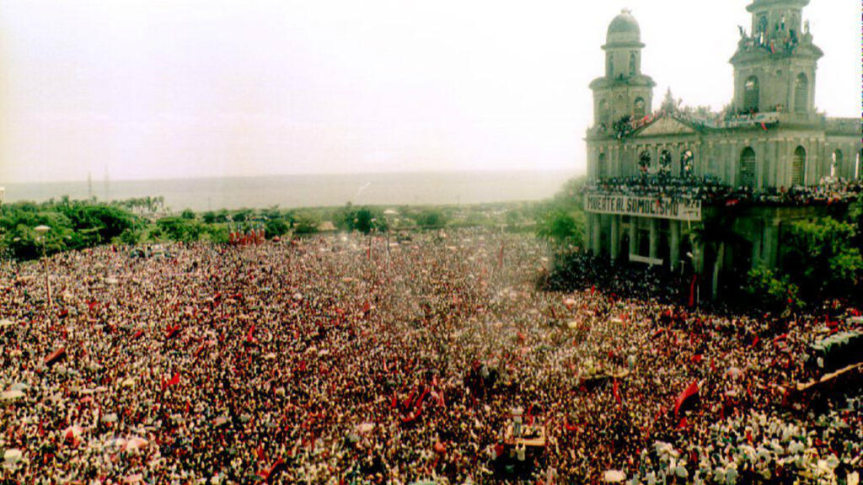
Following the fall of the National Guard barracks in León on July 9 and in Estelí on July 16, the Southeast Front advanced from Rama toward Boaco and Chontales, the National Leadership, from the command center, ordered all military fronts to advance toward the capital. On July 19, the Western Front entered the city, and hours later, the other fronts followed with their contingents. On July 20, the National Directorate called for a historic and massive rally in the Plaza de la República, now called the Plaza de la Revolución, thereby breaking through a reality of repression and death, the will of the people fighting for their liberation, and in those moments the historic and irreversible triumph of the Sandinista Popular Revolution was consolidated.
12. The Final Offensive
Between September 1978 and May 1979, the following events, among others, took place: Attempts by local right-wing forces, in collusion with the U.S. embassy, to secure so-called mediation—with international guarantors—to achieve a peaceful settlement that would allow for the establishment of a “Somocism without Somoza.” This led to the proposal to hold a plebiscite. This initiative had the full support of U.S. power circles, for which they mobilized supranational organizations such as the OAS and leaders of the local right-wing in Nicaragua.
When the mediation failed, they became determined to prevent the overthrow of the dictatorship spearheaded by the FSLN. They proposed intervening with a peacekeeping force, in the midst of the Final Insurrection. Ambassador Laurence Pezzullo and the special envoy
Together with Ambassador Laurence Pezzullo and Special Envoy Bowdler, they worked until July 1979 to ensure that, upon Somoza’s resignation, a military balance would be established between the National Guard and the Sandinistas in a new government. Meanwhile, as part of the preparations for the final offensive, the MPU established the Civil Defense Committees (CDC) to ensure logistics for the war fronts, as well as the safety of residents in areas affected by the fighting. With the FSLN’s monolithic unity in March 1979, arrangements were made to launch the Final Offensive, which would be carried out through the established war fronts.
The Final Offensive was launched on May 28 by the Southern Front, on the border at El Naranjo, and in the city of Rivas on the 29th. The fronts gradually joined forces, engaging in hostilities across each territory with the aim of preventing Somoza’s forces from concentrating their strength in a single location, but forcing them to disperse. The Western Front on May 31 in Chinandega and on June 7 in León; in Jinotepe and Masaya on the 5th and 6th, respectively. The general strike began on June 4, and the insurrection broke out in Managua on June 9 and 10. The Northern Front went on the offensive by laying siege to the barracks in Estelí, Matagalpa, Ocotal, and Jinotega, while guerrilla units launched attacks against barracks and rural garrisons. On June 24, the Masaya barracks fell, and the guards took refuge in the El Coyotepe fortress. Between June 27 and 28, “The Retreat to Masaya” took place.
This allowed forces to be concentrated to liberate the departments of Carazo and Granada. The outlook was bleak for the Somoza regime:on July 9, León fell; on July 16, the Estelí barracks fell. The Southeastern Front advanced from El Rama toward Boaco and Chontales; in Granada, Colonel Francisco Fajardo surrendered.
Although the JGRN leadership had reached an agreement with the U.S. envoy Bowdler to establish a transitional process in which Somoza’s successor (Francisco Urcuyo Maliaños) was to hand over power to the Junta, the very next day after taking power, Urcuyo Maliaños reiterated in his inaugural address that he would remain in power until 1982 and called on the FSLN to lay down its arms. Faced with this situation, the Governing Junta for National Reconstruction—composed of Commander Daniel Ortega, Violeta Barrios, Engineer Alfonso Robelo, Sergio Ramírez, and Moisés Hassan— traveled to León on July 17 to lend legitimacy to the government. Furthermore, the National Directorate, from its command center in Costa Rica, ordered the leaders of the military fronts to advance toward Managua from their respective sectors, while radio communication was maintained until July 18 to call on the National Guard troops to surrender to the guerrilla forces.
Meanwhile, there was a mass desertion and rout of National Guard soldiers and officers, who abandoned their uniforms and weapons and sought to flee the country by various means. Following the entry of the Western Front, the other war fronts began arriving one after another with their contingents in the hours that followed. The next day, July 20, the Joint National Leadership called for a mass rally in the Plaza de la República, which would henceforth be known as “Plaza de la Revolución.” A dark chapter in Nicaragua’s history was drawing to a close, and the Sandinista Popular Revolution was emerging in all its magnitude.
13. The Sandinista Popular Revolution (1979–1990)
The Sandinista Popular Revolution marked the beginning of a new era—the affirmation of national sovereignty as an expression of our people’s determination to build a popular democracy, in which the organization of rural and urban workers ensured effective popular participation in the nation’s political and economic decisions.
The principles of the Sandinista Popular Revolution (RPS) were: “International Non-Alignment” as an unprecedented approach to our international relations and our stance against the bipolarity of that period; a multi-party system as a political openness to ideological diversity; and a mixed economy as an economic model in which all the socio-productive sectors of our people participated.
Through these principles, the people’s human rights—including social, economic, cultural, and political rights, as well as the rights of women, youth, families, children, workers, and peasants—became a reality.
The Legacy of Somocism
Somocism left behind a country that was impoverished, unequal, backward, dependent, destroyed, and plundered. A small number of wealthy landowners and a vast mass of landless peasants landless peasants. In 1970, 5% of the Nicaraguan population accounted for 28% of the national income, while 50% of the population received only 15% of the income, and the middle classes received the remainder. The top 2% of estates occupied 40% of all arable land, and the majority of the rural population had almost no access to secondary schools because they were located in the cities. There were significant disparities in income distribution, land tenure, access to education, and basic indicators of quality of life. During the years 1971–1975, 56.8% of Nicaraguan children under the age of 5 suffered from some degree of malnutrition. The overall mortality rate was 13.9 per 1,000 people, the infant mortality rate was 120 per 1,000 births, and the illiteracy rate stood at 50.3%. These social indicators revealed that approximately half of the Nicaraguan population lived in a state of absolute poverty.
There was a high level of foreign debt, which grew from $255 million in 1972 to more than $1,650 million in 1979. A large portion of these foreign resources was literally stolen by the Somoza clique. There was a gradual drain of financial resources abroad, a contraction in private investment and rampant inflation, along with the theft of the country’s financial reserves, which were taken by the Somocistas, leaving a country in ruins that needed to be rebuilt—which was the Revolution’s first major task.
Social and Political Measures of the JGRN
One of the first measures taken by the Governing Junta for National Reconstruction (JGRN) was to publish the Fundamental Statute of the Republic of Nicaragua as the supreme provisional law, which repealed the old formal structures of power and laid the foundations for the new institutional order. The executive, legislative, and judicial branches came to be exercised by the JGRN, the Council of State, and the Courts of Justice. The revolutionary state embraced the sovereign and supreme interests of the people and the nation—the interests of the majority sectors, who had always been denied their most fundamental human rights: the right to life, food, education, and health, among many others.
Creation of a New Armed Force
The Revolution abolished the National Guard and in its place created a new army (the Sandinista People’s Army) composed of guerrillas and popular fighters, as well as a new police force (the Sandinista Police), as armed institutions at the service of the homeland and the people—for the first time in our national history.
The People’s Property Area (APP)
Another measure of great economic and social importance undertaken by the Revolution was the creation of the People’s Property Area (APP), which was formed through the confiscation of a large number of companies that had previously belonged to Somoza and the Somocistas, who had amassed vast fortunes through plunder, theft, and corruption. The new government, in an act of historical justice, transferred them into the hands of the people, and the profits were used for the benefit of the people. By mid-1980, the APP included approximately 90 industrial enterprises and more than 2,000 agricultural and livestock production enterprises. All of them were tasked with achieving import substitution while simultaneously increasing export categories.
Redistribution of Wealth
Likewise, the Revolution promoted a policy of equitable redistribution of wealth; a policy of wage adjustments was established in favor of lower-income workers, with a focus on the productive sectors. Furthermore, price controls were implemented on basic goods to prevent inflation from undermining the redistribution of national wealth among all Nicaraguans.
Education
The National Literacy Crusade took place from March 23 to August 23, 1980. Over the course of five months, as a result of this great educational and cultural liberation effort, illiteracy was reduced from 50.3% to 12.9%.
Formal education was declared free and universal at all levels, with enrollment doubling in the early years of the revolution. Enrollment grew from 501,660 students in 1978 to 1,127,428 in 1984, including higher education; the number of teachers in the education system rose from 12,706 in 1978 to 53,398 in 1984. Consequently, the number of technical staff at the various educational levels—secondary, higher, and graduate—increased to more than 40,000.
Health
On August 8, 1979, the Governing Junta for National Reconstruction enacted a law establishing the Unified Health System, which brought together all the country’s medical institutions under the direction of the Ministry of Health. By establishing this system, the government committed to providing free medical care to the entire population, to establishing hospitals and clinics in all regions of the country, and to implementing massive campaigns to eradicate endemic diseases and prevent epidemic diseases. The country was divided into nine regions to decentralize services and facilitate health administration.
In 1980, the under-one-year-old infant mortality rate was estimated at 101.7 per 1,000 live births. By 1982, this figure had fallen to between 70 and 80 per 1,000 live births, and this downward trend continued in the following years. Health became the second pillar of popular mobilization after the National Literacy Crusade (CNA), strengthening the growth of health initiatives through the development of the Popular Health Days (JPS) throughout the country. Thanks to the efforts of the Sandinista government and the solidarity and support of friendly governments, new hospitals—some of them fully equipped—were built in several departmental capitals.
Agrarian Reform
Another very important social measure was the Agrarian Reform Law, enacted by Decree No. 6 of July 20, 1979. This decree established the Ministry of Agricultural and Livestock Development, which was tasked with revitalizing the Nicaraguan agricultural sector. Thus, on July 27, 1979, the Governing Junta, through Decree No. 26, established the Nicaraguan Institute of Agrarian Reform (INRA).
In Nicaragua, the nature of the Agrarian Reform was determined both by the need to develop its productive structures efficiently and strategically to meet the demands and aspirations of different sectors within the country, especially the peasants. The Agrarian Reform Law sought to increase the production of staple grains, while also boosting export crops, which were vital for Nicaragua’s foreign exchange earnings. It responded to peasants’ aspirations to own land, while at the same time protecting the property rights of medium-scale and large-scale producers.
Urban Reform
As one of the JGRN’s priorities, the improvement of the quality of life for Nicaraguan men and women, the Urban Reform was carried out, benefiting some 200,000 low-income residents by providing them with drinking water and electricity; the construction of urban housing for low-income sectors was increased; in 1984 alone, 4,824 public housing units were built—not counting housing constructed for peasant settlements.
Social Security
The revolutionary process developed the necessary strategies to guarantee social security for the working class and Nicaraguans in general. Thus, in 1982, the responsibilities of the Ministry of Social Welfare were transferred to the INSS, transforming it into a new agency called the Nicaraguan Institute of Social Security and Welfare (INSSBI). Under this new structure, programs were developed for child care, comprehensive rehabilitation (care for people with disabilities), protection for the elderly, and family guidance and protection.
Women’s Rights
The Sandinista Popular Revolution radically transformed the social relations that existed prior to 1979, creating the political conditions to eliminate the ideological, legal, and social manifestations that sought to perpetuate discrimination against women. Progress in both areas was an indispensable condition for achieving the full emancipation of women and guaranteeing true equality of opportunity. Women participated fully in all areas, tasks, and efforts that the moment demanded (defense, productive work campaigns, health, education, etc.).
Rights and participation of young people
The participation of young people was decisive for the triumph of the Revolution. Subsequently, it was crucial for its consolidation and defense, especially in educational, cultural, and national defense campaigns. The Revolution guaranteed the freedoms and rights of young people, and they defended the Revolution to safeguard their own rights and those of the people; thus, their involvement spanned many revolutionary tasks (health campaigns, education, defense, etc.). At the same time, young people gained rights in all aspects (widespread access to scholarships at various levels, the right to political participation, among many others).
Political Measures
When it is asserted that the Sandinista Revolution established representative and electoral democracy in Nicaragua, this can be viewed from various perspectives. It required the creation of a new political and legal framework following the abolition of the 1974 Constitution. Before the 1987 Constitution was established, substantial reforms were enacted—such as the Political Parties Act of 1983 and the Electoral Law of 1984—so that Nicaraguan society, through its various political currents, could claim as its own the right to participate in the country’s first general, multiparty elections. In November 1984, the first free elections were held in Nicaragua, with seven political parties participating. The U.S. administration tried to prevent these elections, which went ahead and resulted in a victory for the FSLN with 61% of the total vote.
These elections took place against the backdrop of the military aggression by the counterrevolution, supported by the U.S. administration of Ronald Reagan. Furthermore, throughout 1986, a broad campaign of public consultations was conducted on sociopolitical issues to bring to life the 1987 Constitution, which would be drafted by the National Constituent Assembly. To this end, countless open and public town hall meetings were held.
For this process of public consultation, the National Assembly, led by Commander Carlos Núñez Téllez, organized a series of meetings in which the public could express their opinions on which issues to include and how to incorporate them into Nicaragua’s new Constitution. In accordance with constitutional law, this Magna Carta declared that Nicaragua was a participatory democracy rather than a representative one, as had been customary in previous constitutions. Furthermore, our new constitution enshrined and institutionalized the country’s multi-ethnic, multilingual, and multicultural character.
U.S. Counterrevolutionary Aggression
With the arrival of the Republican administration of Ronald Reagan, who took office in January 1981, the aggression against our revolution intensified. The first sign of Reagan’s intention to reverse the Nicaraguan revolutionary process came with the cancellation of the final $15 million of the $75 million that Carter had granted to Nicaragua on the condition that the private sector benefit from 60% of that loan.
The Contras in Honduras
In late 1981, Reagan approved a CIA plan in Honduras to create the Contras, an army of 1,500 paramilitary terrorists, who launched their first organized operations by attacking Sandinista facilities located on the Nicaraguan border with Honduras. In early 1984, they mined the country’s main ports; simultaneously, the Contras launched their deepest incursion into Nicaraguan territory yet, with 6,000 Contras advancing as far as Region V, where they remained in this area for several months. During this offensive, several towns in the north were attacked, as well as 40 state-owned enterprises, resulting in the deaths of 400 cooperative members. The military situation at that time was described by the FSLN National Directorate as “extremely difficult.” However, during this period the Sandinista Army laid the groundwork for the counteroffensive: the establishment, in late 1983, of the two-year Patriotic Military Service (SMP) for young people turning sixteen, the formation of Irregular Combat Battalions (BLI), but especially the adoption of heavy weaponry—were the elements that made it possible to halt the Contras’ advance, which suffered more than 700 casualties in just a few months. Between 1985 and 1988, the clashes between the Contras and the Sandinista People’s Army were extremely bloody.
From April 1988 until the 1990 elections, the military operations carried out by the Contras consisted mainly of terrorist acts: mining roads and ports, attacks on peasant cooperatives, destruction of state-owned enterprises, ambushes of civilian vehicles, and the destruction of health centers, schools, and Child Development Centers (CDI) in rural areas. Although the U.S. Congress had, in 1988, had suspended covert aid to the Contras through the CIA, Reagan secured illegal funds to sustain them through the so-called Irangate scandal. This not only laid bare the criminal war against Nicaragua but also the various illegal financing mechanisms used by the Empire. In this context, between 1988 and 1989, the Sandinista People’s Army launched a major and victorious offensive, including Operation Danto 88, which led to the strategic military decline of the counterrevolution and, under these circumstances, compelled the parties in the negotiation process to sign the Sapoá Accords.
Nicaragua’s Victory in International Law
On April 9, 1984, at the Peace Palace in The Hague, Nicaragua filed a lawsuit against the United States of America with the International Court of Justice (ICJ). This marked the beginning of the most controversial case ever heard by the ICJ and the most famous case ever brought before an international tribunal.
Convinced that the Reagan administration’s policy constituted a violation of the most fundamental norms and principles of international law—upon which international peace and security rest—on April 9, 1984, Nicaragua filed its complaint with the ICJ, stating its grounds: “The United States of America is using military force against Nicaragua and interfering in its internal affairs in violation of its sovereignty, territorial integrity, and political independence, as well as the most fundamental and universally recognized principles of international law.”
On April 6, 1984, three days before Nicaragua filed the complaint, the U.S. government learned of Nicaragua’s decision to initiate proceedings before the ICJ. Secretary of State George Shultz sent a letter to the Secretary-General of the United Nations, attempting to use legal technicalities to prevent Nicaragua from filing its complaint. Nevertheless, on November 26, 1984, the International Court of Justice announced its decision, admitting Nicaragua’s complaint and thus clearing the way to proceed with the case. On June 27, 1986, in the afternoon in the Netherlands and at dawn in Nicaragua, the full Court read, in open session, its final judgment on the case. None of the many judgments had generated as much anticipation as the one delivered that day. The ICJ’s judgment ruled in favor of Nicaragua and unequivocally condemned the United States, ordering it to pay $17 billion in compensation. The Court’s decision, reasoned in 291 paragraphs and summarized in 16 operative paragraphs—which we will omit for reasons of space and time—established the various violations committed by the Ronald Reagan administration against Nicaragua, in clear violation of international law. Following the historic ruling, which the United States hastened to dismiss, the ICJ set the deadline for submitting the Report on Compensation for March 29, 1988. Nicaragua submitted it on that day. The Report begins with the following statement:
“No monetary compensation, whatever its amount, can truly compensate Nicaragua for the devastation caused on its territory by the unlawful conduct of the United States. Such compensation cannot bring back the dead, nor can it repair the physical and psychological harm suffered by a population that has endured a ruthless campaign of armed attacks and economic strangulation for more than seven years… The overall consequences of such a policy on a small country are simply incalculable.”
The Sandinista Government’s Struggle for and Contributions to Peace, 1987–1990
The struggle for peace to halt U.S. aggression in Nicaragua and Central America was an initiative of the Sandinista government led by Commander Daniel Ortega from 1981 to 1990.
This included the Manzanillo talks spearheaded by Nicaragua, as well as the creation of the Contadora Group on January 5, 1983—an initiative by countries such as Mexico, Venezuela, Colombia, and Panama—which sought to create conditions to prevent the regionalization of the conflict in Central America and to foster peace, development, and democracy. But it was ultimately the Esquipulas Peace Agreements and Nicaragua’s Contribution (1987–1990) that bore fruit on that path toward peacebuilding. These took the form of a series of meetings, which the U.S. attempted to boycott through certain Central American leaders. However, the diplomatic teams of Presidents Daniel Ortega and Vinicio Cerezo of Guatemala proved more adept, and in an extraordinary maneuver, both foreign ministers completed the drafting of the Esquipulas II Declaration. Esquipulas II constituted a political project for Central America, based on the principles of independence and national sovereignty in the face of interference by third-party states.
Sapoá Accords: The by the Sandinista government toward peace and reconciliation
The Government of Nicaragua, in its eagerness to advance the peace process, unilaterally adopted measures that contributed to the negotiations within Nicaragua between the government and the Contras through the Sapoá Agreements. The Sapoá negotiations established the first internal agreements aimed at defining a peaceful end to the war in Nicaragua. On February 13 and 14, 1989, a fourth meeting of Central American presidents was held at the Costa del Sol resort in El Salvador; once again, they reviewed the progress of the peace process in Central America and adopted joint decisions within the framework of the Esquipulas II framework document.
Timeline:
The Sandinista Popular Revolution (1961 –1990)
October 4, 1912 – Death of Benjamin Zeledón Following the landing of U.S. Marines who sought to prevent the fall of Adolfo Díaz and Emiliano Chamorro, Benjamin Zeledón organized a small patriotic army and later fell in battle while defending his ideals.
1927–1933 – The Struggle of General A. C. Sandino The new invasion by U.S. Marines took place against the backdrop of a war between liberals and conservatives. General Sandino decided not to capitulate in the face of the betrayal by traitorous politicians in the Pact of Espino Negro. Thus, through his struggle, he changed the nature of the war; from a war between Liberals and Conservatives to a guerrilla war for the liberation of Nicaragua, forming the Army in Defense of National Sovereignty against U.S. intervention, emerging victorious in 1933.
February 1934 – Assassination of General Sandino On February 21, after a dinner with Sacasa, as he was descending Tiscapa Hill, he was treacherously captured and assassinated on the orders of Anastasio Somoza García, chief of the National Guard.
1936 – Beginning of the Somoza Dictatorship An Anastasio Somoza García, through a coup d’état directly supported by the United States and the National Guard, seized power and established a dictatorship that would last more than four decades.
1956 – Execution of Anastasio Somoza García Somoza’s death occurred following an act carried out by the young poet Rigoberto López Pérez, at the Casa del Obrero; four of the five bullets struck the dictator’s body.
1960–1963—Founding of the FSLN A group of young people, including Carlos Fonseca Amador, Tomás Borge, Francisco Buitrago, José Benito Escobar, Germán Pomares, and others, decided to form a political-military revolutionary movement.
1963—The Raiti-Bocay Guerrilla Operation A guerrilla cell crossed from Honduras into the jungle region of Nicaragua; due to various problems encountered on the ground, guerrilla operations faced significant challenges; Jorge Navarro, Modesto Duarte, Francisco Buitrago, and others were killed in action.
1967 – Pancasan Guerrilla Campaign This marked the beginning of a new offensive against the dictatorship. Between 60 and 70 fighters managed to gather in the areas near Mount Pancasan; local authorities reported the guerrillas’ presence; the local militia located the guerrilla camp, and on August 27, Commander Silvio Mayorga and 12 other comrades were ambushed.
1969 – FSLN Historical Program The armed struggle was defined as the only way to overthrow the regime; objectives such as national liberation were set, along with the establishment of a government that would eliminate exploitation and injustices, and strategies were outlined to lead the movement to ultimate victory.
December 27, 1974—Seizure of Chema Castillo’s House This action broke the period of quiet buildup of forces (1970–1974), the Juan José Quezada commando unit, composed of 14 male and female combatants, neutralized the National Guard soldiers and took hostages, including high-ranking Somoza officials and ambassadors; after three days of negotiations, Somoza yielded to the guerrilla commando’s demands.
1977 – October Offensive It consisted of a series of attacks on the barracks of the Somoza National Guard in San Carlos and Masaya, as well as containment ambushes such as the one at San Fabián on the Ocotal-Dipilto highway; the casualties inflicted on the National Guard revealed the vulnerability of the Somoza regime.
February 19–26, 1978—Monimbó Uprising The residents of the Monimbú neighborhood in Masaya rose up against the Somoza dictatorship. The first demonstrations were suppressed by the National Guard; however, this did not prevent the residents from continuing their uprising. The actions were supported by the FSLN, led by commanders Camilo Ortega, Hilario Sánchez, Ulises Tapia Roa, and others.
August 22, 1978—Assault on the National Palace A commando unit of 25 fighters seized the National Palace and took most of the legislators hostage; some were relatives of Somoza. With this action, the FSLN achieved its objective: the release of valuable comrades who were imprisoned—including Commander Daniel Ortega—and the publication of a statement denouncing the dictatorship’s massacres and abuses.
1979 – Final Offensive The offensive began on May 28 with the Southern Front on the border at El Naranjo; the Western Front joined on May 31 in Chinandega; the Northern Front besieged several National Guard barracks, and finally, the Southeastern Front advanced from Rama to Boaco and Chontales.
July 19, 1979—Triumph of the Sandinista Revolution Hours after the Western Front entered the capital, the other war fronts began arriving. This unprecedented event marked the beginning of a new chapter in Nicaragua’s history: the Triumph of the Sandinista Popular Revolution.
Nicaraguan President Daniel Ortega Saavedra agreed to move up the Nicaraguan elections to February 25, 1990, and to guarantee the free operation of the media. In Tela, Honduras, on August 5-7, 1989, the Central American presidents met again to reaffirm their firm commitment to fully comply with all the commitments and agreements reached during the various summits held between 1987 and 1989. Through the Central American agreements, it became clear that the pursuit of peace, democracy, and development were tasks that fell, to a greater or lesser extent, to all countries in the region. Within this framework, Nicaragua was the first to fulfill all commitments to bring peace to its territory through the Sapoá agreements, the holding of early elections in 1990, and the creation of all the conditions necessary for understanding and reconciliation within the country.
Nicaragua: The 1990 Elections
After nearly a decade of conflict, the groundwork was being laid to hold elections in accordance with Nicaragua’s peaceful will within the framework of the Central American agreements.
Internally, the country faced a severely damaged economy, with its economic infrastructure nearly destroyed as a result of the criminal war and the economic blockade imposed by U.S. imperialism. In this situation, Nicaraguan society began preparing on April 24, 1989, for the elections scheduled for February 25, 1990. The United States exploited the electoral process, as an alternative means to overthrow the government of the Sandinista Revolution, since they had failed to achieve their objective by military means through the Contras.
At the end of the decade, in the final days of December 1989, the United States demonstrated that it was not willing to abandon the use of military force by invading Panama. Faced with this warmongering stance, the Sandinista Revolution, always sought the necessary ways, means, and strategies to respond to the national situation through peaceful and democratic means; however, Yankee imperialism, along with its puppets in the region, sought ways to attack the Revolution in various forms.
Likewise, the elections of February 25, 1990, were not the first held during the Revolution; the Sandinista government had twice submitted to the will of the people, making clear to the people and the world its commitment to democracy.
President Daniel Ortega publicly acknowledged the results by congratulating Violeta Barrios de Chamorro. Two days later, on February 27, negotiations began between the FSLN and the National Opposition Union (UNO), with the participation of former U.S. President Jimmy Carter, João Clemente Baena Soares (Secretary General of the Organization of American States, OAS), and Elliot Richardson, representative of the Secretary-General of the United Nations (UN), with the aim of ensuring a peaceful transition in the country. Among other things, it was agreed that General Humberto Ortega Saavedra would remain as commander-in-chief of the Ejército Popular Sandinista (EPS), that the EPS would be downsized, and that the Contras would be disarmed; the negotiations concluded on March 27, and were dubbed the “Transition Protocol.” The inauguration of Violeta Barrios de Chamorro, a representative of oligarchic and pro-American interests, took place two months later, on 5 of April of that same year at the Rigoberto López Pérez Stadium, marking the beginning of the neoliberal hell in Nicaragua.
Conclusions
In conclusion, we reaffirm the following points:
– The FSLN was the principal architect and protagonist of the Sandinista Popular Revolution; amid difficult experiences, such as the loss of valuable cadres in the events at Pancasán and in the urban structures, it was able to survive thanks to the stoicism and conviction of leaders such as Carlos Fonseca Amador, who, under those circumstances, were able to assess their limitations and adapt an appropriate strategy of struggle to Nicaragua’s conditions.
– The revolutionary triumph of 1979 was driven, above all, by the maturity of the subjective conditions—a result of the perseverance shown by various political and social actors who, through diverse organizational forms (labor unions, student groups, women’s organizations, artistic collectives, community groups, etc.), contributed to the development of social consciousness, opposing the system’s manipulations from their respective positions. They sowed the seeds that allowed other forms of struggle—such as the revolutionary armed struggle—to gain the necessary momentum. This proves the adage that, while individual leaders play a fundamental role in guiding processes, revolutionary victories are only possible when backed by a vast popular movement capable of shaking the system to its core. This is how the revolutionary victory of July 1979 was achieved.
– The Sandinista Popular Revolution marked the beginning of a new life and the affirmation of national sovereignty as an expression of our people’s determination to be builders of popular democracy, where the organization of rural and urban workers ensured the people’s effective participation in political and economic decisions.
– Amid many adversities resulting from the blockade and military aggression orchestrated by the U.S., the Sandinista Popular Revolution fulfilled its historic program. The people’s human rights, as well as their social, economic, cultural, and political rights—the rights of women, youth, families, workers, and peasants were realized. The Historic Program, written in 1969 in Commander Carlos’s own handwriting, represented (and represents) the ideological foundation and strategic challenges of the Sandinista Popular Revolution—a process that unites all the aspirations of the Nicaraguan people in their struggle for an independent, free, and sovereign homeland.
The Sandinista Popular Revolution 1990-2020
“Peace is the only thing that allows us to prosper, to work in peace, to feel secure, to thrive, and to move forward. That Peace as a Treasure and as a Right of Humanity, and of the Nicaraguan people. We, from Free Nicaragua, from Blessed Nicaragua, proclaim our Right to live in Peace!” Comrade Rosario Murillo, August 29, 2022.
“By fighting for peace, we will continue to fight for life; we will continue to fight against poverty; we will continue to fight for health and for the education of our people. This is a sacred commitment […] before God and before our people, we raise our hands and swear that we will fulfill our duty to contribute to this struggle for peace, for security, for life—for all Nicaraguans. Comandante Daniel Ortega, October 15, 2024.
Introduction
On April 25, 1990, a historic event took place that had never before occurred in the country’s history: a revolutionary party in power peacefully handed over the government, respecting the will of the people, despite having control of all state resources. This marked the beginning of the Neoliberal Period, which lasted until 2007.
During this time, the FSLN became the opposition party, leading protests against the anti-popular social and economic measures of the neoliberal governments. However, despite the many maneuvers and obstacles—including electoral fraud—the FSLN returned to power in 2007, ushering in what is known as the second phase of the Sandinista Popular Revolution (RPS), which continues to this day.
In this unit, we will examine the most significant events and developments during the 16 years of neoliberalism—the factors and events that enabled the FSLN’s return to power in 2007. In addition, we will examine the political and social measures that allowed the Government of Reconciliation and National Unity to consolidate its power through 2018. That was the year in which internal extremist factions, in alliance with U.S. power circles, chose to unleash coup-driven violence in an attempt to bring down the Sandinista project in its second phase.
Background Information
The signing of the transition protocol was one of the events that marked the transfer of power following the results of the 1990 elections. The agreements provided for the disarmament of the counterrevolution, the continuation of the Police and the Army as the nation’s armed forces, and respect for and legal security regarding the property granted by the Sandinista Popular Revolution to dispossessed sectors.
The agreements signed by the Revolution and the UNO made it possible to implement Laws 85 and 86, through which 1 million manzanas of land were legalized in favor of 47,000 peasant families between 1990 and 1996.
The rise of neoliberalism in Nicaragua occurred within a global context of a strengthening right wing; following the dissolution of the USSR and the socialist bloc, the United States sought to strengthen its unipolar system, by supporting and financing the right-wing movements it had imposed itself.
The U.S. pressured the UNO government to take measures against Sandinismo, seeking to reduce the size of the army and police and remove high-ranking officials linked to the FSLN. Violeta Barrios initiated the process of dismantling the achievements of the Revolution and adopted a foreign policy of submission to the United States, repealing Law 92, through which Nicaragua had won its case against the U.S. in the Inter-American Court of Justice.
The Transition Protocol
As part of the transfer of power from the FSLN government to the incoming UNO government, a series of events took place in connection with this transfer, beginning with the announcement of the results in February 1990. Among these was the signing of the transition protocol by representatives of the UNO and the FSLN.
This took place amid internal conflicts within the UNO alliance; while some sectors sought to reach agreements with the outgoing Sandinista Popular Revolution government, extremist sectors of the alliance—incited by officials from the U.S. Embassy—sought to dismantle both the institutions established by the Sandinista Popular Revolution and the social advances achieved during the revolutionary decade. This latter faction was known as the “Estadio Group,” led by Vice President Virgilio Godoy, Arnoldo Alemán, and others, supported by the far-right Somocista faction in Miami and some COSEP leaders.
Meanwhile, the so-called “Las Palmas Group,” led by President Violeta Barrios, her son-in-law Antonio Lacayo, and others, opposed an abrupt transfer of power away from the FSLN, as they were well aware of Sandinismo’s political strength and its control over the armed forces and state institutions. This situation facilitated the transition agreements between this sector and the FSLN, with the presence of an OAS delegate, a UN delegate, and former U.S. President Jimmy Carter.
These agreements outlined basic points of agreement, such as: the disarmament of the counterrevolution; the retention of the police and the army as the nation’s legitimate armed forces, subordinate to civilian authority—a process that would lead to their institutionalization between 1992 and 1994; and respect for and legal security regarding the property granted by the Sandinista Popular Revolution—primarily—to the dispossessed sectors. This gave rise to Laws 85 and 86, through which, between 1990 and 1996, 1 million manzanas of land were legally transferred to 47,000 peasant families and demobilized members of the armed forces and the “Contra,” regardless of their origins or ideological positions.
In the months and years that followed, political contradictions emerged, between the reformist liberalism of the Presidency and the extremist neoliberalism of sectors of the UNO, who, entrenched in the National Assembly, maintained a stance opposed to the democratic and participatory approach led by former President Daniel Ortega. The FSLN caucus and a centrist faction maintained a strong stance in defense of the rights of Nicaraguan men and women, succeeding in tempering the extremist positions supported by the U.S. State Department.
It should be remembered that the rise of neoliberal governments also occurred amid a strengthening of right-wing tendencies worldwide. The dissolution of the USSR and the socialist bloc had cleared the way for the U.S. to strengthen its unipolar doctrine in the world. In various countries around the globe, including Latin America and the Caribbean, right-wing regimes emerged and gained strength, and there was a defection of intellectuals and politicians who, until recently, made a testament to their progressive and even revolutionary stance. At the same time, however, other poles of global economic power were emerging; for example, the People’s Republic of China began to pave the way for a new multipolar alternative, which would bear fruit in subsequent years.
Domestically, although the U.S. supported extremist right-wing tendencies, it did not dare to overthrow the UNO government, which it had imposed. At the same time, however, it pressured that government to take measures against Sandinismo. One of these measures was to reduce the army and police to a minimum and to remove the top commanders, who were historically linked to Sandinismo.
Domestically, the government of Violeta Barrios initiated a gradual process of dismantling the social achievements of the Sandinista Popular Revolution, and externally, it pursued a policy of submission to the U.S. Among these actions was the repeal of Law No. 92, through which Nicaragua was upholding the ruling it had won against the U.S. at the International Court of Justice in The Hague between 1984 and 1986.
The FSLN and the popular mobilizations
From the moment it came to power, the government of Violeta Barrios implemented neoliberal policies, impoverishing the population and worsening living conditions. In 1994, the so-called Structural Adjustment Program (ESAF) was established, named for its English acronym. Among the consequences of these economic and social measures were:
§ A reduction in public-sector jobs (from 285,000 in 1990 to 85,000 in 1998)
§ A decline in the purchasing power of wages, as the cost of privatized public services rose
§ The closure of countless small and medium-sized businesses, which could not compete with the large corporations that entered the country after 1990 with the liberalization of the economy.
Added to this were breaches of agreements that affected thousands of demobilized individuals (from the army and the Contras). Compounding these consequences were a reduction in health care and a rise in the price of medicines, as well as a cutback in public education in favor of private education. Poverty skyrocketed to 54% in the city and 63% in rural areas.
The FSLN and Popular Mobilizations
Violeta Barrios implemented the Structural Adjustment Program in 1994; the consequences of this program were: a reduction in public-sector jobs, from 285,000 to 85,000 workers; public services were privatized; and small and medium-sized businesses closed due to their inability to compete with the transnational corporations that entered the country, within the framework economic liberalization, resulting in poverty skyrocketing to over 50 percent.
Protests erupted, led by organizations such as the Frente Nacional de los Trabajadores (FNT), Federación de Trabajadores de la Salud (FETSALUD), and Unión Nacional de Estudiantes de Nicaragua (UNEN). For its part, the FSLN, through its grassroots organization in neighborhoods and communities, bolstered the protests. One of the most emblematic struggles was the fight for the constitutionally mandated 6 percent for universities, which resulted in the deaths of three students between 1995 and 1999.
There were also armed protests by demobilized members of the Army, the Contra, and the Ministry of the Interior, due to the failure of Chamorro’s neoliberal government to fulfill its promises. In 1993, those discharged from the EPS adopted the name Revolutionary Front of Workers and Peasants and seized the city of Estell. That same year in Quilá, a group of re-armed members of the “380” kidnapped legislators and government officials, demanding the resignation of Humberto Ortega as head of the Army; the FSLN responded by kidnapping UNO leaders in Managua, demanding the release of those who had been kidnapped; the situation was resolved through mediation, and from then on, armed protests diminished while peaceful popular protests gained greater prominence.
In response to this situation, workers, students, transportation workers, and peasants organized demonstrations, led by organizations such as the National Workers’ Front (FNT), the Federation of Health Workers (FETSALUD), and the National Union of Students of Nicaragua (UNEN). The FSLN, through its local branches and its cadres within these organizations, supported the social protests. One of the most important struggles was the students’ campaign for the “6%”—protests that resulted in tragic losses, such as the deaths of three students between 1995 and 1999—struggles that ensured the right to free university education was upheld.
But this situation reached its extreme when armed protests broke out, led by demobilized members of the Army, the Contras, and the Ministry of the Interior. These protests were driven by the neoliberal government’s broken promises. The groups were called “recontras” and “recompas,” which later gave rise to the “revueltos.”
The situation became more difficult in 1993, when former EPS members, operating under the name Revolutionary Front of Workers and Peasants (FROC), took over the city of Estelí for several days. This resulted in the deaths of FROC members and civilians.
Another notable incident—in the same year—was carried out by the rearmed group “380” in Quilalí, led by José Ángel Talavera, “El Chacal,” who—in concert with right-wing factions—demanded, after kidnapping legislators and government officials, the resignation of General Humberto Ortega as head of the Army and that of Antonio Lacayo as Minister of the Presidency.
But almost immediately, a commando unit aligned with the FSLN kidnapped the radical leaders of the UNO in Managua, demanding the release of those held captive in Quilalí.
The situation was resolved through the mediation of Commander Daniel Ortega and Cardinal Miguel Obando y Bravo, who managed to ensure the physical safety and freedom of the hostages by intervening directly with the parties involved, without their demands being met. From then on, armed protests diminished, while peaceful popular protests grew in scope.
However, at the same time, within the framework of U.S. interference, since 1992 the United States Agency for International Development (USAID) has been promoting and financing nongovernmental organizations (NGOs). These organizations were aimed not only at spreading their reactionary values and political ideas under the guise of social projects, but also at dividing and neutralizing the leadership of Sandinismo as the dominant political force.
The 1996 Elections and the Continuation of the Neoliberal Cycle
Arnoldo Alemán of the Constitutionalist Liberal Party expanded his social base through the support of pro-Somoza reactionaries in Miami, other anti-Sandinista sectors, and the distribution of handouts to certain poor segments of the population; this enabled him to become the FSLN’s strongest opponent in 1996.
The electoral process was rife with irregularities; the vote count and the results were delayed, with ballot boxes and ballots thrown into the ditches—all in an effort to prevent an FSLN victory by any means necessary. In his statements that year, Comandante Daniel denounced these actions and said that although he did not consider the elections to be legitimate, he would accept the result.
Arnoldo’s government was a combination of the continuation of Violeta’s neoliberal policies and high levels of corruption and plundering of state assets. In the subsequent elections of 2001, the PLC fielded Enrique Bolaños as its candidate, against a backdrop of rampant corruption and political and social instability caused by the widespread poverty afflicting the Nicaraguan people. Thanks to a series of maneuvers, the results favored the PLC, and Bolanos assumed the presidency; following an internal split within the PLC, Bolanos brought Arnoldo Alemán to trial on corruption charges, and Alemán was convicted. With that trial and the third term of neoliberal government, that dark chapter in Nicaragua’s recent history came to a close.
The 1996 Elections and the Continuation of the Neoliberal Cycle
By 1995, the political forces that would compete in the 1996 elections were taking shape. Among the extreme right, the parties supported Arnoldo Alemán were in the so-called Liberal Alliance.
Alemán, leader of the Constitutionalist Liberal Party (PLC), used his position as mayor of Managua—based on the resources generated by the tax plan, the support of reactionary Somocists in Miami, and other anti-Sandinista sectors— enable him to expand his social base by distributing handouts to some of the poorest sectors of the population.
In that 1996 electoral context, although there was a range of political forces, the struggle took place between this latter force and the Sandinista National Liberation Front (FSLN), led by Commander Daniel Ortega.
The electoral process was rife with irregularities, all aimed at preventing an FSLN victory. The vote count results were released very late; a large number of ballot boxes and ballots were found discarded in riverbeds and garbage dumps; and the Supreme Electoral Council (CSE) turned a deaf ear to the complaints. The conduct of the election observers was ambiguous; they commented on the fraudulent practices but refused to issue an official statement.
Faced with this situation, Commander Daniel, in addition to denouncing the aforementioned irregularities, declared that although they did not consider these elections—which declared Alemán and the PLC the winners—to be legitimate, they would accept the results.
Alemán’s administration was characterized first by its continuation of the previous government’s neoliberal policies, but also by high levels of corruption. Regarding the former, the market economy was strengthened, and resources were privatized and placed in the hands of private and foreign companies.
Regarding the latter, the exposure of corruption became evident in the so-called “checazos” or “tarjetazos”—through which private bills were paid using public funds—and the placement of public funds in private accounts outside the country. International aid funds suffered the same fate, including those intended for victims of Hurricane Mitch in 1998.
Among the most significant political events of this period were the 1999 agreements, which allowed for partial reforms to the Constitution and, primarily, to the Electoral Law. This resulted in a balanced distribution of positions among the main political forces (FSLN and PLC) for positions in the main branches of government: the Supreme Electoral Council (CSE) and the Supreme Court of Justice (CSJ). The percentage required to win in the first round was lowered, and legislative and municipal elections were separated from the presidential election.
Under these circumstances, the 2001 elections took place. The PLC fielded Enrique Bolaños as its candidate, a member of the oligarchic families and the business-oriented right wing. In a historical context marked not only by allegations of corruption but also by high political and social instability and acute poverty.
The right-wing media, in alliance with representatives of the U.S. Embassy, used the difficult socioeconomic situation of the 1980s as the basis for their attacks, but also used the timely terrorist attack on the Twin Towers in New York in September 2001. Although this attack had been carried out by a right-wing fundamentalist group that was a former U.S. ally, the media portrayed them as “allies” of the FSLN.
The election results favored the PLC and Bolaños as president. Commander Daniel recognized the electoral results. Shortly after assuming the presidency, serious conflicts arose that led to a complete split within the PLC between a faction supporting Bolaños and another supporting former President Alemán. Bolaños and his group brought charges of corruption against Alemán, succeeding in having him imprisoned. The U.S. supported Bolaños on the condition that he prosecute FSLN leaders, reviving the false accusations regarding the application of Laws 85 and 86 of 1990.
However, Bolaños was navigating a very complex balance, as he needed the FSLN’s votes in the Assembly to strip Alemán of his immunity and bring him to trial. Furthermore, as part of the reforms in that context, there was a bipartisan judiciary that prevented him from taking direct action against the FSLN. Nevertheless, Alemán and some members of his inner circle were tried and sentenced to light penalties. In turn, in 2005, the majority in the Legislative Assembly proposed and passed a reform that limited the powers of the executive branch.
Meanwhile, the Sandinistas emerged victorious in the municipal elections, winning a large number of mayoral seats, including that of the capital. The 2006 elections took place with the right divided into two factions: the Nicaraguan Liberal Alliance (ALN), supported by Bolaños and the U.S., and the PLC, led by Alemán. These two groups, along with the Sandinista Front, all ran in the 2006 elections.
The campaign, like previous ones, was dirty and rife with unsubstantiated slander; U.S. officials traveled to the country, stating that if the FSLN won, they would review their policy toward Nicaragua and declared open support for the ALN. The right-wing media used propaganda centered on political manipulation, with arguments such as the return of war and the economic blockade, the suspension of remittances from the U.S., and other forms of disinformation and media manipulation. Everything was aimed at confusing and filling potential voters—who were tired of the promises and broken commitments of the neoliberal.
U.S. Ambassador Trivelli spoke out openly in favor of uniting right-wing forces. He contacted the former mayor of Managua, Herty Lewites, urging him to withdraw from the FSLN ticket and run as a candidate for another political party in order to siphon votes away from the Sandinista Front itself. Despite these adversities, the FSLN, through the Alianza Unida Nicaragua Triunfa (United Alliance for a Victorious Nicaragua), with Commander Daniel as its candidate, emerged victorious, securing 38% of the total vote. This electoral victory paved the way for a new phase of the Sandinista Popular Revolution under conditions different from those experienced in the 1980s.
16 years of impoverishment and social exclusion
In 1990, the FSLN lost the elections and accepted the will of the people. The Sandinista Front lost the government but not power, since the revolution did not stop; rather, it continued to advance from the organized grassroots, defending the revolutionary gains under new circumstances and facing new challenges. The new phase meant fighting every day to defend the achievements of the revolutionary decade, ever since that historic speech by Commander Daniel, which marked the continuation of the Revolution “Governing from Below” .
Privatization of the State: Business leaders took the reins of political power and imposed drastic cuts to investment in the social programs that the revolution had promoted, as well as the privatization of strategic sectors of the national economy, such as the national companies under CORNAP, public services, health care, and education. These changes were aimed at concentrating wealth among the neoliberal elite then in power, which was subject to the dictates of the United States.
Neglect of Peasants: The three administrations eliminated loans and technical support for cooperatives, as a result, small producers were left unprotected against the international market price system. Furthermore, imports of basic products and grains were liberalized, and thus small farmers became increasingly impoverished. Thousands of farmers turned their backs on the land they knew how to work, were uprooted from their world and their rural culture, and thus an incalculable amount of human talent left the countryside.
Rural Exodus, From the Countryside to the City: With the rural exodus, the wisdom of planting and harvesting was gradually lost, and with it, food sovereignty. Peasants arrived in cities that lacked the capacity to accommodate them, following cuts in investment in social programs and the privatization of public services. This further fueled overcrowding and extreme poverty. Many of these peasants swelled the ranks of of the unemployed and cheap labor, serving the neoliberal system.
Unemployment, Maquilas, and International Migration: That army of the unemployed—made up of the city’s impoverished and the farmers who had arrived as part of the rural exodus—had few options; some ended up in the maquilas earning starvation wages, where the majority were women. Others were forced to venture into international emigration—mostly young people—of whom only one in three reached their destination. The rest of the Nicaraguan people were pushed into poverty and extreme poverty, a situation in which seven out of ten Nicaraguans found themselves. Neoliberal poverty spread throughout our people, and battles were fought on all fronts, producing an unprecedented popular response channeled through our instrument of liberation, the FSLN, and led throughout this period by Commander Daniel Ortega in the building of unity among the working classes, which led us to govern once again from the top in 2007 through the United Alliance for a Triumphant Nicaragua.
The Second Stage of the Sandinista Popular Revolution
With a smear campaign financed by the United States and a divided right wing, the FSLN—through the United Alliance “Nicaragua Triumphs” and with Commander Daniel as its candidate— achieved electoral victory, marking the beginning of a new stage of the Sandinista Popular Revolution.
The FSLN’s rise to power signaled a drastic shift in domestic and foreign policy, with values, attitudes, priorities, and social policies in favor of the people; its model centered on the human being, the restoration of their rights, and social justice, guaranteeing free access to services such as health care, education, subsidies, and programs to reduce poverty. Alliances between the government, workers, and the private sector helped ensure stability, economic growth, and an equitable distribution of wealth.
The New Phase of the Sandinista Popular Revolution (2007–2020)
The FSLN’s return to government signaled an upheaval of the neoliberal model that had governed the country for 16 years, in its social, economic, and political dimensions. The new government represented not only a change in course and political direction, but also a shift in values, attitudes, priorities, governing style, power relations, and social policies in favor of working people.
The policy of the Government of Reconciliation and National Unity (GRUN) since 2007, led by Commander Daniel Ortega and Comrade Rosario Murillo, centered on a model of restoring rights and social justice, with an emphasis on free health care and education, subsidies, and poverty alleviation programs. The model was based on alliances between the government, workers, and the private sector, to guarantee stability and ensure economic development and the redistribution of wealth among the broad masses impoverished by neoliberal policies.
Its fundamental pillars were:
Free Health Care and Education: The GRUN immediately re-nationalized education and health care, eliminating fees for public services and implementing countless programs, including school lunches for all schools in the country.
Model of Partnerships for Prosperity: The government fostered a partnership among local and national governments, business leaders, workers, and social movements to implement economic programs.
Restoration of Rights: Notable programs included the Productive Food Voucher, the social housing plan, and the mass issuance of property titles.
Gender Equity: A balanced gender policy was implemented, achieving 50% female representation in public office and training programs for women, which was reflected in a reduction of the gender gap according to the World Economic Forum.
Infrastructure and Energy: Investment in road infrastructure, the construction of roads and bridges that connected cities with municipalities and municipalities with rural communities, nationwide electrification—which involved extending power lines to the farthest corners of the country—and the construction of new hospitals, clinics, and health centers.
Participation and Security: The reconstruction of parks and public spaces has been promoted, in addition to maintaining high levels of public safety throughout the country.
This approach has sought “comprehensive human development” through direct state intervention in the economy and social protection. But at the same time and in parallel, within the framework of an international vision. It is worth noting that years earlier, in 2004, at the initiative of Cuban President Fidel Castro and Venezuelan President Hugo Chávez, the Bolivarian Alliance for the Peoples of Our America—People’s Trade Treaty (ALBA-TCP) had been established. Subsequently, the CELAC would be created, which entailed broader coordination with the participation of the vast majority of countries in the Americas, excluding the United States.
ALBA emerged as a mechanism for regional integration based on solidarity, cooperation, and complementarity, in contrast to the free trade agreements that generated unfair competition and social inequalities imposed by international organizations such as the International Monetary Fund (IMF) and the World Bank (WB).
ALBA was defined in terms of three levels: the Latin American and Caribbean Union; an agreement on unity through common programs; and a project to build economic and social models that would replace neoliberalism and overcome inequalities.
The Government of Reconciliation and National Unity (GRUN), which had reclaimed the right to self-determination in contrast to the subservient behavior of neoliberal governments, found in ALBA a mechanism to advance these projects, achieving—among other gains—macroeconomic stability and the strengthening of energy sovereignty, with a view to consolidating food sovereignty and and the development of the Caribbean regions. It emphasized regional integration policies aimed at achieving the country’s social and economic development through collaboration with Latin American and Caribbean states and governments. In short, it was a relationship based on balanced trade in which solidarity prevailed among the participating peoples and governments.
The GRUN —which remained in power after the 2011 elections, in which it emerged victorious—broke with the neoliberal framework of previous governments, implementing the National Plan for Human Development (PNDH) and subsequently various plans for human development and the fight against poverty.
Social Measures
Education
In the case of education, it was declared free at all levels, in contrast to the commercial and exclusionary conception of the neoliberal model.
The approach was based on the need to coordinate specific agencies and institutions such as: the Ministry of Education (MINED), the National Technological Institute (INATEC), and the National Council of Universities (CNU). This was driven by a systems-based vision in which all entities are integrated and serve the individual, the family, and the community. The goal is to strengthen and ensure equitable, high-quality education from preschool through college.
In this regard, the following achievements can be highlighted:
§ Quantitative and qualitative expansion of school enrollment in both urban and rural areas, which included new skills and competencies (English, computer skills, and entrepreneurship), as well as innovative mechanisms such as distance learning for middle school and technical high school programs, among others.
§ Promotion of social programs, such as the school snack and backpack programs; the presidential grant for high school graduates; and others.
§ Policies that integrated families into the community and engaged young people, such as the “Yo Sí Puedo” literacy program.
§ Teacher training and professional development. In 2007, 47% of teachers were untrained, (teachers who had not formally studied to become certified educators), which contrasts sharply with the 2% rate achieved by 2020.
§ Investment in school infrastructure to foster a dignified and appropriate environment for the educational process. Between 2007 and 2020, 4,478 new schools were built, bringing total coverage to 9,105 schools; in addition, 984 schools and 28,961 classrooms were renovated.
§ Recognition of the 6% quota stipulated in the Constitution. Public and subsidized universities began working with the government and other public institutions, municipal governments, and other economic and social actors to contribute more relevant academic, professional, and technical expertise to Nicaragua’s human development and economic growth.
§ Among other achievements and initiatives, the following cannot be overlooked: the distance learning program for secondary education; and the technical high school program (since 2013), which involves small and medium-sized farmers in rural areas. This person-centered learning approach has enabled them to study, learn, and prosper.
Health
From 1990 to 2006, neoliberal governments turned health care into a commodity accessible only to a small portion of the population. This resulted in the perverse consequences of service privatization and shortages in hospitals and health centers, denying this human right and shifting the full cost of care and medications onto families, thereby greatly deteriorating the health of the people.
The GRUN, through the Ministry of Health, proposed “a model of comprehensive, human-centered, solidarity-based, equitable, efficient, and effective” health care. First, there was a systematic increase in the budget, rising from 14% of GDP allocated to the health sector in 2006 to 22% of the total budget in 2020.
Regarding infrastructure, according to the MINSA report from 2020, as of that year, 937 health facilities had been built, and 1,137 have been renovated; 19 hospitals (7 regional, 12 departmental), 42 primary care facilities, and 4 specialized care centers. In addition, there were 143 health centers and 1,333 health posts. Along the same lines, with 2,841 community health centers; the network of maternity homes grew from 50 to 178.
For the treatment of serious diseases such as cancer, four specialized centers were established, focusing on both prevention and treatment for affected patients.
We cannot overlook initiatives such as “Operation Miracle,” which, drawing on Cuban–Venezuelan solidarity, made it possible to perform thousands of eye surgeries.
It is worth noting that between 2017 and 2020, 80 mobile clinics were established, thereby providing medical care to millions of people in remote communities, in specialties such as dentistry, cardiology, and gynecology. On the Caribbean Coast, the GRUN promoted the regional health model of the Northern and Southern Caribbean Autonomous Regions (RACN and RACS), where coverage has been expanded while incorporating the ancestral healing knowledge and services unique to our indigenous communities.
Nicaragua is today a successful model in the fight against epidemics; one example of this was the response to COVID-19, where the impact of the pandemic was mitigated without resorting lockdowns or other extreme measures, such as those implemented in other countries.
Labor Rights
Since 2007, the Sandinista economic model has represented an alternative path to economic and social development for Nicaragua, seeking avenues of collective prosperity in response to the impacts of neoliberal globalization, which has generated greater poverty and inequality worldwide. Nicaragua ratified more than 60 international conventions along this path, reflecting the political will to continue working for the protection and benefit of the working classes, as well as a commitment to Nicaraguan families to restore their economic, social, and labor rights.
Among these are the following:
-Enactment of the Minimum Wage Law, with the goal of making periodic wage adjustments based on the nature of each job and ensuring minimum conditions that dignify workers’ participation in the productive process. To this end, a tripartite agreement was established between the government, employers, and workers. This has led to a sustained 198% increase in real wages between 2007 and 2021.
The government has also implemented policies and programs to promote innovation and entrepreneurship through the Dirección de la Economía Creativa y Naranja [Directorate of the Creative and Orange Economy], in collaboration with other agencies and institutions, with the goal of ensuring that Nicaraguans have opportunities to start their own businesses and earn incomes that translate into an improved quality of life; this, in turn, has created new jobs. In 2019, Comrade Rosario Murillo reported that 58,870 new jobs had been created by small and medium-sized enterprises.
Today, labor unions are at the forefront of labor reforms in our country, key players in decision-making as representatives of workers’ interests, in the exercise of economic democracy, but also as defenders of the Revolution. The Ministry of Labor conducts ongoing training on labor issues and occupational safety at various public institutions and private companies to raise awareness about workers’ labor rights as well as their responsibilities toward employers.
Social Security
The GRUN’s good governance policy has expanded the social protection coverage provided by the INSS, improving services and care at the departmental and municipal offices, while also equipping them with better infrastructure, equipment, and technology. A hospital covering all specialties was built for the elderly, named “Porfirio García Ramírez” INSS coverage has been strengthened through various programs. This includes high-quality, high-cost health care services and the sustainability of the insurance system to guarantee pension payments, including reduced pensions. The minimum contribution period required to qualify for a pension was reduced from 750 to 250 weeks, benefiting thousands of Nicaraguans.
In addition, programs targeting victims (people with disabilities, orphans, widows, etc.) resulting from the struggle against the dictatorship and the defense of the Revolution during the period from 1980 to 1990 have been secured.
Water and Sanitation
In recent years, Nicaragua has made significant progress in terms of drinking water coverage. In 2007, Nicaragua had 65% coverage, and by 2020, this figure reached 91%; currently, coverage stands at over 95%.
Meanwhile, regarding sanitary sewer coverage, Nicaragua had 30% coverage in 2007; these figures were increased to 54% by the end of 2020. It is estimated that, with the investment plan secured through 2026, these figures will be surpassed, reaching 80% by 2024.
Electricity Coverage and Generation
Nicaragua has made the right to electricity universal, recognizing it as a human right and a prerequisite for advancing economic, social, and technological development. To put these changes into context, it is important to recall that in 2006, Nicaragua had the lowest electricity coverage in all of Central America. Nicaraguan families were subject to 14 hours of daily power rationing; in other words, more than 3 million Nicaraguans had no electricity in their homes, and access barely exceeded 50%.
Furthermore, 75% of electricity generation was oil-based, and on the Caribbean Coast there was a deficient system relying on diesel-powered plants,which provided only a few hours of power per day. By the end of 2020, coverage of the national power grid was estimated at 98.42%; currently, nationwide electricity grid coverage stands at 99.7%, indicating that from coast to coast and from border to border, Nicaraguan families enjoy electricity service in their homes.
Another significant point to highlight is that, until 2006, the country relied 75% on oil- or bunker (for boats, ships) fuel-based generation; in contrast, today, energy generation is distributed as follows: 16% wind power; 15% biomass; 16% geothermal; 7.56% hydroelectric; and 20% imported energy.
From January through July 2020, 76.6% of power generation came from renewable sources, reducing dependence on fossil fuels.
Road and Highway Development
The expansion of the road network has reached more than 5,540 km of roads, connecting 95% of municipalities to the main network. Notable megaprojects include the Pacific Coast Highway and the historic connection to the Caribbean Coast, road extensions in urban areas, and bridge construction. It is safe to say that Nicaragua boasts the best road transportation system in Central America.
Telecommunications
There has been remarkable growth in telecommunications. Access to telecommunications is a right of all people, which is why the Broadband Program has been launched; its physical implementation is overseen by ENATREL [Empresa Nacional de Transmisión Eléctrica]. In this regard, work is underway to install fiber-optic cables that will connect 91 municipalities.
Healthy Recreation
The Sandinista Government has made healthy and popular recreation a public policy and a community practice, as an integral part of human development. To this end, a modern infrastructure of family recreation centers, entertainment centers, and parks has been created, enabling healthy recreation and leisure for families and communities. During this period, Nicaragua built tourist complexes in various parts of the country, which became attractions for both foreign and domestic, in turn generating new sources of income.
The Right to Sports
During the neoliberal administrations, only $1 million of the annual budget was allocated to sports development; this changed during the 2012–2017 period, when the FSLN government allocated an average of $7 million annually; for the current period, public investment for this purpose stands at approximately $16 million.
In addition, $60 million has been invested in sports infrastructure, as clearly demonstrated by the construction of the new Soberanía National Stadium and other large-scale sports facilities throughout the country. In this way, baseball has been brought to every corner of the country, from the little leagues to the top-tier league, the Germán Pomares League, which is supported by contributions from the national government and municipalities; stadiums have been improved in every department. Support has also been increased for other sports, such as soccer and many others.
The Right to Culture
The promotion of and the right to culture constitute the fulfillment of the commitments, principles, and values embedded in the FSLN’s Historic Program, Section III of which is dedicated to the Revolution in Culture and Education, stating that the Sandinista Popular Revolution “will develop national culture and eradicate neocolonial penetration in our culture.”
At this stage of the revolutionary process, the work begun in the 1980s was continued. National culture was promoted, and creative and artistic interest was awakened, strengthened through ministries, platforms, and educational institutions, including: the Ministry of Family Economy (MEFCCA), the National Institute of Culture (INC), the Rubén Darío National Theater, the Ministry of Youth (MINJUVE), the National Film Archive, the National Institute of Technology (INATEC), Nicaragua Emprende, Nicaragua Creativa, and Nicaragua Diseña. Film screenings in parks, plazas, and communities were encouraged.
New FSLN Term in Office (2012–2016)
The Nicaraguan people’s trust in Commander Daniel Ortega enabled him to win the November 2011 elections by a wide margin over the right-wing PLI and PLC parties. After facing a smear campaign based on unsubstantiated allegations, both before and after the elections, by opposition political parties, Commander Daniel Ortega was sworn into office on January 10, 2012, in Managua.
During this new term, the opposition launched an initially covert campaign against the government, with support from COSEP, members of the Catholic Church hierarchy, and supranational organizations. Comandante Daniel publicly denounced interference in internal affairs by international organizations and nongovernmental organizations that had proliferated during the decade and a half of neoliberalism.
New Term of the FSLN Government (2012–2016)
The FSLN’s social policies, under the leadership of Commander Daniel, enabled the party to garner sympathy and trust among the Nicaraguan people. This allowed it to win the presidential elections in November 2011 by a wide margin, securing more than 62% of the votes cast, to the detriment of right-wing political forces, such as the Independent Liberal Party (PLI) and the Constitutionalist Liberal Party (PLC), which saw a substantial drop in the level of support they had enjoyed in previous terms.
Even before Election Day, opposition political parties, along with nongovernmental organizations, spoke of fraud—despite the fact that, in all pre-election polls, the FSLN consistently emerged as the overwhelming winner. Despite this, sectors of the right circulated rumors and accusations of fraud without evidence. These intensified after the results in favor of the FSLN were announced.
Some international organizations (already known for their lack of impartiality), such as the OAS and the European Union, which participated as observers in the process, criticized that they had, on some occasions, encountered problems gaining access to certain polling stations; however, they emphasized the peaceful and calm atmosphere in which the election took place.
The inauguration took place on Tuesday, January 10, 2012, in Managua. During this administration, opposition sectors—united among the most extremist groups and NGOs— launched a covert and later overt campaign against the Sandinista government, taking advantage of the levels of tolerance established by the GRUN.
This campaign was supported by COSEP leaders and high-ranking members of the Catholic Church hierarchy. Furthermore, supranational organizations became involved. In October 2015, Commander Ortega publicly denounced the political interference of the United Nations Development Program (UNDP) in Nicaragua’s internal affairs, which led to the withdrawal of the resident coordinator in Nicaragua, SilviaRucks, and the UNDP office was downsized by 80 percent.
This situation escalated until February 2016, when the GRUN, through Commander Ortega himself, ordered the official closure of the UNDP programs, while accusing the agency of financing political opponents and distorting data in its reports regarding the reality in Nicaragua. This situation intensified even further by the results of the November 2016 elections, which once again favored the FSLN and the presidential ticket consisting of Commander Daniel and Comrade Rosario Murillo. These results, like those of previous elections, gave the FSLN a parliamentary majority.
Failed Coup Attempt of 2018
The coup attempt that began in April 2018, organized by the right wing with U.S. funding through agencies such as USAID and the NED, used the reforms to the National Social Security Institute (INSS) as a pretext. The actions carried out by the opposition were violent and extremist; they made use of weapons and explosive war devices. These actions were backed by a campaign in opposition-aligned television media and social media, both national and international.
Roadblocks, the occupation of universities, and criminal and vandalistic acts against FSLN activists in various regions were all part of the network of coup-plotting actions. In each of these acts, the CIA’s involvement and the participation of COSEP and certain members of the Catholic hierarchy were evident.
Following these actions, the right wing demanded that the government call early elections and that the president and vice president resign. International organizations subordinate to the U.S. and right-wing Latin American governments supported the Nicaraguan opposition.
After the opposition refused to put an end to the waves of violence, in June the government—with the support of the National Police and the Volunteer Police—decided to dismantle the roadblocks and take control of the universities occupied by gangs.
In November of that same year, Donald Trump signed an executive order declaring Nicaragua an unusual and extraordinary threat to the national security of the United States, and in December of that same year, he signed the Nicaraguan Investment Conditionality Act, known as the “Nica Act” . The coup attempts were defeated thanks to the support of the people; however, their conspiratorial efforts to reignite violence did not cease.
Failed Coup Attempt of 2018
In April 2018, reforms to the Nicaraguan Social Security Institute (INSS) were used as a pretext by the organized right wing to stage protests that came to be led by opposition groups financed both openly and covertly by international organizations such as USAID and the NED. As the days passed, these elements escalated their actions and organized violent demonstrations, which initially clashed with groups of government supporters and later with the police, first using hunting rifles and explosive devices, and eventually even military-grade weapons.
In some extreme cases, they committed heinous acts, such as burning people alive in public. Radio and television media outlets funded by the political right constantly fueled the violence, presenting completely distorted accounts in which they blamed the police for repression and other acts of violence. Added to this were foreign radio stations that hysterically portrayed a situation of chaos, blaming the government for the situation. This was compounded by the erection of roadblocks first on the capital’s main roads, which then spread to other cities and highways across the country.
As the violence unfolded, criminal elements funded by the political right began to join in, committing criminal acts against FSLN activists in the territories, acts of vandalism against institutions and government offices, acts of intimidation and blackmail against neighborhood residents. This situation lasted from April 18 through mid-May, following the pattern of other events such as those in Venezuela in 2013 and Ukraine in 2014.
Amid the unfolding protests, evidence emerged of foreign advisory involvement by organizations such as the CIA in the country. The protesters, reinforced by gangs, seized and barricaded themselves inside some university campuses, a chaotic situation that resulted in hundreds of deaths and injuries.
The COSEP and most of the Catholic hierarchy joined the anti-government actions, offering themselves as mediators for a dialogue between the opposition and the government. During these events, the right-wing leadership made demands such as calling for early elections, while their slogans called for the government’s resignation. This effectively placed them in the position of coup plotters—that is, attempting to seize power through violent means outside constitutional channels.
The government called for calm and the removal of roadblocks to allow freedom of movement and restore the normal functioning of the economy. However, the right-wing’s intransigent stance—amplified through the media outlets under its control— only intensified its calls for violence.
The decision was made, with the support of the population, to regain control of the situation through the National Police—backed by the Volunteer Police (constitutionally authorized)—by dismantling the roadblocks and regaining control of the universities, occupied primarily by “lumpens” paid by the opposition right wing, which is controlled directly by foreign powers.
Commander Daniel Ortega stated on July 19, 2018: “Nicaraguan brothers and sisters, families of this homeland of Diriangén, of Darío, and of Sandino, today—the 39th anniversary of the Revolution’s triumph—is a very special day because, from April to May, from May to June, and from June to July 19, it has fallen to us once again to defend peace for all Nicaraguans.”
Supranational organizations under the control of U.S. power circles, such as the OAS and the IACHR, as well as the right-wing governments of Central America, sided with the coup plotters. In their investigations, they ignored the ballistics reports and other evidence presented by the police, instead siding with the distorted accounts of the media and right-wing leaders.
These international organizations, in line with U.S. directives, hostile toward the GRUN, created a so-called “Group of Independent Experts,” linked to the OAS General Secretariat and the IACHR, which proceeded to conduct an investigation—using the coup plotters as its primary source—to produce a sort of “white paper” condemning the government’s repressive actions “against peaceful protesters.”
The government, acting in accordance with our Constitution and its laws, proceeded to shut down all media outlets involved in the failed coup attempt. At the same time, it arrested some of the directors of these outlets after confirming their direct participation in the coup attempt. Similarly, some of those responsible for the atrocious crimes committed against the population and against members of the National Police were captured and prosecuted.
Some of the masterminds managed to flee the country, evading justice, and joined the international campaign against the GRUN. In solidarity with the failed coup plotters, in November of that year, U.S. President Donald Trump signed an “executive order” declaring Nicaragua an “unusual and extraordinary threat to national security” of the United States.
In December, he signed the Nicaraguan Investment Conditionality Act, known as the “Nica Act,” which imposed sanctions against the government of the Sandinista National Liberation Front (FSLN) and aims to limit Nicaragua’s access to international loans. Various countries, including the European Union—following policies set by the United States—supported and financed members of the Nicaraguan opposition.
In June 2019, 56 of the detainees were released, including some media directors. The economic sanctions imposed by countries such as the United States, Canada, and organizations such as the OAS and human rights groups remained (and remain) in place against the Nicaraguan government. This situation stems from the frustration over the attempted coup that was thwarted, due to popular support. The political right, frustrated by its successive defeats in the aforementioned electoral processes, resorted to violence with the support of certain Catholic Church leaders, COSEP, NGOs, and the direct interference of U.S. imperialism.
The NGOs themselves played an active role; they were sanctioned and declared illegal, as they, along with members of the Church, served as a conduit for funneling resources and even supplies to the coup plotters. Despite their defeat, the conspiracies and attempts to unleash violence once again did not cease; these involved some priests and Church leaders, necessitating legal action against them.
The criminal uprising left a trail of material, economic, and social destruction that profoundly affected the country’s economy. More than 500,000 jobs were lost, and buildings and monuments damaged by the criminal rampage had to be rebuilt. But the hardest blow was the loss of more than 300 lives, and hundreds of people were injured, most of them innocent victims. In addition, dozens of police officers and Sandinista militants were murdered in the regions, most of them simply for proudly carrying their FSLN membership cards.
Timeline
The Second Sandinista Popular Revolution (1990–2020)
1990—The Beginning of Neoliberalism The arrival of Violeta Barrios marked the beginning of the neoliberal period; her government began a process of dismantling the state and privatizing public assets. She also adopted a foreign policy of submission to the United States.
1990—Signing of the Transition Protocol The FSLN and the UNO signed an agreement that provided for the disarmament of the counterrevolution and the continuation of the National Police and the Nicaraguan Army as guarantors of the nation’s security and sovereignty. Among the key points of the agreement was the assurance that the legal security of the assets granted by the Sandinista Popular Revolution to the dispossessed sectors through various laws would be certified.
1991—Repeal of Law No. 92 The government of Violeta Barrios decided not to proceed with the legal case against the United States—which Nicaragua had won at the ICJ—and to forgive the $17 billion debt imposed by the Court for damages caused by the war of aggression in the 1980s, repealing Law No. 92, thereby renouncing to pursue the lawsuit it had won against the U.S.
1994 – Structural Adjustment Program The program implemented by the government of Violeta Barrios had negative consequences, such as a reduction in public sector jobs; it also reduced the purchasing power of wages; public services were privatized; small and medium-sized businesses closed; and poverty skyrocketed to over 50%.
2001—Presidential Elections Enrique Bolaños, a member of the country’s oligarchic classes and the PLC candidate, won the election and became Nicaragua’s new president; his administration further deepened the neoliberal policies developed by his predecessors.
2002—Internal Problems in the PLC and Corruption Scandals Internal contradictions within the PLC led to the party’s split into two factions: those who supported Arnoldo and those who supported Bolanos. Following these events, Bolanos brought Arnoldo to trial on corruption charges, and Arnoldo was sentenced to light penalties.
1996—Presidential Elections Following an electoral process riddled with irregularities, Arnoldo Alemán became president; his administration represented the continuation and radicalization of the neoliberal model, accompanied by countless cases of embezzlement of the nation’s public resources and corruption at all levels.
1995–1999—Social Protests Following privatization policies and budget cuts for universities under the governments of Violeta and Arnoldo, workers, students, transportation workers, and farmers, together with labor organizations such as FNT, FETSALUD, and UNEN, organized protests that were suppressed and resulted in several deaths.
November 2006— Presidential Elections The campaign was similar to previous ones—dirty and funded by the United States. However, the FSLN, through the United Alliance for a Triumphant Nicaragua and with Commander Daniel as its candidate, managed to win the election with 38% of the vote.
January 2007—End of Neoliberalism and Beginning of the Second Stage of the Revolution With the FSLN’s arrival in the presidency, the 16-year neoliberal cycle came to an end, leaving the country mired in poverty.
2007–2010 – First presidential term of the FSLN Under its political model, the GRUN implemented programs to restore the rights of Nicaraguan families, guaranteed free education and health care, implemented programs to reduce poverty, and strengthened regional and domestic alliances to ensure economic growth and an equitable distribution of wealth among all Nicaraguans.
2012–2016 – Second Presidential Term The government developed the National Human Development Plan, which built on the achievements of the previous term, yielding positive results across all areas through actions such as: expanding electricity coverage, implementing new social programs, and investing in school, health, recreational, and road infrastructure.
2017–2020—Third Term of the GRUN The government, led by Commander Daniel and Comrade Rosario, continued to consolidate the model centered on the restoration of the rights of the individual, the family, and the community. It ensured human development with equity, social justice, and economic democracy, and increasing investment in social programs and infrastructure.
2018—Failed Coup Attempt In April 2018, the right wing, in collusion with the United States, organized a coup attempt, during which they carried out acts of extreme violence, backed by a media campaign through national and international television and social media outlets. For three months, from April to July, part of the country was paralyzed by coup-driven terrorism until the Sandinista Front, led by Commander Daniel and Dr. Rosario, together with the people organized through the National Police and the Volunteer Police, restored order and peace for all Nicaraguans.
Conclusions
– Although the neoliberal right managed to remain in power for a period of 16 years, the people experienced firsthand the dismantling of the social and political gains achieved during the first stage of the revolution in the 1980s. For what followed after 1990 were scourges such as unemployment, forced emigration to other countries, corruption, the privatization of public services, the concentration of wealth, and the spread of poverty and extreme poverty.
– The FSLN, under the leadership of Commander Daniel, remained alive by rallying the support of the masses against those who sought to eliminate it politically. It remained alive through its mass organizations and activists in the territories; and, as an opposition party, it took the lead in the social protests of peasants, students, workers, and demobilized soldiers, in defense of their most basic rights threatened by the greed and corruption of neoliberal governments.
– The FSLN persevered in its political participation in electoral processes, respecting the established rules of the game, countering and denouncing fraud, the smear campaigns of the internal right wing, and the maneuvers of its protectors in the Yankee Empire. This perseverance enabled it to achieve electoral victory in 2006.
– In this second stage of the Sandinista Popular Revolution, the FSLN was able to drive new achievements and advances under conditions different from those of the 1980s. But above all, it entailed not merely a change in government, but also a change in values, attitudes, priorities, governing style, power relations, and social policies focused on the individual, the family, and the community—through which the social and political rights of the Nicaraguan people were restored, particularly those of the dispossessed, impoverished by exclusionary neoliberal policies. This resulted in substantial improvements in health, education, economic rights, public safety, the right to wholesome family recreation, and social spaces to create the conditions for economic democracy and the redistribution of national wealth.
This also resulted in infrastructure projects, tourist centers, more schools, and more hospitals. It brought about a substantial improvement in the economic situation of the people, setting them on the path to prosperity. Regional cooperation and integration in projects such as ALBA were primarily aimed at strengthening the macroeconomy, energy security, and social programs.
– It cannot be denied that the criminal uprising of 2018—staged by displaced and resentful minorities subject to foreign dictates—caused material and human damage, but it failed to disrupt the overall trajectory of the revolutionary project, which, once it had overcome that dark period when treachery sought to prevail, continued to advance the goals set from 2007 to the present. Under the leadership of the co-presidents —Commander Daniel and Comrade Rosario—these goals continue to be fulfilled. Nicaragua, in the second stage of the Revolution, will continue to become more prosperous, more Christian, more socialist, more humanistic, and more united in solidarity, in peace and prosperity for all Nicaraguans.
Objectives Unit I
Analyze the legacy of General Sandino, who, through his revolutionary actions, opposed U.S. intervention and, by his example and struggle, guided the people toward the construction of a dignified, free, and sovereign homeland.
Explain how Comandante Carlos Fonseca studied and adapted General Sandino’s vision of struggle to the new context at the beginning of the , thereby consolidating the Sandinista National Liberation Front based on his historical example.
To understand the historical processes and struggles, as well as the sacrifice of thousands of Nicaraguans, that made the triumph of the Sandinista Popular Revolution possible.
Objectives for Unit II
Analyze the political, social, and economic effects of the exclusionary and impoverishing policies implemented by neoliberal governments from 1990 to 2006.
Explain the internal factors that enabled the FSLN to secure victory in the 2006 elections and describe the transformations that took place as a result of this victory through the United Alliance for a Triumphant Nicaragua . Also, to understand the progress achieved by the Government of Reconciliation and National Unity from 2007 to the present.
To understand how our people confronted and defeated the failed coup attempt orchestrated in 2018 by the treasonous right wing, which was subservient to the dictates of U.S. imperialism.
References for Unit I
Unpublished text written by Nicaraguan historian Rafael Casanova Fuerte
Agudo García, J. (2015) Defense of Sovereignty, Democracy, or Social Justice: The Dilemmas of the Sandinista Revolution. National Autonomous University of Mexico.
Barahona, Amaru. Study on the Contemporary History of Nicaragua. In: Research Advances No. 24. University of Costa Rica. San José, CR, 1977.
Borge, Tomás (1990). Patient Impatience. COMPANIC.
Campos Hernández, F. (2012) Sandinista Diplomacy and the Triumph of the Sandinista Popular Revolution. National Autonomous University of Mexico.
Casanova Fuertes, Rafael. (2013) Hidden Edges. Copy Express.
Muro Rodríguez, Mirta et al. (1986) Nicaragua and the Sandinista Revolution. Ed. Ciencias Sociales. Havana.
Ortega Saavedra, Humberto (1980). 50 Years of the Sandinista Struggle. Editorial de Ciencias Sociales.
Romero, Jilma et al. (2002) History of Nicaragua. Basic Textbook. Editorial Ciencias Sociales. UNAN-Managua.
Tinelli, Giorgio (2015) The Political Culture of Sandinismo: Birth, Development, and Realignment of a Central American Political Anomaly. Doctoral dissertation. Complutense University of Madrid.
References Unit II
Unpublished text written by Nicaraguan historian Rafael Casanova Fuerte
AN (2020) Dr. Porras: “Progress in the Health Sector: A Historic Commitment of the F SLN that we are fulfilling.” Retrieved from: https://shortest.link/2H4c
Berroterán, M. (2021). The Evolution of Health Policy in Nicaragua, 2007–2020. Retrieved from: https://shortest.link/2H3r
Edwin N. Montes (2020) Nicaragua: The GRUN’s Strategic Response to COVID-19 and the Insidious Statements by the OHCHR. Retrieved from: https://shortest.link/2Afq
(2019) Nicaragua Presents Progress and Projections for Drinking Water and Sanitation Services. Retrieved from: https://shortest.link/2H4B
(2019) The Sandinista Government Succeeded in Transforming the Landscape of Electricity Generation and Electrification in Nicaragua. Retrieved from: https://shortest.link/2zPc
Espinoza, C. (2016). Rosario Outlines This Year’s Educational Pathways. El 19 Digital. Retrieved from: https://shortest.link/2zNR
INSS (2019) Resolution of the INSS Board of Directors, January 28, 2019.
JP (2021) Ben Swann: “Nicaragua Crushed the Coronavirus, Without Lockdowns.” Retrieved from: https://shortest. link/2zP7
López Hurtado, C. (2021) Interview with Representative Carlos Emilio on *Informe Pastrán*, April 21, 2021
MINED (2021). Retrieved from: https://shortest.link/2H3a
(2009). Curriculum transformation, paradigms, and pedagogical approaches. Retrieved from: https://shortest.link/2zNP
MINSA (2021) Retrieved from: https://shortest.link/2H3w
MINSA (2021) Retrieved from: https://shortest.link/2H3E
MINSA (2007) Conceptual Framework of the Family and Community Health Model, 2007. Retrieved from: https://shortest.link/2H3R
Viva Nicaragua (2020) Government Presents Achievements in Telecommunications to NGOs Since 2007. Retrieved from: https://shortest. link/2zPe
(2020) Major changes in sports are evident under the Sandinista government. Retrieved from: https://shortest.link/2zPg
The IACHR confirms 264 deaths in Nicaragua due to repression, and the government denies it. eldiario.es (Washington). July 11, 2018. Accessed July 15, 2018.
Murillo, Rosario (April 19, 2018) . “Rosario on Multinoticias Special Edition (April 19, 2018).” Accessed April 20, 2018.
President Daniel Ortega: Nicaragua has chosen the path of peace. teleSUR. April 30, 2018. Accessed May 8, 2018.

