
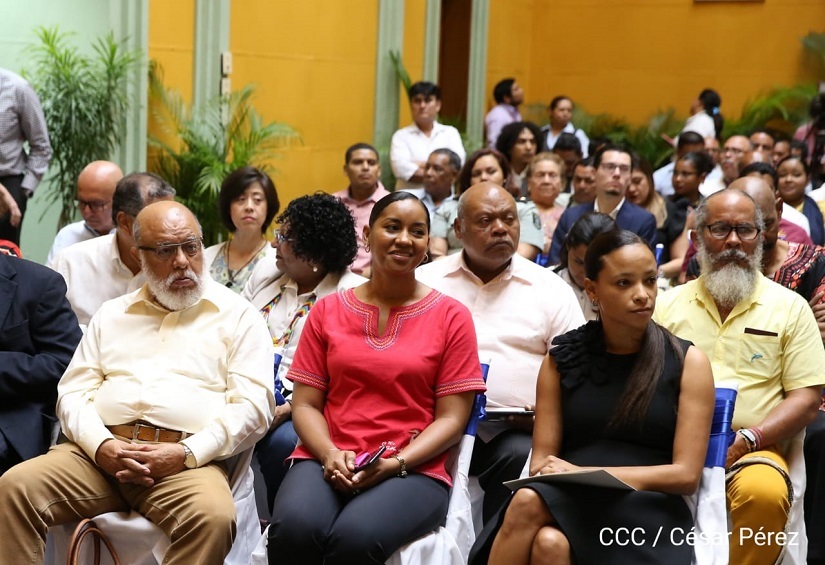
Celebration of the World Day for African and Afro-Descendant Culture (January 24) in Managua
REPORT ON ACTIVITIES CARRIED OUT BY THE GOVERNMENT OF NICARAGUA WITHIN THE FRAMEWORK OF THE INTERNATIONAL DECADE FOR PEOPLES OF AFRICAN DESCENT
Published by Procuraduría para la Defensa de los Derechos Humanos es la Institución Nacional de Derechos Humanos de la República de Nicaragua [The Office for the Defense of Human Rights is the National Human Rights Institution of the Republic of Nicaragua].
Since the majority of Nicaraguan Afro-descendants live in rural areas and engage in agriculture, many of the achievements and goals of their self-determination reflect these conditions. (Stan Smith words in italics)
TABLE OF CONTENTS
I. REFERENCE
II. OMBUDSMAN’S OFFICE FOR THE DEFENSE OF HUMAN RIGHTS
III. RECOGNITION OF THE RIGHTS OF THE AFRO-DESCENDANT PEOPLES OF NICARAGUA
Since 2008, in the Autonomous Regions of the Caribbean Coast of Nicaragua, the Indigenous Peoples and Afro-descendants are the leaders of their self-determination and self-development. This has contributed to their regaining their human rights and in reducing poverty and unemployment. Their advances stand out in educational progress, improved health care, safer water and better sanitation, more opportunities in construction, telecommunications, transportation, electricity, agribusiness projects, fishing, tourism, forestry, and mining.
IV. THE RIGHT TO FREE SELF-DETERMINATION
Afro-descendants’ right to self-determination is their right to decide their own forms of government, to achieve their own economic, social and cultural development, and to structure this without external interference. In Nicaragua, the Afro-descendant Peoples also have the right to autonomy: they have the right to define their own rules of life, whether written or oral, within which they have statutes or regulations for the free election of their regional, territorial and communal authorities.
These Communal and Territorial Governments are elected by Communal and Territorial Assemblies respectively and based on traditional norms and their own statutes. The Communal Assembly constitutes the highest authority in each Afro-descendant community. It is the responsibility of the Communal Assembly to elect the Communal Government. The Territorial Assembly is the highest authority of the Autonomous Territory and is made up of representatives of each of the communities.
V. POLITICAL PARTICIPATION OF THE PEOPLES OF AFRICAN DESCENT IN NICARAGUA
The government of Nicaragua has promoted the representation of the Afro-descendant peoples in all branches of government. For instance, representatives are on the Supreme Court of Justice, the Supreme Electoral Council and in the National Assembly. Likewise, eight Afro-descendants hold Minister or Vice-Minister positions in the main ministries and institutions of the Executive Branch.
VI. RIGHT TO COMMUNAL TENURE OF PROPERTY AND THE USE OF NATURAL AND SCENIC RESOURCES
Nicaragua is finishing the demarcation and titling of communal property of the Indigenous and Afro-descendant Peoples. This prioritizes community coexistence, the peaceful resolution of conflicts and other issues.
VII. THE RIGHT TO FREE, PRIOR AND INFORMED CONSULTATION
The responsibility for carrying out the processes of free, prior and informed consultation for both public and private projects to be developed on indigenous or Afro-descendant communal property lies with the Government of Nicaragua, the Autonomous Regional Governments, and the Communal and Territorial Authorities.
VIII. RIGHT TO EDUCATION
In more than 70% of the schools in Afro-descendant communities, education is taught in English. The illiteracy rate in the Caribbean Coast was reduced from 58% in 2007 to 8% in 2020. Between 2007 and 2020, 482 classrooms were built and 397 have been repaired on the Caribbean Coast of Nicaragua and 332 schools have been equipped with desks, tables, toilets, blackboards, drinking fountains, kitchens, vegetable gardens, and sports and recreation areas.
IX. RIGHT TO HEALTH
Free, universal access, quality and intercultural health services based on the needs of the population with emphasis on prevention is guaranteed for Afro-descendants and each of the departments and autonomous regions of the country. This health care transcends the attention to the individual person, seeking to give life to a family and community approach, including the protection of Mother Earth and the rational and sustainable use of its valuable natural resources.
The Intercultural Health Care Models recognize that traditional medicine constitutes a fundamental pillar for the provision of health services. Popular and Traditional Medicine and other forms of non-Western medicine are promoted, allowing the national health system to access a vast cultural heritage of traditional practices and ancestral wisdom of indigenous and Afro-descendant peoples.
X. RIGHT TO FOOD
The Productive Food Bonus (Bono Productivo Alimentario, BPA). given to campesino families, consists of nine hens, a rooster, a pregnant sow and a 100-pound sack of concentrated animal feed. This is one of the emblematic and far-reaching programs that has allowed Nicaragua to reduce hunger and malnutrition
since the Zero Hunger Program began in 2007. More than 30,000 BPA have been delivered to 200,000 protagonists, among these protagonists in Afro-descendant communities of the Caribbean Coast of Nicaragua. Almost half of the protagonists are integrated into small cooperatives.
XI. ECONOMIC PARTICIPATION OF AFRO-DESCENDANT PEOPLES
Thousands of producers have benefited from government financing.
XII. RIGHT TO DRINKING WATER AND SANITARY SEWERAGE
Access to drinking water service increased from only 4% in 2007 to 72% in 2020, with significant investments in drinking water systems in all municipalities and in the most populated communities.
XIII. RIGHT TO THE PRESERVATION AND PROMOTION OF THE AFRO-DESCENDANT CULTURE
The Afro-descendant peoples of Nicaragua come from millenary civilizations of the African Continent and contribute skills and knowledge to the political, social, economic and cultural development of the country, also contributing to the strengthening of the multi-ethnic and pluricultural national identity. Since 2007, the Government of Nicaragua, together with the Autonomous Regional Governments, the Mayors’ Offices and the Territorial and Communal Governments, have promoted the rescue of the traditional festivities of the Afro-descendant peoples, including the May Pole, “Crab Soup” Anniversary of the Emancipation of the African Slaves, Anniversary of the arrival of the Garifuna People to Nicaragua, among other celebrations of these peoples.
The establishment of Regional and Municipal Houses of Culture has been promoted in Bluefields, Pearl Lagoon, Corn Island and Bilwi, with the objective of promoting the rescue of dance, song, painting and handicrafts of Afro-descendant peoples.
The Government of Nicaragua has promoted the production and presentation of the Afro-descendant films: The Black Creoles, Lubaraun and Antojología de Carl Rigby It is investing in the recovery of the cultural heritage of the Afro-descendant peoples, the compilation and reconstruction of their bibliographic and oral history, as well as the promotion and transmission of their good productive practices, value systems, religious and spiritual beliefs.
XIV. RIGHT TO SPORTS
XV. STRATEGY FOR THE HUMAN DEVELOPMENT OF THE CARIBBEAN COAST 2019 – 2029
This strategy is based on territorial and sectoral development, seeking to contribute to socioeconomic growth with equity, prioritizing the consolidation of the Autonomy process and the different forms of self-government in each Afro-descendant and indigenous territory, in addition to mitigation and adaptation to the effects of climate change, considering the high vulnerability of these communities.
I. REFERENCE
The Office of the United Nations High Commissioner for Human Rights (OHCHR) through communication, informed that the United Nations Secretary General is preparing an annual progress report on the activities of the International Decade for People of African Descent (2015-2024), in accordance with Resolution 68/237 and 69/16; same that will focus on the implementation of the Program of Activities of the International Decade and will take stock of the progress made during the first five years of the Decade.
By virtue of the above, the National Human Rights Institutions were invited to share the actions, technical cooperation projects, research, awareness-raising activities or any other measures aimed at improving the situation of the Human Rights of Afro-descendant Peoples and that have been adopted during the last five years (2015-2020) within the framework of the International Decade for People of African Descent.
II. OFFICE OF THE PROCURATOR FOR THE DEFENSE OF HUMAN RIGHTS
The Office of the Human Rights Ombudsman (PDDH), established in accordance with Law 212, is the state agency responsible for ensuring the security of persons and human rights incorporated in Title IV of the Constitution and international human rights instruments. The fundamental purpose of the PDDH is to contribute to achieve a freer and fairer society, which enables the development of better moral and political values, so it sponsors the monitoring, promotion, education, dissemination and defense of human rights in its broadest sense.
III. RECOGNITION OF THE RIGHTS OF THE AFRO-DESCENDANT PEOPLES OF NICARAGUA
The Political Constitution of the Republic of Nicaragua of 1987, recognizes for the first time the multiethnic and pluricultural nature of the Nicaraguan nation, laying the foundations for the approval of the Statute of Autonomy of the Autonomous Regions (Law 28) in the same year. The Magna Carta, Law 28 and other legislation referring to the Rights of Afro-descendant Peoples are therefore based on the principle of free self-determination and non-discrimination on grounds of race, ethnicity, culture, religion or spiritual belief, language, among others.
Although the rights of Afro-descendant peoples were fully recognized within the national legal framework, the neoliberal governments that governed between 1990 and 2006 did not prioritize the development of the Caribbean Coast, the improvement of the living conditions of these peoples, or the effective exercise of their rights.
It was not until 2007, with the Government of Reconciliation and National Unity, that the National Human Development Plan was launched, with the objective of promoting economic growth with macroeconomic stability and aimed at guiding specific objectives related to employment, poverty reduction, equality, nutrition, access to health and education, citizen security, productivity, investment promotion and trade, among others.
In the Autonomous Regions of the Caribbean Coast of Nicaragua, the Indigenous Peoples and Afro-descendants are protagonists of the Caribbean Coast Development Strategy since 2008, which has undoubtedly contributed to the restitution of rights and the generation of significant progress in reducing poverty and unemployment, particularly in the areas of education, health, construction, telecommunications, transportation, electricity, water and sanitation, as well as the development of agribusiness projects, fishing, tourism, forestry, and mining.
IV. RIGHT TO SELF-DETERMINATION
Nicaragua has an advanced legal framework that takes up customary law and the principles of self-determination and non-discrimination, recognizing the historical rights of Afro-descendant peoples both in the Political Constitution and in specific laws governing the matter.
The right to self-determination is understood as the right of a people to decide its own forms of government, to achieve its economic, social and cultural development, and to structure itself freely without external interference.
In Nicaragua, the Afro-descendant Peoples also have the right to Autonomy, that is, they have the right to define their own rules of life, whether written or oral, within which they have statutes or regulations for the free election of their regional, territorial and communal authorities.
The Communal and Territorial Governments are elected by Communal and Territorial Assemblies respectively and based on traditional norms and their own statutes.
According to Article 4 of the Law of Demarcation and Titling of Communal Property (Law 445), the Communal Assembly constitutes the highest authority in each Afro-descendant community. It is the responsibility of the Communal Assembly to elect the Communal Government. Likewise, the Territorial Assembly is the highest authority of the territory and is made up of representatives of each of the communities.
Article 5 of Law 445 establishes that the Communal Government is the administrative and traditional governing body that represents the community, while the Territorial Government is the administrative body of the territorial unit, which it legally represents.
According to Article 6 of the same Law, the elections, reelections, dismissals and terms of office of the Communal and Territorial Government shall be made in accordance with traditional customs and procedures of the Afro-descendant Peoples.
The development of the electoral process is reflected in an Act that explains the candidacies, the degree of participation of the community or territory, the results of the voting and the names of the persons who will govern for the period of time established in the statute. Said Minutes, duly signed and sealed, are presented to the First Secretariat of the corresponding Regional Autonomous Council for due registration and certification.
When controversies arise regarding the electoral processes or the right to legal representation of a given Communal Government or Territorial Government of the Afro-descendant Peoples, this must be settled by the corresponding Communal Assembly or Territorial Assembly, which again must transmit its decisions through Minutes to the Regional Autonomous Council.
Each Territorial Government has a Development Plan and receives a budget allocation from the General Budget of the Republic for its implementation. Likewise, the Communal and Territorial Governments decide on the implementation of public and private investment projects, after holding free and informed consultation processes that guarantee the preservation of their cultural heritage and traditional ways of life, the protection of the environment, the rational and sustainable use of their natural resources and the wellbeing of their population.
The Electoral Law (Law 331) and the Autonomy Law (Law 28) govern the election of the Autonomous Regional Councils of the Northern and Southern Caribbean Coast, which is held every five years, during the first week of March and is developed according to 30 ethnic constituencies, 15 in each autonomous region, established according to the geographical distribution of the Indigenous and Afro-descendant Peoples. In each ethnic constituency, 3 Regional Councilors are elected, for a total of 45 who go on to form the corresponding Autonomous Regional Council.
A seven-member Board of Directors is elected from the Regional Council plenary, in which the six Peoples of the Caribbean Coast must be represented.
V. POLITICAL PARTICIPATION OF THE AFRO-DESCENDANT PEOPLES OF NICARAGUA
Since 2007, the Government of Reconciliation and National Unity of the Republic of Nicaragua has promoted the representation of the Afro-descendant Peoples in all branches of government, having achieved to date their election or appointment to the Board of Directors of the Supreme Court of Justice, the Supreme Electoral Council and the National Assembly. Likewise, eight Afro-descendants hold Minister or Vice-Minister positions in the main ministries and institutions of the Executive Branch.
The Government Coordinator of the Autonomous Region of the Northern Caribbean Coast and the President of the Board of Directors of the Autonomous Regional Council of the Southern Coast are Afro-descendants. 24% of the Regional Councilors of the South Caribbean Coast and 5% of the Regional Council of the North Caribbean Coast are Creoles or Garifuna.
Of the 23 Territorial Governments established, three are being led by Afro-descendant Presidents.
Priority has been given to the election of Afro-descendants to the positions of local and district judges, prosecutors, public defenders and magistrates of the courts of appeals in the autonomous regions of the Northern and Southern Caribbean Coast, which in turn has contributed to a better resolution of cases and a reduction in the delay of justice.
Since 2007, the Supreme Electoral Council has implemented a series of actions aimed at improving citizen participation in electoral processes, among which the following are highlighted, which have had a significant impact on Afro-descendant communities:
1. Permanent citizen education campaign in Spanish, English, Miskito and Mayagna, prioritizing voter registration and actively promoting voting as a right and civic responsibility.
2. Continued expansion of the network of voting boards to include the most remote communities.
3. Strengthening of the communal voting system, in which voting tables do not exceed 400 citizens, allowing for greater familiarity among voters.
4. Representation of political parties among the members of each voting board.
5. Training and certification of political parties’ poll watchers who remain inside the polling station during the entire voting process and during the scrutiny.
6. Legal and political reforms aimed at ensuring a 50% participation of women in all public election spaces.
7. Technical improvements to the identity card to ensure a “one person, one vote system”, which includes detailed biometric photography, registration number, bar codes, watermarks, among others.
8. Continuous updating of the electoral roll with the purpose of integrating new citizens and removing those who have changed their address or have died.
In this sense, the increase in the political participation of Afro-descendant peoples in regional electoral processes can be evidenced, having reached 55% in 2019; 50.03% in 2014; 40% in 2010; 45% in 2006 and 38% in 2002.
VI. RIGHT TO COMMUNAL TENURE OF PROPERTY AND USE OF NATURAL AND SCENIC RESOURCES
The Mother Earth Program of the Caribbean Coast Development Strategy has allowed the demarcation and titling of 23 of the 25 territories of the Indigenous and Afro-descendant Peoples between 2007 and 2020, integrated by 314 communities that cover a territorial extension of more than 37,859.32 square kilometers, with more than 205,315 inhabitants, representing 31% of the national territory and 55% of the territory of the Autonomous Regions and the Special Regime Zone of the Upper Wangki, Wihta and Bukawas. This percentage will increase in 2021, when the process of demarcation and titling of the Miskito Indian Tasbakya Kum and Mayagna Sauni Bu territories is concluded.
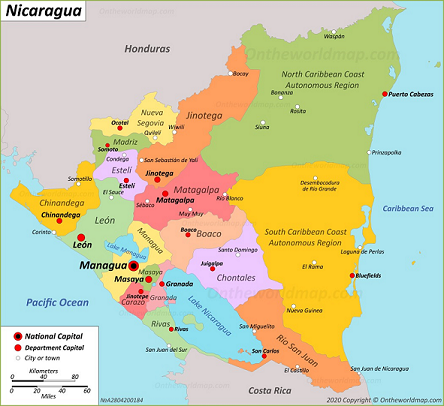
Currently, the Miskito and Mayangna Indigenous Peoples and Afro-descendant Creole People of the Autonomous Region of the North Caribbean Coast are settled in the municipalities of Puerto Cabezas, Waspam, Rosita, Siuna, Bonanza and Prinzapolka and in the 19 Indigenous and Afro-descendant Territories of Kipla Sait Tasbaika Kum, Miskitu Indian Taspaika Kum, Mayangna Sauni Bu, Li Lamni Tasbaika Kum, Wangki Li Aubra Tasbaya, Awas Tingni, Wangki Twi Tasba Raya, Wangki Maya, Ten Communities, Tasba Pri, Tawira, Karata, Waupasa Twi-Llano Sur, MATUNGBAK, Mayangna Sauni As, Sikilta, Tuahka, Prinsu Awala and Prinsu Auhya.
The Afro-descendant Creole and Garifuna Peoples and the Mayagna-Ulwa, Rama and Miskito Indigenous Peoples of the Autonomous Region of the South Caribbean Coast are settled in the municipalities of Desembocadura del Río Grande, Laguna de Perlas, El Rama, Kukra Hill, Corn Island and Bluefields and include the Indigenous and Afro-descendant Territories of Awaltara Luhpia Nani, Laguna de Perlas, Rama Kriol and Bluefields Creole.
In this sense, the State of Nicaragua is also working hard in the final phase of the program of demarcation and titling of communal property of Indigenous and Afro-descendant Peoples, which prioritizes community coexistence, reduction of the advance of the agricultural frontier, reforestation of forests and degraded areas, eradication of productive practices adverse to the development of forests, soils and river basins and lagoons, as well as the peaceful resolution of conflicts between peasants, indigenous and Afro-descendants. All of the above represents a challenge of singular importance for the State of Nicaragua, given that it requires significant human and financial resources to monitor such an extensive area.
VII. RIGHT TO FREE, PRIOR AND INFORMED CONSULTATION
Nicaragua has a robust legal framework to guarantee the effective exercise of the Right to Free, Prior and Informed Consultation. The holding of consultation processes with Indigenous and Afro-descendant Peoples is based on Articles 5, 89, 91 and 181 of the Constitution. 5, 89, 91 and 181 of the Political Constitution of Nicaragua, as well as in the Autonomy Statute (Law 28), the Decree of the National Assembly 3584 (Regulation of the Autonomy Statute) and the Law of the Communal Property Regime of the Peoples of the Caribbean Coast of Nicaragua (Law 445). It is also based on the spirit and letter of Convention 169 of the International Labor Organization (ILO), the United Nations Declaration on the Rights of Indigenous Peoples and other international human rights instruments to which Nicaragua is a signatory: Durban Program of Action of the Declaration of the World Conference Against Racism, Duran, South Africa, 2001; General Assembly Resolution A/RES/68/237 Proclamation of the International Decade for People of African Descent; and General Assembly Resolution A/RES/69/16 Program of Activities for the International Decade for People of African Descent.
In Nicaragua, the responsibility for carrying out the processes of free, prior and informed consultation for both public and private projects to be developed on indigenous or Afro-descendant communal property lies with the Government of Nicaragua, the Autonomous Regional Governments, the Communal and Territorial Authorities.
The consultation process specifies the impacts to be generated by the project, either at the communal or territorial level. It defines the impact at the level of employment opportunities, effects on natural resources, means of survival, cultures and customs of indigenous peoples and Afro-descendant peoples, among other aspects that can be identified by each of the parties participating in the process.
According to the current legal framework, in Nicaragua, the consultation process to achieve Free, Prior and Informed Consent is governed by the following principles:
Good Faith: It is understood as the attitudes or behaviors of the parties involved to perform in a correct, loyal and sincere manner, guaranteeing a climate of respect, harmony, solidarity and mutual trust.
Prior Implementation: Means that prior to the implementation of the project that directly or indirectly affects the collective rights of Indigenous and Afro-descendant Peoples, the consultation procedure for Free, Prior and Informed Consent must be implemented.
Flexibility: The Free, Prior and Informed Consent Consultation Process shall be appropriate to the worldview of the Indigenous and Afro-descendant Peoples involved.
Transparency: The procedure must be carried out in a clear manner without hiding information so that the parties involved can build a comprehensive and fruitful intercultural dialogue.
Exclusivity: The forms of organization and representation of Indigenous and Afro-descendant Peoples may not be replaced in the process of the Free, Prior and Informed Consent Consultation.
Interculturality: The Consultation must be carried out within a framework of recognition and respect for the cultural diversity of each Indigenous or Afro-descendant People, holders of ancestral knowledge and wisdom.
Timely Information: Efficient and effective ways of disseminating knowledge must be adopted with due anticipation of the case and the translation of documents into the mother tongue of those consulted must be guaranteed. The purpose is that the indigenous and Afro-descendant peoples can evaluate and express their opinion on the positive or negative effects, or lack thereof, of the measure, plan or project to be consulted.
Exhaustive Information: It is an obligation of the State and the Company proposing the Project to provide all the necessary information on the Project, including: short and long-term objectives; methodologies to be used; possible impacts on the environment, people and cultural assets; sources of financing; participants and their backgrounds; framework project and its objectives, if any; management of the information and/or material elements obtained during the project and once it is concluded; monitoring of the project and of the conditions established during the Consultation; direct and indirect benefits to be obtained.
Confidentiality: The use of the information obtained from the project, during and after its completion, whether written, graphic, oral, audiovisual, etc., shall be agreed between the parties, and the Indigenous Peoples may not accept its publicity or certain uses, alluding to the Principle of Confidentiality of their cultural or natural heritage.
Benefit Sharing: During the consultation process to obtain Free, Prior and Informed Consent, the manner in which the direct or indirect benefits obtained from a consulted project will be shared with the Indigenous and Afro-descendant Peoples shall be established by mutual agreement between the parties.
Reasonable timeframe: The consultation procedure must be carried out within reasonable timeframes that allow the Indigenous and Afro-descendant Peoples to develop an internal process of deliberation and decision making, in order to reflect on the consulted Project, and thus make a proposal regarding the object of the consultation.
Equality: Its purpose is to allow the parties to participate under equal conditions in the Consultation Process to obtain the Free, Prior and Informed Consent.
VIII. RIGHT TO EDUCATION
In more than 70% of the schools in Afro-descendant communities, education is taught in English. There is also a Septuagenal [those over 70 years old] Education Plan 2014-2021 for the Caribbean, approved by resolution of the Autonomous Regional Councils of the North and South Caribbean Coast to continue improving the quality and relevance of Intercultural Bilingual Education at all levels.
The illiteracy rate in the Caribbean Coast was reduced from 58% in 2007 to 8% in 2020. Investment in educational infrastructure, teacher training and flagship programs such as school lunch have contributed to the progressive increase in school enrollment, reaching 251,989 students in 2016, in the modalities of Initial Education, Regular Primary, Multigrade Primary, EIB Primary, Regular Secondary, Secondary (J/A), Secondary in the Field and Special Education.
The municipalities of Waspam, Puerto Cabezas, Rosita, Bonanza and Prinzapolka of the Autonomous Region of the North Caribbean Coast, where indigenous and Afro-descendant peoples are located, represent 79.19% of preschool enrollment, 60% of primary enrollment and 61.31% of secondary enrollment. Likewise, the municipalities of Desembocadura del Río Grande, Laguna de Perlas, El Rama, Kukra Hill, Corn Island and Bluefields in the Autonomous Region of the South Caribbean Coast represent 47.61% of preschool enrollment, 41.95% of primary enrollment and 51.59% of secondary enrollment.
Between 2007 and 2020, 482 classrooms were built and 397 have been repaired on the Caribbean Coast of Nicaragua and 332 schools have been equipped with desks, tables, toilets, blackboards, drinking fountains, kitchens, vegetable gardens, and sports and recreation areas.
This reflects a progressive increase in investment in education in the autonomous regions within the framework of the Caribbean Coast Development Strategy being implemented since 2007.
The implementation of the Regional Autonomous Education System (SEAR) in its various components, including curricular reform, teaching and learning methodologies, psychosocial care, interculturalism and integration of Information and Communication Technologies (ICT), is also advancing.
Decisive support for strengthening the intercultural and community universities of the Caribbean Coast contributes substantially to the implementation of the Caribbean Coast Development Strategy. The 6% allocation has been guaranteed in a timely manner and the participation of the Bluefields Indian and Caribbean University (BICU) and the University of the Autonomous Regions of the Nicaraguan Caribbean Coast (URACCAN) in the implementation of regional and national government programs has been promoted. An estimated 13,012 students are enrolled in both universities, of which 12,018 are pursuing a university degree and 984 are pursuing a technical degree. The most sought-after degree programs are Economics and Business, Agroforestry, Political Science and Law, Engineering and Architecture.
The implementation of the Caribbean Regional Communications Infrastructure Improvement Program (CARCIP), being executed by the Telecommunications and Postal Institute of Nicaragua (TELCOR), has contributed to the development of training and certification programs in English and technical skills in Bluefields, Pearl Lagoon and Bilwi, as well as the establishment of Innovation Centers that promote the use of ICTs to provide solutions to social and economic problems and needs faced by society.
IX. RIGHT TO HEALTH
The Family and Community Health Model (MOSAFC) is a model conceived from active community participation. It is organized through 19 Local Systems of Integral Health Care (SILAIS) in each of the departments and autonomous regions of the country. It is a model that guarantees free, universal access, quality and intercultural health services based on the needs of the population with emphasis on prevention. It transcends the attention to the individual person, seeking to give life to a family and community approach, including the protection of Mother Earth and the rational and sustainable use of its valuable natural resources.
Nicaragua currently has 77 hospitals (16 primary, 1 regional and 2 national), with a capacity of 11,732 general hospital beds, 562 intensive care beds, 449 ventilators, 954 vital signs monitors and 574 suction units.
In the medium term, there are plans to build 15 more hospitals, 6 of which are already under construction, including two departmental and 1 regional: the Oscar Danilo Rosales Arguello Teaching Hospital in the Department of León, the Nueva Segovia Departmental Hospital in Ocotal, and the Nuevo Amanecer Regional Hospital in Biwli. The number of health personnel has increased from 22,083 workers in 2006 to 36,649 in 2020, including physicians, nurses and technicians. In addition, 143 health centers and 1,333 medical posts and 178 maternity homes have been built or improved throughout the country. 66 mobile clinics have been equipped to develop a massive program of disease prevention and free medical care for the population.
Likewise, Nicaragua now has 82 clinical laboratories and 14 epidemiological laboratories, one of which is the National Center for Diagnosis and Reference (with WHO recognition at Biosafety level 3), one of the best in the Central American region, responsible for performing tests and studies to address and prevent epidemics such as influenza, dengue and COVID19. Nicaragua also has a linear accelerator against cancer, the most modern in Central America, which has given a qualitative leap to patients with this disease.
Nicaragua also has a drug plant with the capacity to produce 12 million influenza vaccines per year and plans to produce the Cuban drug Interferon Alfa-2B, successfully used to treat patients with COVID-19.
Closely linked to the Family and Community Health Model (MOSAFC), the Intercultural Health Care Models (MASIRACCN – MASIRACCS) of the Autonomous Regions of the Caribbean Coast, both based on the General Health Law (Law 423), the Law of Autonomy of the Autonomous Regions of the Caribbean Coast (Law 28) and the Law of Traditional and Ancestral Medicine (Law 759), are implemented in the indigenous and Afro-descendant communities of the Caribbean Coast of Nicaragua.
The Intercultural Health Care Models recognize that traditional medicine constitutes a fundamental pillar for the provision of health services or its complement. They promote the rescue of Popular and Traditional Medicine and other forms of non-Western medicine, allowing the national health system to access a vast cultural heritage of traditional practices and ancestral wisdom of indigenous and Afro-descendant peoples, making use of plants, seeds, fruits, insects and animals for the treatment of different ailments.
Health care in the Caribbean Coast of Nicaragua is organized in 4 Local Systems of Integral Health Care (SILAIS) that serve 2 autonomous regions, 20 municipalities, 23 indigenous and Afro-descendant territories and more than 330 communities. Currently, the Caribbean Coast has a network of more than human health resources that includes subspecialists, specialists, general practitioners, nurses, midwives, sukias and healers. Likewise, the Community and Intercultural Universities (BICU and URACCAN) are avidly engaged in training the new generation of technicians, nurses, general practitioners and traditional doctors.
Health investments in the Autonomous Regions of the Caribbean Coast of Nicaragua have increased from US$32 per capita in 2006 to US$72 in 2020, which has allowed scourges such as malnutrition to be reduced by 50%, infant mortality by two thirds and maternal mortality from 118 to 50.6 per 100,000 live births.
In the area of health, important investments have been made in the Ernesto Sequeira Teaching Hospital in the city of Bluefields, which now has a modern oncology department. The facilities of the Primary Hospitals of Kukra Hill and Laguna de Perlas were also improved. In Corn Island, the Ethel Kandler Primary Hospital was built and the construction of the Nuevo Amanecer Regional Hospital in Bilwi has been announced for this year. Likewise, investments have been made in a Modern Health Center in the Municipality of Siuna and the Maternity Homes have been improved throughout the Caribbean Coast, allowing adequate attention in a period of less than 24 hours to pregnant women or women in labor, contributing to the reduction of maternal mortality and maternal and infant mortality.
The strengthening of Primary Health Care (PHC) has contributed to the prevention of infectious and contagious diseases, as well as to the early detection of pregnancy. Attention to patients with special needs, our grandfathers and grandmothers (elderly patients) and patients with chronic non-communicable diseases has also improved. In 2020, the main non-epidemic causes of death among the Afro-descendant population of the Caribbean Coast of Nicaragua were: acute myocardial infarction, malignant tumors, diabetes mellitus, chronic kidney disease, stroke, hypertensive disease and chronic obstructive pulmonary disease. These diseases accounted for 68% of deaths in the Autonomous Region of the South Caribbean Coast and 59.3% in the Autonomous Region of the North Caribbean Coast. Among the most predominant epidemic diseases in the Autonomous Regions are: Malaria vivax, rabies, leishmaniasis, dengue, falciparum malaria, hepatitis, leptospirosis, Chagas disease, chikungunya and zika, all of which are attended to in a responsible, comprehensive and systematic manner.
X. RIGHT TO FOOD
The right of Nicaraguans to healthy food is codified in the Law on Food and Nutritional Sovereignty and Security, Law No. 693. Within the framework of this law, a number of public policies have been developed to protect the diet and the basic food basket. In this regard, it is worth noting that Nicaragua produces more than 70% of what it consumes in food quality. There is a quota policy for the export of rice and beans and the cattle herd is protected by prohibiting the export of females.
The Zero Hunger Program, which consists of the delivery of a Productive Food Bonus (Bono Productivo Alimentario, BPA) consisting of nine hens, a rooster, a pregnant sow and a 100-pound sack of concentrated animal feed, is one of the emblematic and far-reaching programs that has allowed Nicaragua to reduce hunger and malnutrition from 21.7% in 2006 to 11.1% in 2019) and by 66% among school children aged 6 to 14 years (from 27.2% in 2004 to 9.2% in 2018).
Alongside this program is the School Snack Program, implemented in all Nicaraguan schools and consisting of the daily delivery of a ration of basic foodstuffs: oil, rice, cereal, beans, corn or flour.
The Zero Hunger Program is designed to recover ancestral knowledge, self-esteem and food sovereignty and is implemented by the Ministry of Family, Community, Cooperative and Associative Economy (MEFCCA). It aims to strengthen the production of food for self-consumption in Nicaraguan rural families, through the delivery of a Productive Food Bonus consisting of nine hens, a rooster, a pregnant sow and a sack of concentrate feed for animals, whose delivery seeks to promote food sovereignty.
According to MEFCCA data, since the Zero Hunger Program began in 2007, more than 30,000 vouchers have been delivered to 200,000 protagonists, among these protagonists in Afro-descendant communities of the Caribbean Coast of Nicaragua. Almost half of the protagonists are integrated into small cooperatives. Along with the delivery of inputs, the MEFCCA offers technical advice so that they can multiply their goods and market them.
In relation to the above, the statistics of Surveillance Control, Promotion, Growth and Development of Children under 5 years of age, collected by the Local Systems of Comprehensive Health Care, reflect a significant improvement in child nutrition data in the case of Afro-descendant peoples in the Autonomous Regions of the Caribbean Coast of Nicaragua between the period 2012 – 2020.
XI. ECONOMIC PARTICIPATION OF AFRO-DESCENDANT PEOPLES
The Autonomous Regions of the North and South Caribbean Coast contribute 12% to the National GDP, mainly through the following sectors: fishing, agriculture, mining, forestry and tourism. To this end, the Ministry of Family, Community, Cooperative and Associative Economy (MEFCCA), the Nicaraguan Institute of Fisheries and Aquaculture (INPESCA), the Institute of Agricultural Protection and Security (IPSA), the National Forestry Institute (INAFOR) and the Nicaraguan Institute of Tourism (INTUR) are developing important projects in communities of African descent on the Caribbean Coast of Nicaragua.
The small-scale farmers of the Caribbean plant about 70% of the national area of quequisque, 60% of the area of cassava, 35% of the area of rain-fed rice, 23% of the area of corn, and 17% of the area of beans. As of 2020, the Caribbean Coast gathers 32% of the cattle herd with 1.6 million head of cattle and concentrates the largest production of meat and milk in Nicaragua. The Caribbean also has extensive areas planted with oil palm, cocoa, robusta coffee, teak and coconut, all of which create economies of scale, improve the exportable supply and generate jobs. Private companies with national and foreign capital, as well as the integrated production programs PROCACAO, PAIPSAN and NICADAPTA have invested more than US$200 million in these crops between 2007 and 2019.
The Autonomous Region of the South Caribbean Coast has approximately 22,714 farms and an estimated 22,600 producers, 81% of whom are men. The Autonomous Region of the North Caribbean Coast has approximately 20,541 farms and an estimated 19,800 producers, of which 75% are men.
To date, thousands of producers have benefited from cocoa financing and an estimated 2,000 hectares of coconut have been reactivated.
Fishing on Nicaragua’s Caribbean Coast represents approximately 35% of national production. In both autonomous regions, fishing employs more than 18,000 people, including 7,779 artisanal fishermen dedicated mainly to fishing for scales (mackerel, sea bass, sea bass, among others), shrimp, crab and lobster.
Through INPESCA, artisanal fishermen have received fishing equipment and technical advice to increase their productivity. In addition, the “Caribbean Pearl” Technological and Experimental Fish Center has been established in the municipality of Laguna de Perlas, where Afro-descendant communities can learn more about the different species of fish they catch, as well as the necessary instructions for establishing aquaculture projects.
INPESCA and IPSA have invested in the development of the public policy framework and regulations for the establishment of fish stocks, prioritizing food safety and traceability and generating new opportunities for exporting local fish production to markets in the United States, Asia, and Europe.
In terms of tourism, during the period 2007-2017, the supply of accommodations and carrying capacity of the autonomous regions increased from 66 establishments, 655 rooms and approximately 990 beds to 143 establishments, 2,006 rooms and 2,564 beds. This represents an increase of 53.8% in the number of establishments, 67.3% in the number of rooms and 61.3% in the number of beds. Most of these investments were made in the municipalities of Bluefields, Pearl Lagoon, Corn Island and Bilwi, where Afro-descendant peoples live.
The potential of the Caribbean is eminently forestry. The region has 37,394 square kilometers of land suitable for timber plantations (62.7% of the Caribbean territory) and of high commercial value, including mahogany, laurel and teak. The IV National Agricultural Census (CENAGRO), indicates that the Autonomous Regions have 993,261 Hectares suitable for the cultivation of teak; 4,280,109 Hectares suitable for mahogany and 5,945,309 Hectares suitable for Laurel.
Within the framework of the Development Strategy for the Caribbean Coast of Nicaragua and the Strategy for the Reduction of Emissions from Deforestation and Forest Degradation (ENDE-REDD), the following actions have been prioritized to invigorate the forestry sector:
1. Strengthen forest protection efforts to halt deforestation.
2. Encourage the development of forest plantations of species of high value in the national and international market: cedro real, mahogany, pine, cedro macho, pochote, laurel, maria, genízaro, coyote, guapinol, guanacaste, granadillo, oak, loquat, rubber/hule, etc.
3. Develop the timber value chain including certification and traceability processes, specialized shipyards, carpentry, construction and maintenance companies.
4. Strengthen territorial planning for forest protection.
5. Continue developing the emissions reduction and carbon sequestration strategy.
6. Promote green investments.
In the Afro-descendant territories of Laguna de Perlas, Bluefields Creole and Rama/Kriol, the goal has been established to protect and reforest 481,826 hectares and capture 2,664,422.06 metric tons of CO2 annually as of 2020.
XII. RIGHT TO DRINKING WATER AND SANITARY SEWAGE SYSTEMS
The Empresa Nacional de Acueductos y Alcantarillados (ENACAL), the Fondo de Inversiones Sociales y Económicas (Nuevo FISE), the Autonomous Regional Governments and the Mayors’ Offices in the 153 municipalities of the country have invested in the restitution of the Right to Potable Water and Sanitary Sewerage by incorporating 222,446 households to the potable water service and 168,264 to the sanitary sewerage network, with an accumulated investment of $620.92 million.
This has allowed an increase in the level of national drinking water coverage from 65% in 2006 to 91.8% in 2018, projecting to reach 95% in 2023. Likewise, there has been an increase from 33% sanitary sewerage coverage in 2006 to 51% in 2019, projecting 70% in 2023.
In the Autonomous Regions of the Caribbean Coast of Nicaragua, access to drinking water service increased from only 4% in 2007 to 72% in 2020, with significant investments in drinking water systems in all municipalities and in the most populated communities. In addition, sanitary sewerage projects are currently underway in Bluefields, Bilwi, Waspam, El Rama and Nueva Guinea.
XIII. RIGHT TO THE PRESERVATION AND PROMOTION OF AFRO-DESCENDANT CULTURE
The Government of Reconciliation and National Unity recognizes that Afro-descendants have played a transcendental role in the construction of the State of Nicaragua. The Afro-descendant peoples of Nicaragua come from millenary civilizations of the African Continent and contribute skills and knowledge to the political, social, economic and cultural development of the country, also contributing to the strengthening of the multi-ethnic and pluricultural national identity.
Within the framework of the approval of the United Nations General Assembly Resolution establishing the International Decade for Afro-Descendant Peoples, Nicaragua reinforces its actions aimed at strengthening the protection of the rights of Afro-Descendant Peoples, prioritizing the preservation and promotion of their historical and cultural heritage.
In this sense, the Caribbean Coast Development Strategy contemplates actions aimed at (1) Reconstructing, publishing and disseminating the ancestral memory associated with the rescue, dissemination and preservation of the cultures and traditional ways of life of Afro-descendant peoples; (2) Promoting cultural tourism as a source of income, but also as a space for dissemination and enrichment of local and community Afro-descendant culture; and (3) Deepening a regional sports system accompanied by the infrastructure and conditions necessary to achieve human development based on their identity and healthy recreation.
Since 2007, the Government of Nicaragua, together with the Autonomous Regional Governments, the Mayors’ Offices and the Territorial and Communal Governments, have promoted the rescue of the traditional festivities of the Afro-descendant peoples, including the May Pole, “Crab Soup” Anniversary of the Emancipation of the African Slaves, Anniversary of the arrival of the Garifuna People to Nicaragua, among other celebrations of these peoples.
Likewise, the establishment of Regional and Municipal Houses of Culture has been promoted in Bluefields, Pearl Lagoon, Corn Island and Bilwi, with the objective of promoting the rescue of dance, song, painting and handicrafts of Afro-descendant peoples. These spaces also contribute to the meeting of Afro-descendant artists and cultural promoters, generating better opportunities for creativity and cultural production.
All parks and/or squares in the municipal capitals of the Caribbean Coast of Nicaragua have been maintained and some have been equipped with games, sports infrastructure, ornamental and forest plants, and internet access, which also contributes to cultural reunion and healthy recreation.
Along these lines, the Ródrigo José Enrique Campbell Foundation, together with the National Assembly, INTUR, the Autonomous Regional Government of the Southern Caribbean Coast, the Mayor’s Office of Bluefields and the Center for Human, Citizen and Autonomous Rights (CEDEHCA), have established the House Museum of Afro-descendant Peoples in the city of Bluefields, restoring an old house of colonial architecture, which exhibits artifacts, handicrafts and paintings of the Creoles and Garifunas peoples, as well as the history of these peoples, including information about their heroes, distinguished individuals, poets and artists.
The Government of Nicaragua has promoted the production and presentation of the Afro-descendant films: The Black Creoles, Lubaraun and Antojología de Carl Rigby by the Lunas Films Film Company, all of which have won national and international awards and highlight the history, daily life and cultural practices of the Creole and Garífuna Peoples of Nicaragua.
The Community and Intercultural Universities of the Caribbean Coast of Nicaragua, BICU and URACCAN, in turn, develop programs aimed at teaching and disseminating the cultures of the Afro-descendant peoples, investing in the recovery of the cultural heritage of the Afro-descendant peoples, the compilation and reconstruction of their bibliographic and oral history, as well as the promotion and transmission of their good productive practices, value systems, religious and spiritual beliefs.
XIV. RIGHT TO SPORT
The Government of Reconciliation and National Unity has invested extensively in infrastructure, teacher training, equipment and holding sports tournaments in the Caribbean Coast of Nicaragua, understanding that sports constitute a central component of the Afro-descendant culture, particularly the disciplines of basketball, baseball, volleyball, boxing, athletics and soccer.
In this regard, since 2007, the Costa Caribe Basketball, Baseball and Soccer Teams have been formed, in which Afro-descendant youth participate and compete at the national level with teams from other departments of the country.
Likewise, through the Nicaraguan Sports Institute (IND), financing and technical assistance is provided to the Sports Academies on the Caribbean Coast of Nicaragua, promoting the teaching of different disciplines and recruiting talented girls, boys, adolescents and young people to participate in local, regional and national sports teams.
To date, 8 baseball stadiums, 3 multipurpose gymnasiums, 18 basketball courts and 6 soccer fields have been built, repaired and equipped in the Caribbean Coast of Nicaragua.
XV. CARIBBEAN COAST HUMAN DEVELOPMENT STRATEGY 2019 – 2029
The Human Development Strategy of the Caribbean Coast of Nicaragua is conceived as a tool to guide the formulation and implementation of public policies aimed at guaranteeing the effective participation of Afro-descendant peoples, indigenous peoples and ethnic communities in regional and national development processes.
It aims to promote an economic, political and social reality that restores the rights of the inhabitants of the Caribbean Coast and the Upper Wangki-Bocay, to have quality basic services and productive, equitable and fair opportunities, supported by an autonomous, dynamic and articulating citizen participation, which contributes to reduce poverty and improve human development in the autonomous regions.
The Strategy in its first and second phase, (2007-2011) and (2012-2018) respectively, implemented a series of actions based on three strategic axes:
Axis 1: Socioeconomic well-being of the population of the Caribbean of Nicaragua,
Axis 2: Equitable, Sustainable and Harmonious Economic Transformation between Human Beings and Nature and
Axis 3: Autonomous Institutional Development to lead Human Development in the Caribbean.
The Strategy combines greater public investments in physical infrastructure; incentives for the organization and strengthening of the regional private sector; economic development of indigenous and Afro-descendant territories based on their competitive advantages; international cooperation and national and foreign direct investment. It aims at strengthening the fundamental industries of the autonomous regions, such as fishing, agroindustry, tourism, forestry, mining and energy.
The third phase of the EDCC, which covers the period 2019-2029, defines four complementary axes:
Axis 1: Socio-Cultural Development;
Axis 2: Territorial Economic Development with a focus on Climate Change;
Axis 3: Productive and Economic Transformation; and
Axis 4: Strengthening of Autonomous Institutionality.
This reflects a new development approach based on territorial and sectoral development, seeking to contribute to socioeconomic growth with equity, prioritizing the consolidation of the Autonomy process and the different forms of self-government in each Afro-descendant and indigenous territory, in addition to mitigation and adaptation to the effects of climate change, considering the high vulnerability of these communities, particularly those located in low-lying coastal areas of the Caribbean Sea and along the banks of rivers and lagoons.
In this sense, within the framework of the Decade of the Afro-descendant Peoples, the Government of Reconciliation and National Unity will continue working tirelessly to promote the Afro-descendant aspect of the Nicaraguan national identity, generating development opportunities for these Peoples, with a clear understanding that this goes hand in hand with the strengthening of their cultures and cosmovisions, the vindication and restitution of their rights and their full participation in the political, social and economic activities of the nation.


3 thoughts on “Self-Determination of the Afro-Descendant People of Nicaragua: Report by Nicaragua’s Office for the Defense of Human Rights”