

Orinoco Tribune: Venezuela Reports 4,490 Fatalities and Over 120,000 Families Assisted Following Earthquakes The official death toll from the devastating double earthquake that struck Venezuela on June 24 has risen to 4,490, the number of reported injuries at 16,740. 856 buildings suffered varying degrees of structural compromise, while 190 structures collapsed entirely. Only 5% of the damaged buildings are newly built housing. 17,907 citizens are temporarily homeless. Venezuela’s emergency response mechanisms have provided direct, comprehensive assistance to 120,794 families. State healthcare networks have provided specialized medical care to 32,401 patients within the affected zones. Specialized supply lines have distributed 9,995 tons of food and 18,507,166 liters of potable water to ensure food security. A total of 31,837 public safety, rescue, and military personnel remain active on the ground. This official deployment is reinforced by the solidarity of 30,535 organized civil volunteers and the technical expertise of 2,422 international rescue workers from a wide range of nations.
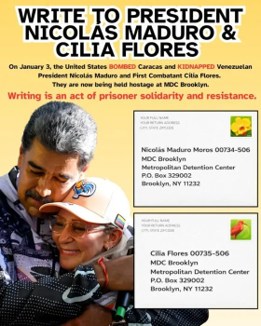
CEPR Calls for a Full Lifting of Sanctions in Response to Venezuela Earthquakes The Center for Economic and Policy Research (CEPR) is calling for the US and other countries to lift all sanctions against Venezuela in the wake of the devastating earthquakes. The ability of governments, civil society, and individuals to provide funds and humanitarian support to Venezuela will be severely hindered while these sanctions remain in place. Research by CEPR economists and other international sanctions experts has shown that overcompliance leads to sanctions having a harsher and broader impact than policy-makers may expect, as aid groups, corporations, and other foreign actors pull back out of fear of running afoul of sanctions. Despite the changed nature of the US-Venezuela relationship following the US abduction of President Nicolás Maduro amid a military raid on Caracas, the Trump administration maintains many sanctions that could hinder foreign aid and relief efforts. Similarly, the governments of the United Kingdom and Portugal should act immediately to secure the release of billions of dollars of Venezuelan assets held by the Bank of England and Novo Banco so that these financial resources, which are the property of the Venezuelan state, can be deployed to support humanitarian and reconstruction efforts. “Tens of thousands, and more likely hundreds of thousands, of Venezuelans died as a result of those sanctions. The United States is therefore obligated to help prevent further loss of life in Venezuela,” he said.
How to donate for Venezuela Earthquake Relief:
https://venezuelanoestasola.com/#dinero
Code Pink emergency solidarity fund
Peoples Forum: Donate to Earthquake Relief for Venezuela
Monthly Review Online (Chris Gilbert, Cira Pascual Marquina): The Venezuelan Earthquake, the Historical Moment and the Continental Question Within hours of the earthquake, an intense information war got going. Even as thousands of firefighters, civil protection personnel, members of the Venezuelan armed forces, health workers, communal organizations, and volunteers were being deployed to the hardest-hit areas, most of the international media moved in lockstep to deny it. Against all evidence, they insisted that the Venezuelan government was absent—that there was no state response, no civil defense, no organized rescue effort. Later, corporate media portrayed every government measure, from coordinating rescue operations and organizing shelters to regulating the flow of humanitarian aid, as evidence of “authoritarianism.”
To be clear, these narratives did not emerge only from the pro-imperialist corporate press. They also spread through social media and ostensibly “independent” voices. Yet the remarkable uniformity of these messages points to their being part of an organized campaign. This reveals that Washington’s objective has never been limited to the extensive economic concessions it obtained after January 3. In fact, it pursues the complete dismantling of Venezuela’s revolutionary project, which integrates state power and organized popular forces. What is ultimately at stake is the unfinished project of recolonizing Venezuela, and, in a broader sense, the Latin American region.
Despite years of sanctions, financial siege, military threats, the naval blockade, and the traumatic events of January 3, the essential architecture of the Bolivarian Process remains in place. The state has not collapsed. The armed forces have not fractured. The communal movement continues to organize social life and participate in governance all across the country. Thousands of middle-level cadres serve as a conveyor belt between the masses and the leadership. For all these reasons, people who cry out, “All is lost and Venezuela is a mere US protectorate” are failing to understand the concrete situation and historical moment. All is not lost, and imperialism knows this very well. Our enemies understand the shape of the current battlefield. Too bad so many opinion-makers historically on our side, alleged leftists and anti-imperialists, are helping them destroy the revolutionary bloc by attempting to turn the masses against the leadership.
Cuba
Letter from National Council of the Union of Writers and Artists of Cuba to American artists, writers and academics “Open Letter to American Artists, Writers, and Academics: Cuba is experiencing a systematic genocide and a war waged by the U.S. government, manifested in a cruel economic and financial blockade that has lasted for almost 70 years. The current U.S. government is increasingly tightening the trade and oil embargo measures, which are causing serious consequences for our country and great suffering for the Cuban people.
We, Cuban artists, writers, and academics, call upon our American colleagues of goodwill and humanist commitment to publicly denounce and condemn the policy of suffocation and the threats of military intervention in Cuba by the Donald Trump administration….We want peace. We believe in the values that have united us for centuries with the American people, their artists, writers, academics, and all men and women of goodwill. That is why today we ask you to raise your voices, to fight with ideas, and to use creativity to condemn the criminal policies of your country’s government against our people, of whom we are a part and to whom we owe everything…”
Cuba’s Foreign Minister Bruno Rodríguez Speech in UN General Assembly: The blockade suffocates and kills silently Against Cuba, the United States government is waging a multidimensional, unconventional war that has lasted for almost seven decades and has become more brutal and ruthless in the last seven months. Now, the energy blockade, equivalent to a naval blockade, has been added, which is an act of war. Access to fuel supplies to Cuba, both commercial and humanitarian, is being prevented through direct threats, unilateral coercive actions, and even the harassment or intimidation of tankers by U.S. naval forces….the macabre plan to provoke a humanitarian crisis in Cuba and the total destabilization of the country, paving the way for or forcing a presidential order for an imperialist military intervention that would cause a bloodbath and countless losses of Cuban and American lives.
These are all matters of high importance and urgency that deserve not only the attention but also the clearest pronouncement from the United Nations and its most universal and representative body, the General Assembly, by virtue of its mandate to preserve international peace and security and to ensure the enjoyment of human rights. The infant mortality rate of 4.0 per thousand live births has increased to 9.9. The number of people dying from cancer in the country has increased significantly. In the case of children and young people, survival fell from 85% to 65%.
Nicaragua
Ben Grosscup: Despite U.S. Hybrid Warfare and Sanctions, Nicaragua’s Socialist Government is Building Infrastructure and Providing Services at Impressive Rate I had just spent three weeks traveling in Nicaragua, most of that time with a delegation organized by Casa Ben Linder. Members of the Black Alliance for Peace, which promotes the anti-war, anti-imperialist, and pro-peace positions of the radical Black movement, were also essential in making the trip possible. Nicaragua is not a wealthy country, battered by U.S.-sponsored hybrid warfare, including punishing economic sanctions, military interventions, and more. Despite this, since the Sandinista Front returned to power in 2007, the Nicaraguan state is building public infrastructure and providing services for poor people who had been neglected for hundreds of years. This includes new water systems, affordable public transit, free university education, and rural electrification. Meanwhile, in the United States, our own public systems are crumbling or being sold off to private corporations.
Starting to reverse Nicaragua’s long history of social and infrastructural neglect, under both the Somoza dictatorship and the neo-liberal period, has required a political commitment to invest in the people, manifested concretely through a political party wielding state power. Today, the US is suffering its own infrastructural and economic decline, as that same logic of privatization has been applied at home for decades by both major political parties. Nicaragua’s example suggests that political will—manifested through organized state power—can reverse decades of neglect.
An urgent question for progressive politics in the United States is whether we have the courage to establish a new political formation and political consciousness outside the two-party duopoly, that is committed to providing the services and infrastructure the people of the U.S. need.
Mexico
TeleSur: Mexico President Sheinbaum: US Weaponizes Drug Trafficking Accusations to Destabilize Governments President Claudia stated that the US government has historically used drug trafficking accusations against individuals or politicians as a strategy for interference and weaken sovereign governments. She added that this strategy is not only being applied against her government but was also previously used against that of former Mexican President Andrés Manuel López Obrador.
To illustrate these interventionist mechanisms, she spoke about historical cases such as the Iran-Contra scandal, where the US used drug cartels to transport weapons to Nicaragua to overthrow the legitimate government there. Finally, Sheinbaum questioned the effectiveness of Washington’s internal policies against organized crime, demanding answers about the mechanisms of drug distribution within the US, the sales channels, the final destination of the profits, and the money laundering schemes.
.
Upcoming Events:
July 16, 5 pm ET webinar: Latin America in Turmoil: The U.S. Drive for Hemispheric Dominance The Council on Hemispheric Affairs Luis Britto García — intellectual, renowned Venezuelan writer, and university professor at the Universidad Central de Venezuela; Atilio Borón — Argentine writer and researcher affiliated with the Institute of Latin American and Caribbean Studies; Adolfo Pérez Esquivel — Nobel Peace Prize laureate, recognized for his enduring commitment to the defense of democracy and human rights.
July 16, 7 pm ET webinar: Cuba Under Siege: Understanding Cuba’s Economic Measures and our work ahead Cuban Ambassador to UN, Ernesto Soberon Guzman; Helen Yaffe, University of Glasgow, author of “We Are Cuba!”; Isaac Saney, Dalhousie University, Canada, leader in Canadian Network on Cuba
July 19, 11 am ET webinar: The “Venezuela Model” Hoax: Trump’s Phantom Conquest Since the US seizure of President Maduro on January 3, and the installation of Vice President Delcy Rodríguez as Acting President, Washington has trumpeted a “Venezuela Model”. It claims to have engineered a comprehensive regime change, delivering total control of the country and its resources. This webinar argues that the “Venezuela Model” is a hoax designed create the impression among the US electorate of a non-existent success and non-existent control over Venezuela. Unfortunately, it has also been widely accepted among sections of the left. María Páez Victor, Venezuelan-born sociologist and political analyst; Francisco Domínguez, secretary of the Venezuela Solidarity Campaign UK; Jesús Rodríguez Espinosa, editor of Orinoco Tribune; Arnold August, author, journalist, and political scientist.
July 22, 9am (Atlanta): All out to Atlanta for historic Uhuru 3 appeal! Oral arguments in the appeal of the landmark Uhuru 3 case will be heard by a panel of three judges at the Elbert P. Tuttle U.S. appeals courthouse in Atlanta, GA. The appeal was filed in June 2025 on behalf of Chairman Omali Yeshitela, Penny Hess and Jesse Nevel by the Uhuru 3 legal team.
July 28, 1:30 pm ET webinar: Venezuela Solidarity Campaign: Emergency in Venezuela – End all sanctions, give back the gold! Despite the earthquakes that have devastated Venezuela, a thousand US sanctions on Venezuela remain in place and Britain’s theft of Venezuela’s gold continues. Speakers: Fravia Marquez, advisor to Venezuela’s National Assembly & spokesperson for the Cumbé Afro-Descendant Movement. Gerdul Gutierrez, Secretary of International Relations of the CSBT (Venezuela’s trade unions); María Páez Victor, Venezuelan Sociologist; Jeremy Corbyn MP; Francisco Dominguez (VSC) & Kate Hudson (Campaign for Nuclear Disarmament)
July 30 (noon ET) webinar: Stopping U.S. Aggression Against Cuba This seminar will analyze the illegality of the U.S. threats to invade Cuba and change its government, the illegal U.S. blockade against Cuba, and steps the international community can take to prevent and punish U.S. aggression against Cuba. Speakers: Vladimir Mora Fonseca: Legal Adviser to Permanent Mission of Cuba to the UN; Alexis Ginarte Gato: President of National Union of Cuban Jurists; Carlos Villán Durán: Professor of International Human Rights Law, President of Spanish Society for International Human Rights Law; moderated by Marjorie Cohn
September 3, 10, 17, 23: Governing from Below: Nicaragua During the Neoliberal YearsFollowing the loss of the elections in 1990, Nicaragua’s Frente Sandinista de Liberación Nacional (FSLN) vowed to “govern from below.” Over the next 16 years the FSLN worked closely with its grassroots base through unions, student groups, and social movements to influence the national government and eventually return to power. The FSLN’s experiences in opposition to neoliberal governance provide important lessons for activists around the world working to effect change.
.
Delegations to Cuba, Nicaragua:
Upcoming Delegations to Nicaragua: 2027 Casa Ben Linder Nicaragua Tours
Feb 13-19 Bird Brigade – birding in Solentiname and Rio San Juan
March 6-14 Power and Protagonism: Women in Nicaragua – meet with women in leadership roles – cooperatives, labor unions, peasant feminists, and artisans to explore gender equity in Nicaragua
April 22-30 Light and Legacy: Ben Linder Brigade – Commemorate 40 years since the assassination of U.S. solidarity worker Ben Linder by U.S.-funded contra forces
May 21-June 1 Mayo Ya – Cultural tour to the Southern Autonomous Region of the Caribbean Coast, which is the heart of Nicaragua’s Indigenous and Afrodescendant communities.
Cuba – Video: Yes You can Travel to Cuba
 Chicago ALBA Solidarity
Thank you I donated on another site earlier for Venezuela & am in the process of helping my friend in Cuba.
LikeLike