
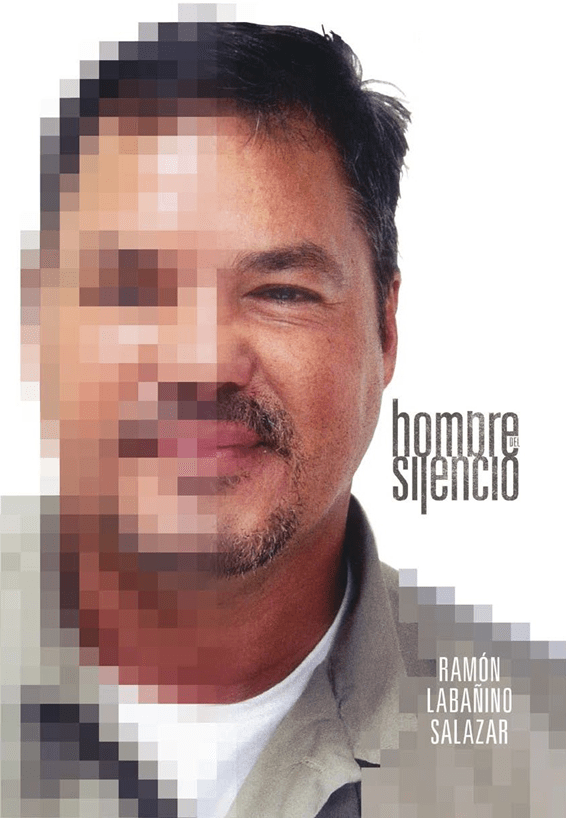
Blood pressure
I remember I was in Miami for prison residency in 2010. One day while playing handball I sprained my foot, it was swollen and painful, so I went to the doctor. He gave me a general check-up, and he detected that my blood pressure was very high.
They started treating me with Amlodipine and Losartan to keep my blood pressure under control. Medications that I still use. It is worth noting that the times when my blood pressure went up the most was when I was sent to the hole. I even had my blood pressure at 186/120 once.
Prison transfers
The process of transferring from one prison to another is what one hates the most. That day they wake you up at three or four in the morning, they put you in chains, your feet, your waist, your hands, a chain that goes from your hand to your waist, and another one from your waist to your feet, and on top of that, the black box between the two hands. All this immobilizes the hands, you cannot do anything.
It is torture. Imagine taking a plane in those conditions, I think I was even claustrophobic, because the fear of the plane falling and not being able to do anything is desperate.
It was under these conditions that the transfers took place. When I arrived at the other prison after a ten or twelve hour flight, I felt very exhausted.
When you arrive at the new prison, a long and annoying process begins, where you are fingerprinted, photographed, interviewed by the psychologist, the psychiatrist, the doctor, the head of security.
The five of us, upon arrival, were sent for at least a week to the hole, a good reception, and then we were taken to the general population, to my new cell, and the process of adaptation began all over again.
PRISON EVENTS
The knife under the bed
To die in order to give a foot on which to stand up to these people who push us to death for their benefit? Gonzalo de Quesada, letter of December 14, 1889.
In Jessup I was in a room of four people and had a very good friendship with a Puerto Rican who shared the room, but over time it seems that he began to feel jealous for some reason that I never defined, perhaps when he saw that I began to receive letters from abroad, and on a mural we had in the cell sometimes put postcards of the Five, which said that we were heroes of Cuba, perhaps because of all those things it seems that he was overcome with envy and began to get upset, and from a good friendship everything took a strange turn.
The man began to change and people advised me to be careful with him, because to the other Cubans, behind my back, he told them that I thought I was a hero. On the face of it we had a normal relationship, but little by little I became aware of his change. For example, I shared everything I had with him and with the people in the room, because I had always done it, and that bothered him. One day, I’m sitting in the unit, and someone put a knife under my bed. That’s what people do when they don’t have the courage to face another prisoner, so they do that bad thing to you, so they send you to the hole, and the guy gets rid of you.
I was sitting in the common area, watching TV, and two guards come to pick me up and tell me that I have to accompany them to the lieutenant’s office. Usually when they say lieutenant’s office there’s a problem. When I get there he tells me they found a knife under my bed. The lieutenant knew me, everybody in Jessup knew me, people knew that I was a political prisoner, that I had been a political prisoner for a lot of years.
I immediately thought it was him because he had no problems with the other Cubans who were with me in the room, nor did he have any problems with anyone in the prison, and he was the only one who was giving those signs. It wasn’t a knife as such what they found, it was like a razor that is made to look like a dagger, but you can’t have it on your property, because you can do physical harm to someone, that’s why they send you to the hole.
When I am talking to the lieutenant, he tells me: Medina, I am not worried about you, I know that it is not yours, I know that someone put it on you, I am worried about who it was, because whoever did it wants to hurt you, I do not want that to happen, but if you find out who it was, we will not let you hurt them. I don’t want there to be problems here. I ask that if you know of any enemy of yours, you tell us. Obviously, I told him I didn’t know anything, I did imagine it was this guy, but I didn’t tell him. I explained to him that they could send the knife to the FBI lab and that they would not find a single print of mine, because I had never touched it. Then he told me that’s why they weren’t going to do anything to me. He told me to go back to the unit, but to keep in mind that if there was someone in the campout who wanted to hurt me, to let him know so he could take them immediately to another place.
I came back right away and when he saw me, he made his eyes like two headlights, because he already thought he had got rid of me. Everyone was watching that. It was a very hard time because of all the intrigues that were formed around this event.
He slept scared, if I got up in the morning to urinate, he woke up worried. And one day I took advantage of the fact that we were alone in the room, I closed the door and I said to him: Boy, what do you want to do, I don’t mess with you, so why do you want to hurt me? What is your problem? Then he said to me: “Medina, I assure you that it was not me, you are a good person, the knife was put there by one of the other Cubans.”
Well, I told him, whatever you want we will solve it here, if you want to have a problem with me we are going to have it here now. I confronted him and his attitude was one of refusal.
He said, “I respect you, I did not do it, that was done by one of the Cubans.”
The man totally denied that he had been the one in the knife incident, and did not want to have an altercation. So I told him that the best thing to do was to distance ourselves. After that, after two or three days, he left that cell, and I was left alone with the other two Cubans, and I never saw him again. That was quite a difficult scene, by the way, one of the most unpleasant things I experienced in prison, because he really wanted to hurt me.
THE BEGINNING OF THE END
Visit of Cuban doctors to Ashland, Kentucky
because the water erases what the fire dictates. Sister Juana Inés de la Cruz
During 2013 and 2014 we noticed some signs that indicated that there were things happening in a very discreet and effective way. For example, in 2014 I had the honor of receiving two Cuban doctors of high professional level who checked the actual state of my knees and their deterioration given the position I had to live in due to the narrowness of the cell.
The process began with exchanges with the State Department and our government. In my case, I had to make requests to the Bureau of Prisons to allow our doctors to enter the prison to check my knees, do x-rays, MRIs and exchange with the U.S. doctors who were treating me. I began the inside application process from Ashland Prison in Kentucky on March 29, 2014.
I had the great honor of meeting Roberto Balmaseda Manent and Pablo Pérez Capdet. I remember that day with great pride and joy. It was the first time that a Cuban officer could enter a U.S. prison. Seeing them there and sharing with them was like having Cuba in an embrace. Of course, the first thing they told me was that they were sending greetings from our homeland and that everything was going well. At the time, I learned that Doctors Ceballos and Balmaseda had a video conference where they questioned the diagnosis, treatment and procedure of the disease that afflicted me.
The diagnosis was osteoarthritis of the knee, when the cartilage of the knee wears away. But the symptoms could be caused by a brain tumor, stress, vision problems, among others. And all the problems required different treatments, and that is what Balmaseda established, because without a proper diagnosis they injected hyaluronic acid into my joint, which could have even caused my death. For that reason they requested to go to the evaluation and scientific discussion with the doctors who were attending me in prison, which they considered impossible given the laws of the country. However, before twenty-four hours had passed, they authorized the visit, Balmaseda was accompanied by doctor Pablo Pérez Capdet and they warned them that when they entered the prison they could not have physical contact with me and that they had the right to suspend the four-hour visit when they determined it.
In the end they were received by the director, the representative of the prisoners and the head of the medical services together with the doctor who was attending me. They tell me that at the beginning everything was very tense, but when they realized that they were not going to make a complaint, the visit turned into a scientific exercise where the criterion of operating on me prevailed and they even offered options of places.
They were both dressed in suits and ties, very professional, and exchanged extensively with the doctors attending me inside the facility. They performed all the tests they wanted, physical check-up, new X-ray plates, handed them what they had. In the end, the conclusions were that the state of my knees was an advanced degenerative deterioration, and that the solution would be the replacement of both. It was obvious to me that I would never undergo such an operation in the United States, only in my homeland, between sister hands and under my sky.
Fortunately, the return to our homeland was that same year, 2014, on December 17, it was very timely in every way, even for the timely treatment of my health condition, which just by arriving on home soil began to improve thanks also to Dr. Balmaseda who continues to treat me.
Freedom, the love of my family and of our people works wonders and miracles. That’s right!
The end
We arrived in Cuba on December 17, but the whole process had begun on December 15, 2014. Already in Cuba were René and Fernando who had served their sentence and returned to their homeland.
I was already seeing some small signs, which was that Gerardo had been transferred from Victorville, the prison he was in, to Atlanta, a national prisoner distribution center. The fact that they transferred Gerardo was very significant, because they had never done that before, for any reason. That gave me food for thought. We already knew about Adriana’s pregnancy, and that made it clear that there were secret conversations between Cuba and the United States.
We noticed signs that something positive was happening. I remember that my wife was visiting, it was the beginning of December.
I told her to get ready, because Gerardo was being brought to the East Coast, so that we would all be closer to Cuba. And jokingly I also told her: Americans like to look for the best time to do things, and December 15 is a good time, because that is when the Congress is in recess, so the president has more mobility of action, until January 20 the Congress is on vacation, and in that period the president makes decisions without having to count on the Congress. I also jokingly told her to buy me some new underpants just in case.
On the 15th, which was Monday, at half past seven in the morning a guard called me and told me: Luis Medina, put your watch in the locker and come with me. It was the beginning of the end, and I did not realize it. I thought I would have some regular appointment.
I followed him and he took me to a room to wait. Once inside he told me to take off my clothes and put on one that was used for traveling. That’s when I realized that I was on my way out, but I was thinking of a medical appointment. After sixteen years in prison, one thinks that this moment will never come, that it cannot be true. A tremendous state of denial of reality appears. When I put on my clothes, they handcuff my waist, my feet, my hands, and they put the black box on me. While I am waiting, I hear the guard say to another guard: This is a rare case, because they called from the White House today at six-thirty in the morning, ordering us to put this man in the nearest airport as soon as possible.
When I hear them say “White House,” “nearest airport,” I said to myself: that’s Cuba, damn it, and right then and there I started to celebrate. Cuba, the family, my people.
At that moment I looked at a wall and thought, I will never see a prison wall again in my life.
Then began a process that looked like a Hollywood movie. We left in a van, I was alone and all chained up, with guards in front, another police car in the back, helicopters flying, the kind of paraphernalia they like to put together.
At that time I was being held in Ashland, which is a low security prison, and the closest airport I had was Lexington, which was a two-hour drive away. I must have left at eight-thirty, and about ten-thirty we arrived in Lexington. Everything was done very quickly there, very professionally. It was to move this person from point A to point B and nobody knew anything else, because it was a presidential order.
I arrived at the airport, they took me out of the car and immediately put me on a six-seater plane, a small plane with only two security guards, the pilot, the co-pilot, and me. We went straight from Lexington, Kentucky to Butner, North Carolina, which is a prison hospital. We got there and they got me off very quickly. Then I hear a guard say:
Hurry up, the other one is coming!
The other one had to be Gerardo or Tony, that was another sign that something big was happening, and when I arrived at the prison everything was fast too, what in other times would have been slow, now flew by. I was received by the warden of the prison, a tall dark-haired North American, who took me to the hole, and when he was about to enter with me he said: Mr. Medina, from now on whatever you need, let me know, we are here at your disposal.
It was a tremendous deference that the warden had that gesture with a prisoner, it convinced me even more that something big was going on. I stayed there for the rest of the day and night looking to see if I could see Gerardo or Tony, but I never saw them, because they put us on different wings in the prison, as they always did.
I spent the whole night doing exercises, planks and crunches. I couldn’t sleep, every time I tried I couldn’t, it was the excitement, the mind was racing.
On Tuesday the 16th, that is, the following day, at half past eight in the morning a Mexican guard came into the cell, and for the first time they spoke to me in Spanish. The guard told me: “Well, Mr. Medina, from now on you are not going to use handcuffs anymore, come with me quickly, you have a visitor. And indeed I went with him, I was thinking of the ambassador who was visiting me to inform me of how the plans were going, and when I came down I saw Gerardo’s shiny bald head and Tony’s head, then I sent myself to run up to them, but before I got there the guards told me to stop, they introduced me to five men in suits and ties, who I later realized were the marshals, who were the ones who accompanied us on the plane back to Cuba.
I greet them and then they let me greet Gerardo and Tony. We hugged each other with tremendous emotion, kisses, hugs, crying, because we men cry too, and after that they sat us down in an office that had a long table, and at the end there was a computer monitor through which we had a teleconference with Cuba, with the Cuban side that led the operation. Gerardo was sitting in the center, I was on Gerardo’s left, and Tony was on the right, watching the monitor. Then the comrade from the Cuban side started saying: Well comrades, I have the honor to inform you that on December 17 you are going to be free men and you are going to be in Cuba.
Tremendous joy, but since we were lost, we didn’t even know what day it was or what time, so Gerardo asked: But what day is today?
Today is the 16th.
Tomorrow then!!!!
Then he says to us, there in front of you is the executive order from the President of the United States, under which you are going to be exonerated from the rest of the sentences.
We will review the document among all the parties, and if there is anything that you see wrong, let us know so that we can correct it.
It starts with Gerardo, who is the one with the longest sentence, and the executive order says: Gerardo Hernandez Nordelo, you in violation of article 294-CJ etc, the President of the United States exonerates you from the charges. The conditions are, you may never return to the United States, you may not receive any remuneration from books or publications, or films made by you in the United States, you may not set foot in extraterritorial territory of the United States such as Puerto Rico and Hawaii. Such were the terms.
Gerardo looked at the paper and saw the presidential stamp, the seal, and the president’s signature, he saw that everything was in order and signed it. I did something similar, the comrade read it and I checked it with my eyes, Ramón Labañino Salazar, alias Luis Medina, violated article 294-CJ, etc, I checked the presidential seal, the signature and everything was fine, therefore, I signed the document. When Tony goes, he puts on his reading glasses, and then he says:
Gentlemen, this is a historical document, you have to go slowly, you have to review it well, because mistakes cannot be made here. And the comrade from the Cuban side, Antonio Guerrero Rodriguez, begins, the president of the United States exonerates you, etc, because you violated article 294-CJ. And at that point Tony interrupts him and he says: Wait, it’s not J, it’s I, you have to consult it…
We were worried, because a delay here could mean more days in jail. I was about to speak when Gerardo told him: “Compadre, don’t be so exquisite, sign this thing and forget about it, we will solve the problem in Cuba. So Tony signed it and we ended the process there.
As it was the 16th they sent us to the hole again, and they also told us the same thing, that whatever we wanted we should ask for, and what we asked for was a bath and to be able to shave, because we were bearded. Then we spent the rest of the night there.
On the 17th, around three o’clock in the morning, they come to pick us up at the cells, and we go down.
We left without handcuffs, we were loose, but when we put on the uniform, the blue pitusa, the white sweater, the jacket, we were posed to travel on the plane, they also gave us a little bag with medicine, aspirin, and those things.
As we were dressed like this and with a bag in our hands, Gera says: the good thing is that when we arrive if there is no musical group we already have our own trio “Los Matamoras”.
And that’s when the jokes started.
When we were about to board the plane the guard told us: “From now on, no more comments in Spanish, you have to do everything in English for security reasons.”
The rest of the trip was spent making Cuban jokes in English, you can imagine.
The instruction for the American side was to arrive in Cuba at the Baracoa airport here in Havana, and we arrived exactly at eight o’clock in the morning. They had everything well calculated.
When we were arriving, Gerardo says in English: we are getting closer and now we can see through the window if there is someone waiting for us, a relative. Immediately the guard came and closed all the windows. The plane landed normally. It stopped for good.
You have to recognize that the Americans are very symbolic people, and when the plane stopped, they took off our handcuffs and chains, because up to that moment we were chained and restrained, and they moved us from the prisoner seats to the seats next to us, which were seats of freedom. Gerardo at the window, me in the middle, and Tony for the aisle. And a wait began that made no sense, because the logical thing to do was to get off the ship. And we realized that there was a problem, because the guards surrounded us. They looked at us with circumspect faces. After a while we were allowed to get off the plane.
When we met the same colleague from the teleconference, who was directing the whole operation on the Cuban side, he greeted us and invited us to go to the Protocol Room, and that is when he explained to us. The problem was that when our plane was taxiing, and we had not yet disembarked, the other plane carrying Alan Gross was already leaving Cuba, it was almost on take-off. So the Cuban side told the U.S. side, “Stop that [Gross’s] plane there, until my three men are out of the plane, on Cuban territory, no one leaves Cuba.”
Remembering the great historical differences and the figures that make our country great, that phrase reminds us of our immortal Antonio Maceo when he says, “Whoever tries to take over Cuba will only collect the dust of its soil, soaked in blood, if he does not perish in the attempt”. Because it is a phrase that only Cubans know how to appreciate, and it is a historical phrase for the 21st century. So that the new generations of Cubans feel, as we do, the honor and pride that we are descendants of Fidel, of Maceo, of Cubans who will never bow down to anything or anyone.
WE ARE BACK!
Meeting with Raúl
Crossing of nothingness, steps of no one? The mouths of time tell the journey.
Eduardo Galeano, Mouths of Time, 2004.
After arriving at the Baracoa airport, and having a brief meeting with the comrades who received us there, we left for the office of our President Raúl Castro. The emotion of this meeting was enormous. The three of us arrived at his office, where he received us with the affable and human embrace of good men, welcomed us to the homeland, and told us that we would be there until 12:00 noon, at which time both he and the President of the United States would give speeches to the press. That historic meeting marked us deeply because of the affection and the honor of meeting our Raul. We waited there, each one of us in a separate room, until we were surprised when our relatives came in and we all melted into a kiss and embrace of love that we had been waiting for for so many years. Seeing Ely, my girls, knowing that I was home, was the greatest joy of my life, all the emotion contained in so many years of waiting, poured out in tears and laughter, in hugs and kisses.
At 12:00 noon was the appearance in the press of both presidents, they announced the release of the three of us, and the beginning of the reestablishment of diplomatic relations between the two countries. A moment of rationality on the part of the government of the President of the United States, Barack Obama, a historic event of which we are honored to be a part, although in some minor way.
When we left there with all our relatives, we went to the graves of our mothers who could not live to experience this moment of so much love and emotions. I was able to fulfill the debt I had with my soul’s Nereida, my mother, when I took a bouquet of flowers to her final resting place, together with my wife, my daughters and my brothers and sisters. In the cemetery, in the streets, in the neighborhood with our neighbors, in every corner of Cuba, we felt the love and affection of the people, of humble people from everywhere, of heartfelt tears, of eternal embrace, of the love of the nation.
We live and continue to live days of great happiness, also of commitment to never fail this people of mambises.
Our meeting with FIDEL, a dream come true
On February 24, 2015 at the Convention Palace, in a special session of our National Assembly of People’s Power we had the highest honor of receiving the decoration of “Heroes of the Cuban Public Republic”. Receiving the order from our beloved Raul with the embrace of our delegates and government representatives is another transcendental moment in our lives, which marked us forever. Especially in the commitment and supreme duty to live and die for our homeland.
Four days later we had the highest privilege of our lives, meeting our Commander Fidel Castro.
The five of us were gathered at my house and around 2:30 p.m. They came to pick us up and took us to our Fidel’s residence. When we arrived, sweet Dalia was waiting for us at the door, as excited as we were for that historic meeting. When I greeted her I asked her how she was, how she was feeling, and she replied: imagine my son, excited to see The Five together, that is the humility of the great ones, when in truth we were honored to be there with them.
Fidel received us with a hug that seems to me to be infinite, affectionate, like a father. To break the ice, he asked us, “How are you doing, were there many mosquitoes in the prison?” We all laughed.
And from there he began to describe to us the history of his experience in the Isla de Pinos prison, and to string together one idea after another about the history of the revolution, the situation of the country, the need to produce more goods for the country, the moringa and its benefits, the state of the world, the damage of climate change, how to improve the lives of human beings, and all with statistical data, accuracies of a privileged and cultured mind.
On a small table he had a group of papers that he read and acted on every day, according to what was confirmed to us.
We told him anecdotes from prison, personal experiences such as the period when Antonio was an engineer at the Santiago de Cuba airport, when they extended its runway and during that time the Comandante visited them frequently to check on the progress of the work. Tony showed him a photo album of his meetings with Fidel during those years.
We had the immense privilege of meeting Fidel the father, the brother who was always concerned about making us feel good, humble and affectionate, who asked us what we liked, what we preferred. Many experiences and much advice was given to us in that unforgettable evening. We were together for more than five hours, at the end of which we decided to leave so as not to abuse their courtesy. The five of us got up at the same time and he looked at us and said, “Where are you going, why are you leaving so soon,” meaning he wanted to stay all night if possible. We had to let him rest. One by one we went to embrace him in farewell. I stayed to be the last of the Five, even after saying goodbye I felt obliged to go back and ask him that question that I had in my mind and that throughout the whole meeting I could not ask him. I returned and said to him: Commander, forgive me, but I cannot leave without asking you this question.
Do you think the Five of us can be more useful?
He looked at me for a few seconds that seemed endless, and answered me:
Be scientists.
That is what our Commander calls us to, to achieve excellence in everything we do.
Today the Five of us are working on different fronts assigned to us by the revolution:
Antonio is vice-president of OSDE GEDIC, a construction design and engineering business group.
René is vice-president of the “José Martí” Cultural Society, presided over by our everlasting Armando Hart.
Fernando is President of ICAP, Instituto Cubano de Amistad con los Pueblos.
Gerardo is Vice-Dean of ISRI, Instituto Superior de Relaciones Internacionales.
And I am vice-president of ANEC, the National Association of Economists and Accountants of Cuba.
And yes, Commander, we will be scientists, just as you instructed us.
THANK YOU FIDEL!
 Chicago ALBA Solidarity
2 thoughts on “Hombre del Silencio: The Prison Diary of Ramon Labanino Part 13: Blood Pressure; Prison Transfers; The knife under the bed; Visit of Cuban doctors to Ashland, Kentucky; The end; Meeting with Raúl; Our meeting with FIDEL, a dream come true”