
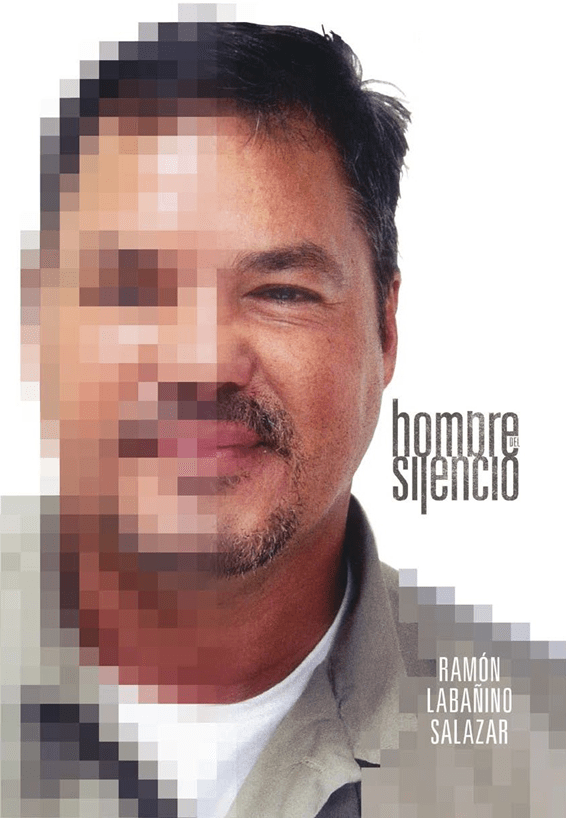
The cursed television
Johnson was a real big guy. Dark, almost six feet tall and four hundred pounds. In Beaumont everyone respected him. He was the only one who dared to work cleaning the guards’ offices, because those who did so were branded as informers and could not live in peace. But he had a terrible weakness: television. He became the owner of one of them. He would always come home from work around 3:00 p.m. and go straight to his room, grab his TV remote, and change channels without looking at anyone, not caring if anyone was watching a program. That had gotten him into arguments with other inmates before, but no one ever got past the harsh words.
One day a white American arrived, about sixty years old, strong, serious. After putting his things in a cell, he sat down in front of Johnson’s television, asked everyone if he could change channels and began to watch a movie. It didn’t last long. After a while it was already 3:00 p.m. and Johnson arrived with his ritual. He went to his room, picked up the remote control and changed the channel without consulting the new tenant. He turned to him and told him he was watching a movie, and Johnson replied that it didn’t matter, that it was his TV set. The white man looked at him with an impressive look on his face and only said:
Oh, it’s like this, okay brother, no problem, he got up with his chair and went to his cell.
That was all that day. The next, about lunch time, as I was crossing the yard to go to the mess hall, I see Johnson walking and exercising, we greeted each other and suddenly a man came up behind him with an awl in his hand, and stuck it in his neck. He was in a cap, long clothes, but I could identify the white man who had just arrived. The four hundred pound man grabbed his profusely bleeding neck, managed to look up and yell something, walked a few steps, and fell to the ground. There began the scurry of guards, closing the yard, everyone on the ground for hours, until they could uncover the assailant.
I don’t know what happened to Johnson, I don’t know if he died, but we never heard from him again. That cursed television set may well have cost him his life. In life, even more so in prison, one cannot have material ties of any kind, much less believe oneself to be the owner of these things. It can cause your death.
Handball practice and physical injuries
He played handball in the morning, afternoon, and evening. I was very enthusiastic about the sport. One day my knees felt like they were locking up, at that moment I stopped playing due to the intense pain. I went to the unit after taking a bath and resting for a while, the pain started to become more intense, and both knees became swollen. The next day I ask to go to the infirmary. When I see the doctor, he tells me: “No, don’t worry, that’s nothing, go to the unit, put ice packs on, put your feet up, take two Tylenol every eight hours and that’s it, you’ll see that the next day you won’t have anything. The reality is that in the hospitals and the prison infirmary they take care of you when it is a matter of life or death, otherwise they don’t give you any attention at all.
I did as indicated and I got better, the pain and inflammation disappeared, I rested for almost a week, and then I continued playing sports.
I never realized when I started limping, it was my dad who noticed that I was walking strangely, differently, and in a visit he told me: You are not walking well, you are not walking like before, you have a problem. Apparently, the injury, poorly treated by the prison doctors, the practice of exercises forcing the injured knees, the humidity of the hole, and the coldness caused this poor physical condition.
Light in the Darkness
Something that helped we Cuban Five a lot at was the program La luz en la Oscuridad (Light in the Darkness), a radio program that came from the idea of Arleen Rodríguez Derivet and my wife Elizabeth. It happened that while we were still in Miami, at the beginning of 2002, we could communicate with Cuba at six o’clock in the morning. Half an hour later we had a space where we could listen to Radio Rebelde, and we liked that idea, to listen to Cuba, to start the morning in contact with the Island, and to know what was going on. So they came up with the idea of making a program to be broadcast every Sunday on Radio Rebelde, and it was called La luz en la Oscuridad (Light in the Darkness), which was what was said every time the program started, and it started right after the Comandante said the famous word “Volverán” (They will be back).
I liked listening to it very much. At first they started talking about the Five, our biographies, interviewing our families, friends, and neighbors. Listening to our wives and daughters, our parents, our siblings and even a neighbor meant a lot to us. At the same time, the narration was linked to Cuban current affairs, with news of the day, world news, our internal problems, cultural activities, music. It had a very nice music section from which we asked for songs and melodies, and they satisfied our requests, it was music by Silvio, by Pablo, all kinds of music, and they also included poetry.
Tony and I wrote poems, we even had a poetry contest. We played chess through the transmission with the children of the island, which was very interesting. The children we played with were from the Instituto Superior Latinoamericano de Ajedrez, and they challenged us, which was very nice.
We against the kids, and in the two games we played, Tony and I won. It was very nice, because the game went like this: one Sunday they would say their move, and the other Sunday we would respond with ours. And it was very useful for us. For me La luz en la Oscuridad was more than a program, it was an experience, it was the umbilical thread that united me with my people. Because the program was a major moral support, when I listened to La luz en la Oscuridad I felt accompanied in the solitude of prison, even in the most difficult moments when they did not let you out of the cell, and there was no way to get out, then listening to the program gave you everything you needed. In the hole I could not hear from the family, you could not make a phone call, but I was sure that on Sunday I would hear our relatives talking, my dad, the girls, Raul and Fidel, the speeches, the messages the children sent, and that became a weapon to tolerate the confinement.
Excerpts from the Radio Rebelde program La Luz en la Oscuridad. March 1st, 2015
Fidel: (off-screen) “The innocence of those patriots is total… I only tell you one thing, they will come back!
Raul: (in voice-over) “As Fidel promised, Gerardo, Ramon and Antonio arrived today to our homeland”.
(Announcer) They’ve returned!
Arleen Rodríguez Derivet (journalist coordinator): I already told you how well the suit suits you…
Ramón Labañino: Thank you, but you are much more beautiful, comrade… (laughs).
What we experienced on February 24, I would say in short that it is the culmination of all the emotions, in short, since we got off the plane on December 17, 2014 we have not stopped getting excited… the truth, it is one emotion after another, one happiness greater than the other, a beautiful virtue to share with the people, the kiss, the embrace, the affection of the children….But February 24 was a culmination of all the emotions, for the symbolism, for the intense memories of the prison, I dare to say it, they missed a revolutionary that we all know of in the Fertile Prison Prison and it was a reality, because we imagined so many things but it was very beautiful and very deep, the simple also overwhelms the immense, the preciousness of being in front of the national insignia, the coat of arms, in front of Raul who is the personification of the Cuban Revolution together with the Commander and all our leadership, in front of all the comrades of the leadership of the country, our brothers of the Parliament, journalists, our relatives and it was very beautiful to be all there, and the children made us cry, the children of La Colmenita finished us off, they made us cry intensely.
Arleen: You were aware of the play but had not seen it, right?
Ramón: They had explained the whole play to us, the girls and my wife had told me that they always cried a lot, because it is very intense, humanly very intense, it touches the innermost fibers of the family, of our history, the tearing apart that is prison, of the distance from your loved ones, of seeing your daughters grow up far from you and not being able to do anything for them, the helplessness in the face of an illness and a difficult problem at home. The conviction that our brothers and our people were there with us is what kept us alive, confident that there was no problem that could not be solved because they were there with us. Abracadabra brings all of that, it shows us the reality that even we want to hide, for the five of us the most painful thing is that feeling of being torn deep inside and they showed it to us there as it was. I am even glad that they showed us other photos, because all that would have turned into tears, there were also photos of the girls, of all the things there, but for me, apart from the enormous symbolism of receiving this distinction that is so extraordinarily valuable for us, it was impressive… Someone asked me recently what it meant to be a hero, my lawyer asked me yesterday, it is a profound question and I think and I told him with the speed that we Cubans have learned in the situations that we are presented with: To be a hero is the highest degree of responsibility before your people, because more than pinning on your chest an insignia that is so valuable, I dare to repeat the words I said at that moment: “I will wear it with the pride with which a soldier of the Homeland wears his most precious insignia, it is the responsibility of being able to represent our people with dignity, to be loyal to our revolutionary principles, to continue the revolutionary work of socialism, to always try to give our best effort for our people”, that is what being a hero means to me. (Applause)
Arleen: …and what you said to Raul.
Ramón: What I said to Raúl? (laughs) I don’t like to be indiscreet, but well what happened was that when he went to put the insignia on me, he pricked me a little, and I told him: “prick there, there is a man here…” (laughs) and then he laughed and told me: “No, no, I don’t want to prick you”; and that should remain a secret, Arleen, I don’t want comrade Raúl to think, “you said that to the people …” We send an embrace to the Commander because he is the architect of this reality that we are living today with his proverbial vision and the way he has of uniting and calculating the future, he knew that one day we would be here thanks to the effort of all the comrades, of Raúl, of Alarcón, of the lawyers here present, well, of all the comrades is that this became a reality, and thanks to our people and the international solidarity, but we must always remember the Commander, an embrace for him from The Five, wherever he may be.
Rita in hell
I remember Hurricane Rita, I was in Beaumont, Texas, it was the only time I thought I was going to die, because I have gone through strange things, and what has saved me psychologically in the end is the conviction that everything passes, and then the time will come to tell about it, in this case it was The Light in the Darkness that gave me the strength to endure things that were beyond my physical capabilities.
Cyclone Rita was a disaster. They announced it on the radio. They said that a high category cyclone was coming, and we had to be careful. I didn’t have a worse time because talking to my Colombian friend, Jorge Bueno, he told me: “Hey boss, we are going to accumulate water because a cyclone is coming. So we took a nylon garbage bag, filled it with water and kept it inside the cell. We had to guarantee water for drinking, and ultimately for cooking.
It happened that an avalanche of rain and wind collapsed part of the houses, and after a while we learned that the governor had ordered everyone to evacuate the town, because it was a coastal area and the hurricane was going to hit, but the warden of the prison, a brown North American, said that the prison could withstand any kind of hurricane, because it was a modern construction, that’s why he didn’t evacuate anyone. All the other people were leaving town, and along with them the families of the guards. Then at two o’clock in the morning the gusts began, and the electricity was cut, the small transformer of the prison was destroyed and no longer generated electricity, and then the ventilation was turned off, which although it seemed a luxury of first world prisons, the air conditioning becomes a great necessity, because the cell is hermetically sealed, and the air is the only oxygen intake, because from the outside you only get some breeze through the small slot that makes the door with the floor. We could not breathe, in the cell we are two people, now without water, without light, without air conditioning; everything is gone.
The toilet was used and had to be covered with a towel, because the stench was terrible, and you couldn’t flush, and so we spent three weeks in that situation. At the beginning one was adapting, but then it became unbearable.
Many guards were evacuated with their families, they closed the cells and left, one or two remained in each unit. There were prisoners with diseases, hepatitis, asthma, high blood pressure, and eventually four people who had heart and diabetes problems that required medication died.
The food was handed out when they remembered, they would give you a little bag with two or three slices of bread, a slice of plastic ham, a square of cheese, and there was nothing else.
What saved me was that bag with water, I poured a little every day, I took a small towel, wet it and soaped it, I took a tremendous bath that cooled me down, because the heat was very high inside the cell.
As the entire city was evacuated, the firefighters also left. When they returned, they were busy rescuing people from the city, and the prison was the last thing they attended to. For three weeks there was no electricity. We found out later, but they had to bring in workers from outside the state to repair the electric generator, because it was not working.
It was in this process that the moment came when I really felt that I was lacking oxygen.
I remember that, in the middle of everything, the warden visited us, and the prisoners shouted strong insults at him. I myself told him a series of things: that he was violating human and constitutional rights, that how long were they going to continue with such disrespect.
He would look at us and say to a guard: Write down his name. It was to threaten us.
Then came a moment when I felt lack of oxygen, and I opted to clean the floor, throw a sheet and put my nose as close as possible to the slot in the door, and from there a little breeze came in that tasted like glory, and when The Light in the Darkness started at midnight, I was disconnected from my situation, because with the transmission I was able to get out of that terrible context. I can literally say that that program saved my life.
After three weeks the prison returned to normal little by little. There was a bad smell in the cells, and the walls were sweating, there were prisoners who began to suffer from fungus in their lungs due to the humidity and respiratory problems.
Later a lawsuit was filed against the prison, and they even wanted me to be on the list of plaintiffs, but my colleagues at the Cuban Interests Section in Washington suggested that I should not do it so as not to create extra conflicts, because the Five were organizing our appeals, but the others filed a lawsuit and some won some money as compensation for the damages they caused us by not evacuating the prison.
The cells
Prisons are not all the same, neither are the cells. The cell in the hole, where we ended up at the beginning, is a space of seven by nine feet, attached to the wall has an iron bunk bed with two plates of the same material that were the racks, on top a thin mattress, sometimes a pillow, sometimes not, it depends on luck. Right next to the bed is the metal toilet, and a shower, right there in a small cubicle of one meter by one meter, or maybe less, eighty centimeters. It’s all iron and stainless steel. At one foot of the bed, above that toilet, is a polished metal mirror, which is where you look at your face to shave or comb your hair, and next to it is the sink. That’s the hole.
There you have to live, twenty-four hours locked up, although they say it is twenty-three with one hour of recreation, but that is false. At the beginning they never took us out for recreation. At six o’clock in the morning, when breakfast came, you would ask the guard to take you out, he would write you down on a list, and supposedly later you would go to recreation, which never happened in the initial period.
When I was alone in the hole I tried to make the time pass as quickly as possible, I did a lot of exercises, planks, and abdominal crunches.
I would walk from one wall to the other for a long time, and then I would bathe and shave.
There is nothing to do, nothing at all, locked up in that place you just chose to sleep as much as possible as long as you could do it, because at night, most of the time some kind of uproar. In those places there are a lot of inmates who are crazy, who get into fights at night with their roommates, because they usually sleep during the day.
There is nothing to read either, they forbid you to read anything, they even denied me a Bible. When you get a book or a newspaper, you take care of it like a relic. At the beginning I used to read everything that was written on the milk cartons they gave me, the diets, vitamins, proteins, etc. were described there. I kept the milk container to read it later. When I managed to get my hands on a book, I turned reading into the most important event of the day.
The first reading materials were mainly newspapers and magazines, which were provided by the prisoners themselves by means of a string that was made with a strip cut from a sheet, at the end of which they put an empty toothpaste tube with an AA battery inside to make weight, They would throw it under the slot in the door with such good aim that it would reach the chosen cell. When you picked up the string, you pulled what they sent you, newspapers, magazines, books, pencils, writing paper, cartridges of instant coffee, packets of instant soup, etc.
That was inside the hole; now, outside the hole, the showers were not inside the cells. The units are made up of two floors, a large lower floor, with a common area where the televisions are located, one in each column, there are places where there are six, in other places there are eight, depending on the positions. Each television has, as I have already said, an owner, a mafia. In that area there are also tables to play chess and checkers, so the bathrooms are almost always in a little corner, at the side of the guard’s office, there are almost always three or four bathrooms upstairs, and three or four downstairs, in the end there are six or eight in total. It’s a normal shower with a rectangular wooden door that covers most of the body. You can see your legs and head, and it’s quite narrow. For me it was very uncomfortable because of the width of my shoulders, however, there were other bathrooms that were a little wider. Sometimes you could find one for the handicapped that was more spacious.
In total there was room for 132 people in each unit, because we had about 30 cells upstairs and 30 cells downstairs, in total 120 inmates. Some units had 32 cells per floor, in the end 64, and in each cell there was room for two people, so the maximum number of prisoners is 132 to 140 people.
When you are placed with the general population, the cells have bunk beds, and a toilet, which was not metal as in the hole, but porcelain, a luxury. And when inmates want to use the toilet with privacy, they tell the other fellow to leave the room, and cover the door slot with a paper or towel. All the doors have a rectangular slot, about eighty centimeters long by about twenty centimeters wide, which makes it easy for the guards to watch at all hours.
The cells are always seven by nine feet. In some places they may be a little larger, but that’s the average.
Sometimes you could find a microwave inside the unit, and in the prisons where there was not much of a problem we could cook. In the prison there is a commissary, which is like a little store where they sell basic necessities such as rice and pre-cooked beans, which are ready with a little hot water, ready to eat.
When I arrived at Beaumont, for a long period I was alone in my cell, but as the prison filled up, I began to have different roommates, and so I began to experience other, more complex dynamics.
 Chicago ALBA Solidarity
2 thoughts on “Hombre del Silencio: The Prison Diary of Ramon Labanino Part 7: The cursed television; Handball practice and physical injuries; Light in the Darkness; Excerpts from the Radio Rebelde program La Luz en la Oscuridad. March 1st, 2015; The cells”