
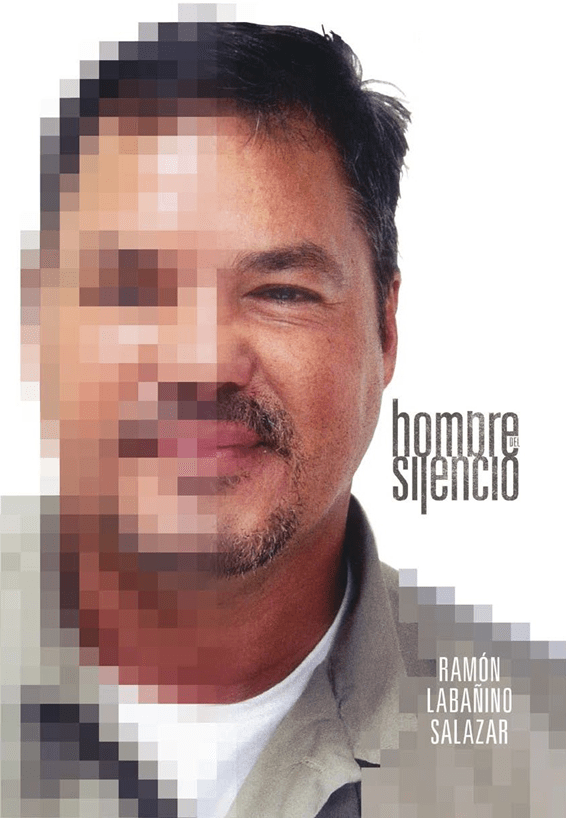
What did we do to get out of the hole?
We were in the hole because they wanted us to be there, it was a way of punishing us, but we began to make demands through internal prison forms. Inside the hole one can ask for better conditions, and for this purpose they use some forms that are Bp-8, Bp-9, Bp-10.
They are legal claims. The Bp-8 is a request that you make to the floor, to the floor captain, who you ask to place you in the population, because there’s no reason for them to have you in the hole. If that doesn’t work, you escalate it to the head of the prison. If the warden says no, you raise it to the region, if the head of the region says no, you can raise it to the national level, that is, it is a staggering of requests that one can make. We started this way, once we discovered that this existed, we started to do it, and one day, when we accumulated enough information, we agreed with the lawyers and made a petition to the building of the Detention Center where we were located, asking to be taken down to the population because there was no reason for us to be punished.
It had even happened that sometimes we would make a request to an officer, and in front of us he would tear it up and throw it in the trash can, but we had a copy of the request where we wrote down “this order was destroyed by officer Richard Hernandez at 7:40 at night, in the hole”. He destroyed it, but we had the copy with the date and time he did it. And we took that document to the Court. And we called that Richard Hernandez “supina”. We called the whole building supina. Supina [court summons or subpoena] is an order of obligation to go to the court or else you will be fined or have to go to prison. If you get a summons, you have to appear even against your will, and people are terrified of that, because a summons means you are going to be charged with something. And what we did was that after we accumulated a lot of papers, we sued the Bureau of Prisons, the Miami building, from the warden to the last officer who tore the paper.
I remember it was a Friday and the trial was going to be on Monday. The five of us were walking around, and an officer comes and tells me, because I was the one closest to the door:
Medina, come here, the captain wants to talk to you.
He was referring to the captain of the hole. In prison they called me Luis Medina, my false identity in the United States. When I arrived the man he said to me: “Come here boy, what do you want, why are you asking us to go to court on Monday?”
Well, the problem is that we have been in the hole for seventeen months in violation of all our rights, we have not committed any crime, it is a violation of our constitutional rights, human rights, even legal rights, because the five of us are defendants in the trial together, and in the conditions of the hole we cannot prepare ourselves. We cannot have a physical visit with the lawyers, everything is through a glass, we cannot have contact among the five of us.
Then the guy said to me:
Forget about it, it’s not going to happen.
Well, what we are asking for is to be lowered into the penal population, that is what Monday’s trial is for. You say no, we say yes. See you in court on Monday.
And I left. I told the guys. It wasn’t five minutes later and there’s a knock on the door, and the same agent as before says to me:
Medina, come here, the captain wants to talk to you again.
Captain, what’s going on?
I already talked to the warden, I talked to everybody. All right, let’s take them down to the population, to the lower floors.
Well, we have been in the hole for seventeen months for security reasons according to you, we want you to put the five of us on the same floor, because after seventeen months if you put the five of us together we can take care of each other.
Then the captain replies:
No, that’s not going to be it, forget about it.
Well, no problem, we’ll see you in court on Monday, that’s what the trial is for.
I leave again, and when I tell the guys about it they tell me: Coño Ramón, you went too far compadre, the important thing is to be on the floors.
Gentlemen, we are here in positions of strength, now we are the ones who have the strength. They do not want to go to trial, let’s see what happens.
Five minutes later there is a knock on the door:
Medina, the captain wants to talk to you again.
I go over there and the captain tells me:
Well, all right now, not one more, let’s take them all down to the seventh floor and you organize yourselves.
Then I wanted to act like I was a damn person and I told him:
We would like to be put two and two and the other to stay alone in the cell.
Then he said no, that this had to be discussed with the head of the unit.
I was about to tell him that if he didn’t give it to me I was going to see him in court on Monday, but I didn’t, because it was already too much. That’s how we managed to get out of the hole after seventeen months.
Then came the seven-month long trial, of which René is making a Diary. At the end of the seven months came the sentence, of course we were found guilty on all charges, on the twenty-six charges imposed, and in December 2001 was the ruling of the Court.
The Sentences
They were huge. They gave us the maximum that was in the sentencing guidelines, the maximum that was in each section, the judge did not consider the mitigating factor that we might have saved the lives of innocent human beings. And this despite the fact that September 11, the Twin Towers, had already happened, because it was September 11, 2001, and the sentences were handed down in December 2001.
We made a reference of the action, we thought that the judge was going to realize that we were trying to prevent something similar for Cuba, but even so, there was no way, because the process was totally political, and that is why we had the longest sentences. To René fifteen years, to Fernando nineteen, to Tony a life sentence plus ten years, to Gerardo two life sentences plus fifteen years, which means that Gerardo had to die twice, be born again and serve fifteen more years. And in my case it was a life sentence plus eighteen years. I died once, was born again, and did eighteen more years.
That is how the sentences were, and then comes the process of going to the prisons. Depending on the number of years you are given, you are placed in a certain prison, you go, for example, for a medium, a low, etc. Even in terms of security levels, penitentiaries are very complicated.
September 12, 2002, Thursday
We have been on lockdown for five days.
Since Sunday 8, the entire prison locked in their cells. There was gang warfare:
Three blacks with big knives run after the white man, stabbing him viciously everywhere, he descends the stairs in confusion, fear on his face, red cracks shadow his sweater, another white man, the black shadows do not rest their perfidy, he runs, falls stumbling, stretches his hands and legs, while the three blacks continue piercing his body, already emptied of blood, until they separate, someone goes to hide the lethal “soul,” the weapons. There are no guards, there are never any in moments of criminality, then they appear, in herds, to pick up the almost inert body, they take him, in haste, to the hospital without doctors or medicine: easy death. In my cell, alone, I read and write, saving battery power for the news program Portada de Radio Rebelde.
I do strong exercises: I kick and punch three black shadows in the air…
 Chicago ALBA Solidarity
3 thoughts on “Hombre del Silencio: The Prison Diary of Ramon Labanino [one of the Cuban 5 heroes] Part 2: What did we do to get out of the hole; The Sentences”