
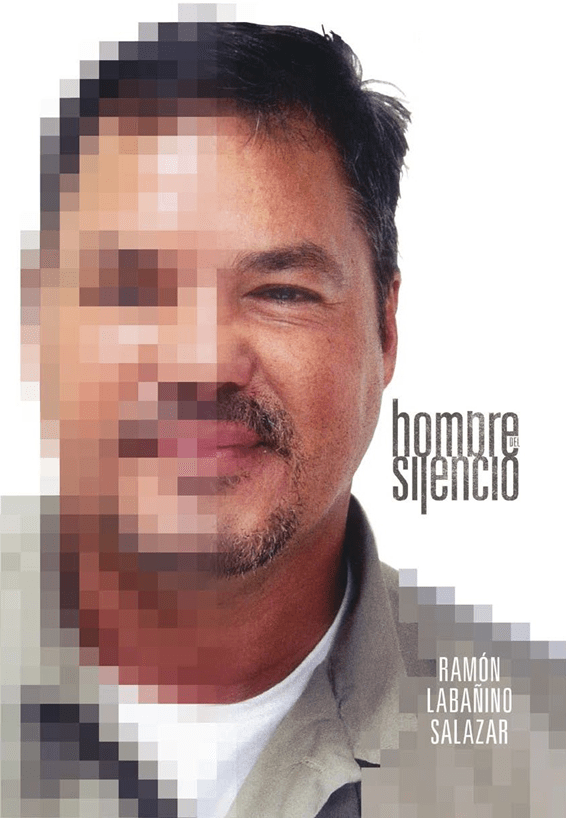
TO BE A MAN OF FIDEL
Elier Ramirez Cañedo
In spite of all the arguments expressed during years of intense struggle for the release of the Five, for truth and justice, I believe that an initial explanation is necessary, especially considering that there may still be some foreign readers who are victims of media manipulation or who have little or no information about who the Five were, what mission they fulfilled in the United States and why they were taken to prison.
The case of the Five (Antonio Guerrero, Ramón Labañino, René González, Gerardo Hernández and Fernando González) was a fabricated case by the U.S. government, with the overreaching participation of the FBI. They were accused of espionage and, in addition, Gerardo Hernandez, of conspiracy to commit murder. However, in May 2001, the Prosecutor’s Office itself requested that the accusation against Gerardo be withdrawn, recognizing that it could not be sustained. In 2009, the Court of Appeals decided to revoke the sentences imposed on the charge of “conspiracy to commit espionage”, because fourteen judges had unanimously determined that there was nothing in this case that affected the national security of the United States, nor any evidence of espionage. But the U.S. government again prevented justice from being done and these events from making the news.
The most perverse part of this whole story is the fact that the U.S. government tried to sell an image of The Five as criminals who wanted to destroy that nation, and at the same time, protected the real terrorists acting in its territory, whose movements and plans they had the necessary information to put them behind bars, thus putting at risk not only the lives of the Cubans, but also those of the US citizens themselves.
Ramón ratifies it in this book: “Because our fight against terrorism is against all types of terrorism, and not only against the one that affects the Island”. That is why we maintain that The Five – and honest Americans who know their story agree – could be considered not only heroes of Cuba, but of many countries in the world, including even the United States itself. One of those honest Americans was Ramón’s own lawyer, William Norris, who went so far as to tell the Court: “I want to tell the Court that it has been a privilege for me to defend him, because the United States would like to have men like Ramón in its military ranks.”
The only “crime” of the Five was to have penetrated the organizations that practiced terrorism against Cuba from the United States. Terrorism that has cost the Cuban people 3,478 dead and 2,099 disabled.
Terrorism against the largest of the Antilles has also caused pain and material damage beyond our borders. To mention just a few examples: the six French sailors who died during the brutal sabotage of the steamship La Coubre in March 1960, the eleven Guyanese and five North Koreans who died when the Cubana plane was blown up in mid-flight in Barbados in October 1976, or Fabio Di Celmo, the young Italian tourist who was the victim of a terrorist act against Cuba when a bomb ordered by Luis Posada Carriles exploded in the Copacabana Hotel in Havana. The list is much longer and the consequences of pain and suffering of the loved ones are incalculable. It is also known from research that the U.S. territory was the most affected by Cuban terrorism in the 1970s, as part of what was called the “war for the roads of the world”. The Five were accused of “conspiracy”, when the real conspiracy came from the U.S. government to subject them to the cruelest and most inhumane punishments. The Atlanta Court of Appeals in August 2005 had decided to annul the rigged trial.
The government’s pressures eventually succeeded in bringing about a retraction. Part of this government conspiracy consisted of paying the local Miami press and other recruited journalists, illegally using federal budget funds, to unleash a sensationalist campaign against the Cubans to influence the jury’s decision. Man of Silence. Prison Diary of Ramón Labañino Salazar, is a shocking book. For those who may still think that The Five lived in a differentiated and easy environment in U.S. prisons, this book is the best lie. As Ramón describes, surviving prison conditions in the United States was a very difficult experience: “for us it was very important to learn to live together so that we would not be left with any bad habits, and it was so important because we had firmly proposed it, we had to come out better human beings than we were when we entered, and that seems not to be the case, but it is a challenge”. The coexistence with other prisoners, drug trafficking, violence, murders, the hole, tuberculosis and other infectious diseases, fights, mafias and other prison phenomena are described by Ramón. It would seem that this is a Hollywood film, but no, it is pure reality. In that context, which lasted for almost sixteen years, family, solidarity, homeland and Fidel were for Ramón – Luis Medina in his pseudonym – the main resources to resist and win.
Ramón makes reference to an anecdote that impacts and moves, and it has to do with what it meant to him inside that maximum security prison in Beaumont, Texas, to be considered by the rest of the inmates as a man of Fidel, I do not advance it to the reader so that he can enjoy it directly from the narration of its author, but I do think it is important to quote his reflection about that experience: “That is why I have said it wherever I want and now I repeat it again, Whatever work you do one day, whatever mission you fulfill in life, the highest pride we Cubans have today is that we are and have the honor of being Fidel’s men and women.”
We must thank Ramón today and always for having decided to offer this truly edifying testimony. We already had René’s diary, Escrito desde el banquillo, published by Editorial Capitán San Luis, in three volumes. Hopefully soon we Cubans will also be able to enjoy the memoirs of Fernando, Tony and Gerardo. Cuba, especially the new generations, need this symbolic capital, closer to their historical times. The Five, without a doubt, remind us every day that the epic is still part of our reality. When the great Ebola epidemic in Africa became evident once again, hundreds of Cuban doctors were willing to go to distant lands to save lives, even at the risk of giving their own. Undoubtedly, this sense of justice, this culture of resistance and liberation, is part of our spiritual fabric. In the most fateful times, it springs even more strongly from the most authentic entrails of our people.
We cannot forget the circumstances in which The Five went out to fulfill their honorable missions, in those difficult years of the Special Period in the 90’s when few bet on the survival of the Cuban Revolution in the face of the collapse of the socialist camp, however, they knew how to draw inspiration from the most glorious of our patriotic tradition and rebel once again against the historically impossible. But not only did they go out to honorably fulfill their mission, but in them there was not the slightest hesitation in the face of adversity and in the most uncertain hours they knew how to grow as those revolutionaries that Bertolt Brecht called the indispensable ones, who are none other than those who fight all their lives.
With their attitude, the Five wrote one of the most beautiful pages of dignity and heroism in our contemporary history. The contemporary position, which reminds us of the position of Céspedes at the crucial moment of the uprising of October 10, 1868; that of Maceo in the Baraguá Protest; that of Martí when he did not cease in his determination to restart the struggle despite the dramatic failure of the expedition of La Fernandina; that of Mella, Villena and Guiteras in the face of corrupt governments and Yankee imperialism; that of Almeida with his shout:
“Nobody surrenders here!”… in Pío’s Alegría, that of Che, ready to leave his bones in any corner of the world in defense of the noblest ideals of justice and freedom; that of Raúl and Fidel, in the Moncada, the landing of the Granma, the Sierra, in Girón, the October Crisis, and in many other moments of our revolutionary epic; as well as many other figures of our history, who forged a fighting spirit in our people that was also present in the most defining moments of The Five. As Ramón emphasizes: “for our people surrendering is not an option, fighting is”.
The book ends with a happy and exciting ending, on December 17, 2014, Saint Lazarus Day, with the definitive return to the homeland of Ramón, Tony and Gerardo, their meetings with Army General Raúl Castro, and the Commander in Chief. A jury of millions put an end to injustice. Cuba and its leaders did not stop fighting for a single moment for their brave sons. That unknown prisoner, who in the most critical hours of the arrest exclaimed to the Five: “Be strong there, you cannot betray the homeland. Fidel will not abandon you”. And once again the Commander was not mistaken, when with his infinite faith in victory, based on an iron will to fight, he said: “They will come back!
Elier Ramirez Cañedo
.
THE LONG NIGHT BEGINS…
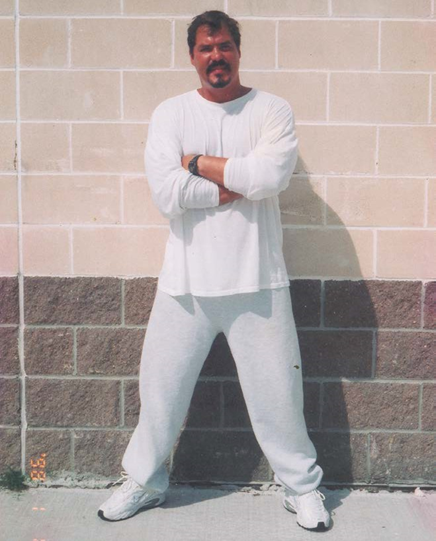
Ramón Labañino, Beaumont, Texas 2006
Dear family:
Receive all of you, this great love of giants, my appreciation and affection, which every day becomes bigger and infinite.
I seem to see the faces of each one of you, and I know that today you are getting to know a little better what “Papi” was doing in each one of those trips and absences that seemed endless, according to what you yourselves told me sometimes.
Well, today I can speak to you more frankly and I think I no longer have much to say, since I imagine that you already know more about my life than I do myself. That makes me happy because it is very difficult for me to talk about myself, as you know about my letters; but sometimes there are explanations that are necessary and this is one of these occasions.
I have always owed myself to my homeland, and to protect the dream of yourselves, of our children and of that eternal family that is Cuba, I had to leave one day, and although I never dreamed of what is happening, I can now tell you my truth.
I hope you can now understand why I could not share more with you, why I was absent so much and so often and even on important dates, birthdays, end of the year, anniversaries, I could not be present. You can be sure that I always longed to be there with you, at our meals and celebrations and also in every difficult moment. You can also be sure that my heart was always in each one of you and I was never absent.
Today I remember with joy and emotion every sweet and loving moment I lived, since I was born until my last day. And I am only sorry that we have not shared much more; but it does not grieve me, because the duty itself comforts and encourages me. Besides, I know that sooner rather than later we will be together again and we will make up for each of my absences and more than make up for it.
Don’t worry about me, I’m fine, besides I listen to you through the small radio I have, besides we never feel alone, because we know that all the people and the truth of the world accompanies us. The five of us are as united as the earth and its roots and nothing and no one can leave us. Always trust me, as much as I trust you and this noble cause that moves me.
I received everyone’s letters and photos. I hope to have time to respond to each one of you; but if it is not possible this time because we are making sure to get them to you as soon as possible, please receive this letter which is dedicated to all of you; my dad, my brothers, my dear uncle-father Misael, my nephew, neighbors and my big family from the East.
I love the photos, everyone looks great and younger every day.
I hope you can send me more in the future.
I was very happy to hear my dad’s voice in the TV interview, in which my daughters also spoke. The old man was very good and I think he can already be a movie actor.
Thank you for all the letters of love and support, I enjoyed them very much. Keep writing to me and I hope my neighbors can write to me. You don’t know how much I miss you all.
Tell José Luis that I will answer his letter, he has no idea how much we have talked here about our childhood, our childhood antics, in whose episodes I could not fail to mention him. I also send special greetings to Dulce, who has always been like a second mom, a hug to Amado my other little brother, a kiss and all my love to Deysi and her children, especially to Yaima who is always present to me. I hope to hear more from all of you and that you will write me someday.
Well, beloved family, take care of yourselves, take care of the old man who has to be “whole” for my return. Keep the faith and firmness that soon “I will be back”.
Until that beautiful moment arrives, I send you all my love. Daddy” Ramon loves you very much.
July 15/ 2001. 4:24 p.m.
.
Love grows, grows like pine trees, grows like palm trees. And from the top of it the world looks small. The work in front, and love inside. José Martí
The year was 1990
When the Soviet Union and the socialist countries of Eastern Europe fell, Cuba was left alone, our option was to survive, we had no alternative but to resist. For our people, surrender is not an option, fighting is. Our enemies in Miami, for their part, began to set us under tremendous fire. All the socialist countries had disappeared, and Cuba was next, at least that is what they thought, and the extreme right, seeing that time was passing and Cuba was holding on, began to take more aggressive actions, including sabotage: bombs in hotels, in restaurants, bombs in ships, in airplanes. Because of this, the Cuban government decided to prepare a group of comrades from the state security, and sent them to monitor these terrorist acts, in order to detect them, prevent them, and unmask them, and above all to prevent innocent people from dying. I was part of the group. In the course of that investigation we discovered that they wanted to plant bombs not only in Cuba, but also inside the United States, provoking, in the face of the death of American citizens, the longed-for invasion. Because our fight against terrorism is against all types of terrorism, and not only against terrorism affecting the island. Because of that, five of us were sent there, there were many more of us, a larger group, the fact is that we carried out several important anti-terrorist activities, foreseeing the explosion of ships full of explosives, explosions in restaurants, hotels, airplanes. In 1994 there were very strong signs that terrorists wanted to bomb a US plane flying to Costa Rica, and other important acts of terrorism, and therefore, our Commander Fidel Castro sent, through Gabriel García Márquez, the famous Colombian writer, a letter to Clinton, explaining all the terrorist acts that were planned to be carried out. The letter was sent to him by a high representative of the Clinton administration, and FBI commissions were sent to Cuba. Much of the information we gathered was given to the FBI, with specific data on individuals, videos, recordings, etc. The FBI at that time promised that they were going to take measures and organize actions in relation to what was going on, and in reality, years later, in 1998, we were imprisoned. That is the real answer that the FBI gave. Our trial is political, because at that very moment the United States was carrying out a supposed war against terrorism in Iraq, and at the same time decided to put five anti-terrorists behind bars, a totally absurd thing, because Cuba only wanted to defend itself against terrorism. We never carried out an act against the United States, and it has never been the intention of our government. The fact is that on September 12, 1998, at 5:30 a.m., FBI officers burst into the different houses of the five of us. In my specific case, I lived in a building in Hollywood, Hollywood Beach, apartment 3F of 1776 Street, in what is called Hollywood Circle, very famous and well known; at that hour and with all the equipment that we know, they broke down the door with an iron pipe, shouting loudly so that we would lie on the floor, my apartment was very small, and the entrance door was about five meters from the bed, there was no time to react.
At that hour one is in a deep sleep, and I reacted, I jumped up and grabbed one of the officers and we fell to the floor, then I felt the man’s gun to my temple, I don’t know how tall he was, but he was bigger than me.
At that moment Fernando was with me, we were both arrested in the same place, because for work reasons I had to hand over certain things to him, and at that moment they arrested us both. There they threw me on the floor, chained me, put handcuffs on my wrists behind my back, and threw a shirt over me, then we went downstairs, where there was a tremendous operation, with helicopters in the air, like in a movie. They took us straight to the FBI General Staff in Miami, and there they subjected us to interviews, supposedly interviews to convince us to collaborate with the US government, arguing that Fidel was going to abandon us.
At that moment it all began, in a similar way it happened to my brothers, it happened more or less in these terms, perhaps with other nuances, but in the same conditions my interview began. I was sitting on a chair with one hand cuffed to the wall, and an FBI officer comes in, evidently Puerto Rican, and starts telling me:
I am your colleague, what I want is to help you, all we want to know is your willingness to collaborate with us, we want you to tell us if you are willing to collaborate with us.
Well, I don’t know what you guys want.
No, what we want you to tell us is your name, place of birth, where you were born, etc.
My name is Luis Medina, I was born in Houston, Texas, and raised in Puerto Rico.
All this with a Puerto Rican accent, because I was pretending to be a Puerto Rican.
The officer answers me:
No, you misunderstood. I want to help you. You tell me the truth and you go to the street, trust me that I want to help you, you will be a free man, but tell me your real name, we know it, but we want you to tell us your real name, forget about Fidel, forget about Cuba, nobody will help you here, when you are in prison, you are screwed.
Well, what do you want?
Your name and surname.
Well, my name is Luis Medina, I was born in Houston, Texas, and I grew up in Puerto Rico.
Then he replied.
No, you have not understood, if you collaborate with us right now you go out to the street, we can give you a new identity, place you in a Caribbean island, whatever you want, money, but what we want to know is your collaboration with us, that you work with us. I am a colleague, I want to help you. I am going to give you one last chance, I know what your data are, tell me your real name and where you were born.
Well, okay, my name is Luis Medina, I was born in Houston, Texas, and raised in Puerto Rico.
And that man almost exploded.
Look, I told him, let’s not waste any more time, I have nothing to say, that is my truth, if you know something about me that I don’t know, tell me, and I will tell you if it is true or false, but I have no other truth. And we better stop the interview here, because I don’t know if what I am saying can incriminate me before a Court of Justice. I want to call my lawyer in Puerto Rico.
It is too early to call a lawyer.
I am not interested, I want to call my lawyer and I am not going to talk to you anymore, I want my lawyer to be present, because I do not want to say something that would incriminate me in a court of law. I have never been in prison in my life.
And that was the end of the interview.
In the same way, a few words more, a few words less, the interviews of the five took place. There were really ten of us, to be strictly truthful, but out of respect and chivalry, we will not talk about the other five, we will only mention my four brothers Gerardo, Antonio, René and Fernando.
When the FBI officials realized that the five of us were not going to betray, they decided to send us to the hole.
Héctor Pesquera, the FBI chief in South Florida, was the key to the whole process. This character was the FBI officer who was in Puerto Rico when they captured the terrorists who wanted, on Margarita Island, to make an attempt on the life of the Comandante, who was there in a meeting. Pesquera helped to get them all acquitted in the trial that followed, and then, as a reward for that, the extreme right in Miami gave him the post of head of the FBI in South Florida.
When he took up his new post he realized that there was a network of ours working against the terrorist exiles, and what he did was to take advantage of the fact that Cuba had begun to have contacts with the FBI and to give them some information, he got involved in the case and verified that our agents had infiltrated, and then he diverted all the resources, all the FBI officials to handle us, to discover us, to follow us. Even during that period, one of the terrorists who attacked the twin towers in New York on September 11 was practicing in airports in Florida, and because the FBI was dedicated to unmasking us, they were not able to detect him.
Pesquera was the one who insisted with the Attorney General, who at that time was Janet Reno, that we should be imprisoned, he spoke to William Free, who was the head of the FBI, that is, the director of the FBI in the United States, and convinced him that we had to be put in prison, because it was a strong blow to the Cuban Revolution, and of course, a way of giving a gift to the extreme right wing in Miami, and also a way of silencing the information that we were sending, which was useful for Cuba, which was able to know in advance all the terrorist acts that were being organized against the the island, including acts that were being planned inside the United States. Throughout the trial, a lot of information came out showing that our actions were anti-terrorist.
Perhaps Janet Reno did not want to stop us because she knew that there was an exchange between Cuba and the FBI, even William Free, director of the FBI, knew that there was an exchange, that Cuba was being co-operative, but they allowed themselves to be influenced.
Pesquera made statements on the radio in Miami claiming all the protagonism in the matter, he declared that without him the arrest of the five would not have happened, because the U.S. government knew that some kind of collaboration on their part had been taking place. Héctor Pesquera was the one who mobilized all the forces against us.
In short, when they saw that we were not going to collaborate, they sent us to the hole in the Federal Detention Center in Miami, and we stayed there for seventeen months for no reason, just to punish us, to somehow make us suffer or get us to betray. On Saturday, September 12, 1998, when we arrived at the Miami Federal Detention Center, we were taken to the twelfth floor, a special room, and placed in isolation. The twelfth floor is the hole, a place which would be our “home” for seventeen months.
On Sunday the 13th the court-appointed lawyers began to arrive, since we did not have the money to pay for a private lawyer (this happens when you are indigent or a political prisoner, until you can afford one).
Monday, September 14, 1998 is our first court appearance. We were brought there, first thing in the morning to plead guilty or not guilty, with the former, you collaborate with the government and come to some agreement, the latter takes you to trial.
On that occasion, the ten of us went down in chains. We were all those who were imprisoned on September 12, the five of us and the other five. It was at that moment that we realized that there were five others who were not going to stand firm on the side of the truth, on the side of the side of the Revolution. These are discernable things. For example, due to the characteristics of the compartmentalization I did not know René or the rest of the people, I only knew Tony, who was a person who worked with me, also Joseph Santos and Amarilis, who were a couple. Those were the people I knew. Right there we realized who was who.
René González began speaking.
Well gentlemen, nothing, we have to stand firm, united and defend the truth of Cuba. It is our time and our duty.
Antonio Guerrero replied:
We have to put up a fight and nothing else, all of us united. To which one of the others asked.
But what about our family? He spoke with his face leaning against the wall, which looked as if it would fall on him.
At this stage of things, something as human as that was unquestionable, but it was already telling of what would come later in the face of those doubts. This was the precise moment when “The Five” defined ourselves as one and forever. It was September 14, 1998.
After the seventeen months in the hole we went to trial. A very long trial that lasted almost seven months. One of those long days of going to court, we stumbled upon an interesting personage. The five of us were lined up one after the other, chained together. Gerardo, who was in front, warned us to watch out for a crazy-looking guy who was staring at us very insistently, wearing high-magnifying glasses that made his eyes look big, and had them tied to a cord around his head.
Gerardo insisted again:
Watch out for this guy who is looking at us a lot, be alert. When we passed in front of him he asked us
Hey, are you the five spies? Yes, we answered almost in unison.
Be strong there, the homeland cannot be betrayed. Fidel will not abandon you. This phrase, coming from the least expected person, just at the most critical moment of our arrest, when all the hatred and repulsion from all the Miami media, from the people of the United States government, was being poured with more force, gave us great strength and optimism, so much so, that surely the person who said it could not have imagined it. It is a pity that we never had the opportunity to thank him for his support and his words.
next: What did we do to get out of the hole?
 Chicago ALBA Solidarity
3 thoughts on “Hombre del Silencio: The Prison Diary of Ramon Labanino [one of the Cuban 5 heroes] Part 1”